
Health Insurance Networks: In-Network vs. Out-of-Network Cost Differences
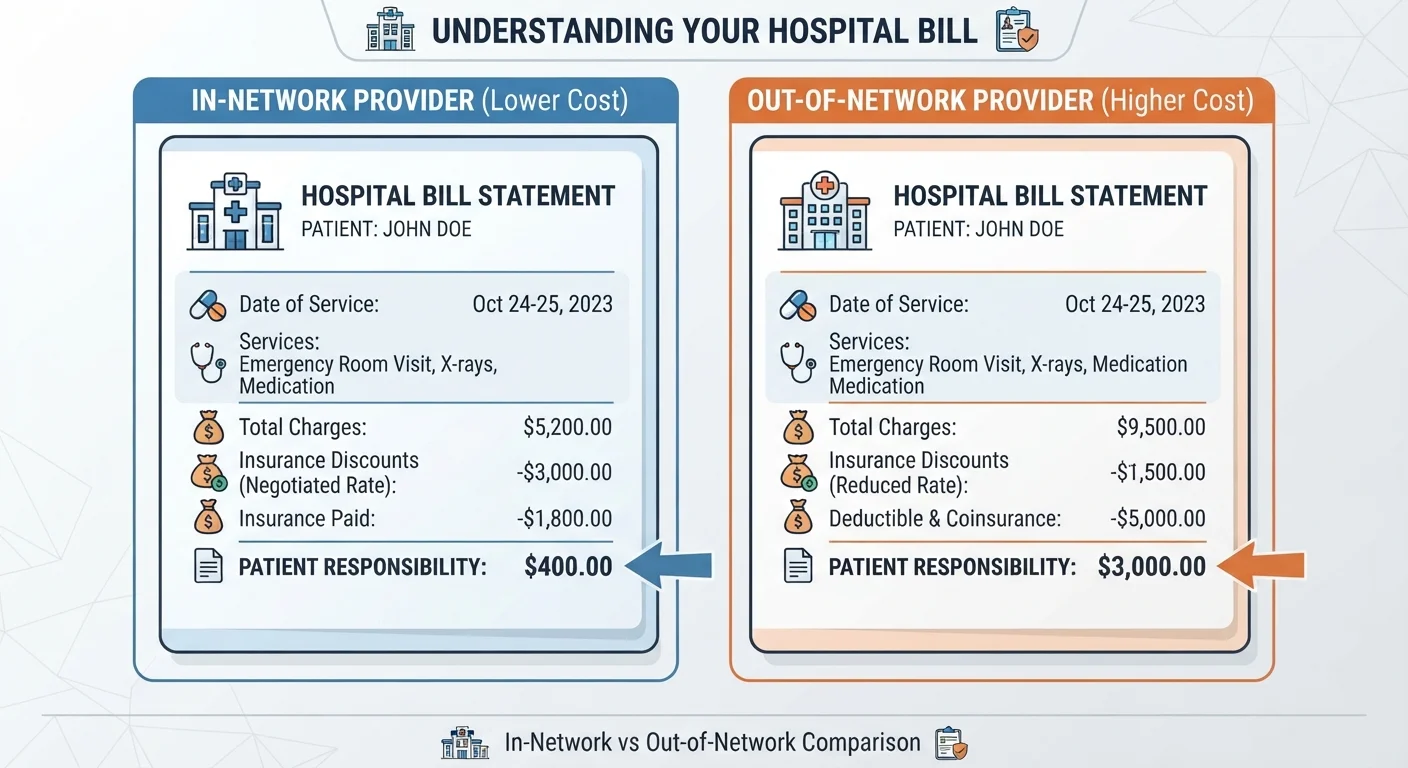
Photo credit: ArticlesHaven.net
In this article
Going out of network can dramatically increase your costs. Here's how provider networks work and what the cost difference looks like in practice.
Key Takeaways
- In-network providers have agreed to discounted rates with your insurer, reducing your share of the cost.
- Out-of-network care can cost two to three times more - or more - than the same service in-network.
- Some plan types, like HMOs, offer zero out-of-network coverage except in emergencies.
- Balance billing by out-of-network providers can result in unexpected charges even after your insurer pays its portion.
- Always verify a provider's network status directly with your insurer before scheduling non-emergency care.
How Provider Networks Actually Work
Insurance companies negotiate contracts with providers - doctors, specialists, labs, hospitals - agreeing on discounted rates in exchange for being listed as "preferred" providers for plan members. That arrangement is the foundation of a network.
When you stay in-network, your insurer and the provider have already agreed on what a service costs. Your cost-sharing - copays, coinsurance, deductibles - is calculated on that negotiated amount, which is typically well below the provider's standard list price.
Out-of-network providers haven't signed that contract. They can charge their full listed rate, and your insurer may cover only a fraction of it, or nothing at all, depending on your plan type.
Out-of-Network Costs and Your Deductible May Not Mix
Many plans maintain separate in-network and out-of-network deductibles and out-of-pocket maximums. Spending toward your out-of-network deductible may not count toward your in-network limit - and vice versa. This means you could theoretically max out both in the same year. Check your Summary of Benefits and Coverage document carefully. The guide on how deductibles interact with your other costs explains how these layers compound.
Understanding how networks interact with your deductible and out-of-pocket maximum is essential. See the guide to deductibles vs. out-of-pocket maximums for how these figures work together.
The Real Cost Gap: In-Network vs. Out-of-Network
The cost difference isn't marginal - it can be dramatic. Consider a specialist visit that carries a $40 in-network copay. Out-of-network, your plan might pay 60% of an "allowed amount" that's already lower than the provider's actual charge - leaving you responsible for both the coinsurance and any balance above the allowed amount.
2-3×
Typical cost multiplier for out-of-network care
Health policy researchers and consumer advocacy groups consistently find that out-of-network rates for the same service can be two to three times higher than negotiated in-network rates.
~1 in 5
Emergency visits involving an out-of-network provider
Research published in health policy journals has estimated that roughly one in five emergency visits results in at least one out-of-network charge, often from providers the patient did not choose.
Separate deductible
Out-of-network deductible on many PPO plans
Many PPO plans carry a distinct - and higher - deductible that applies only to out-of-network services, meaning consumers may need to meet two separate deductibles in the same plan year.
For major procedures, the gap widens further. A surgery that costs you $2,000 out-of-pocket in-network might cost $8,000 or more out-of-network once you factor in a separate out-of-network deductible, higher coinsurance, and balance billing.
The breakdown of copays, coinsurance, and out-of-pocket maximums helps clarify exactly how each cost-sharing layer compounds when you leave the network.
Plan Types and Network Flexibility
Not all plans treat out-of-network care the same way. Your plan type determines how much - if any - flexibility you have.
- HMO (Health Maintenance Organization): Generally provides no out-of-network coverage except true emergencies. Requires referrals to see specialists.
- PPO (Preferred Provider Organization): Covers both in-network and out-of-network care, but at different cost-sharing levels. Out-of-network costs are higher, but no referral is required.
- EPO (Exclusive Provider Organization): Like an HMO in that out-of-network care is typically not covered at all, but usually doesn't require referrals within the network.
- POS (Point of Service): A hybrid that allows out-of-network visits with a referral, but in-network use is strongly incentivized by lower cost-sharing.
Verify Network Status Before Every Visit
Don't rely solely on online provider directories - they can lag behind actual contract changes. Call your insurer directly and ask them to confirm the specific provider, at the specific location, is in-network for your specific plan. Get the confirmation reference number in case of a billing dispute later.
If network flexibility matters to you - for example, if you have established relationships with specific specialists - factoring in plan type during enrollment can prevent costly surprises later. See common health plan myths that cost people money for misconceptions that lead to poor choices.
Situations Where Out-of-Network Charges Catch People Off Guard
Even careful consumers can end up with unexpected out-of-network bills. A few common scenarios:
Federal surprise billing protections - introduced under the No Surprises Act - do limit some of the most egregious situations, particularly for emergency care and certain services at in-network facilities. But protections have limits and don't cover all care settings. Verifying network status remains your most reliable safeguard.
For a broader look at how network status affects your actual bill, the article on what in-network and out-of-network mean for your medical bills covers the mechanics in more detail.
This article provides general health insurance information for educational purposes only and is not personalized insurance, financial, or legal advice. Coverage terms, costs, and regulations vary by plan and state. Always review your plan documents and consult a licensed insurance professional for guidance specific to your situation.
Frequently Asked Questions

Author
Articles Haven Editorial Contributor
Articles Haven Editorial Team is the collective byline for our editorial team and contributor network. Articles published under this byline or an editorial pen name are researched, written, and reviewed according to our editorial standards for clarity, consistency, and independence before publication.
View all articles →