
What 'In-Network' and 'Out-of-Network' Mean for Your Medical Bills
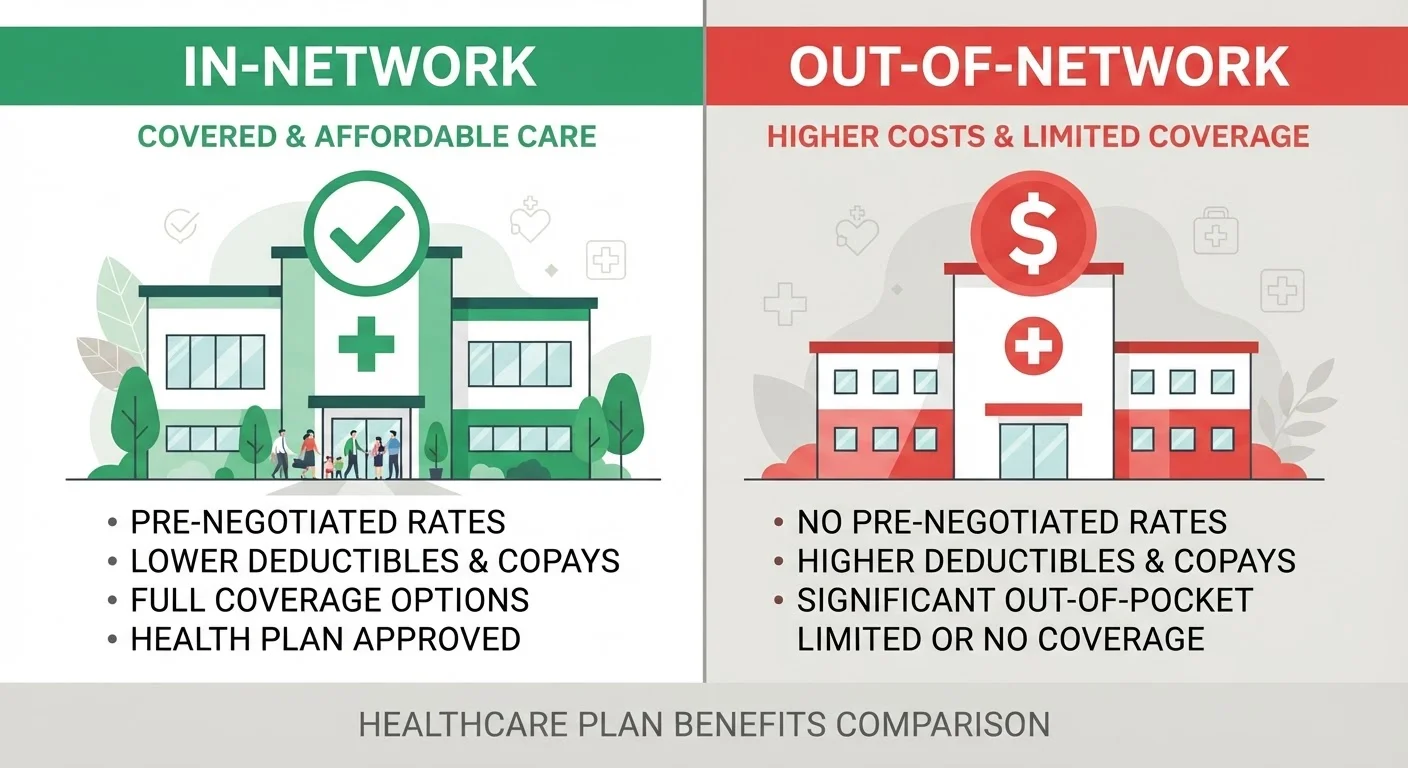
Photo credit: ArticlesHaven.net
In this article
Going out-of-network can cost significantly more. Understand how provider networks are structured and how to check coverage before a visit.
Key Takeaways
- In-network providers have contracted rates with your insurer, resulting in lower out-of-pocket costs for you.
- Out-of-network care can leave you responsible for a much larger share - sometimes the entire bill.
- Always verify a provider's network status before scheduling non-emergency care.
- Plan type (HMO, PPO, EPO) determines how much flexibility you have to go out-of-network.
- Even in emergencies, follow-up care and facility fees can trigger out-of-network charges.
How Provider Networks Are Built
Health insurance networks are built through negotiations between insurers and healthcare providers. When a provider joins an insurer's network, they agree to accept a pre-negotiated rate - called an "allowed amount" - for covered services. In exchange, the insurer directs its members toward those providers.
This arrangement benefits both sides: providers get a steady patient flow, and insurers can control costs. For you as the patient, it means that using in-network providers activates the discounted rates your plan was designed around. When you step outside that network, those negotiated rates no longer apply.
Understanding this structure helps explain why the same procedure can generate wildly different bills depending on where - and from whom - you receive care. It also explains why your plan type matters so much when evaluating coverage options. See the Coverage & Costs hub for a broader look at how these elements fit together.
~$40B
Annual surprise medical billing burden on US patients
Research published in health policy journals has estimated surprise out-of-network bills generate tens of billions in unexpected patient costs annually in the US.
Up to 3x
Higher cost for out-of-network vs. in-network care
Studies from health policy researchers have found patients can pay two to three times more for the same procedure when going out-of-network compared to in-network rates.
1 in 5
Emergency visits with at least one out-of-network charge
The Kaiser Family Foundation has reported that roughly one in five emergency visits results in at least one out-of-network charge, even when the facility itself is in-network.
How Plan Type Changes Your Out-of-Network Options
Not all health plans treat out-of-network care the same way. Your plan's structure sets the rules:
- HMO (Health Maintenance Organization): Generally requires you to use in-network providers only, except in emergencies. Referrals from a primary care physician are typically required to see a specialist.
- PPO (Preferred Provider Organization): Offers more flexibility. You can see out-of-network providers, but you'll usually pay a higher coinsurance rate and meet a separate, higher deductible for out-of-network care.
- EPO (Exclusive Provider Organization): Like an HMO, it typically covers no out-of-network care outside of emergencies, but usually does not require referrals.
- POS (Point of Service): A hybrid - requires a primary care physician and referrals like an HMO, but allows some out-of-network coverage at higher cost like a PPO.
If you have providers or specialists you want to keep seeing, verifying they're in-network before selecting a plan is worth the extra effort. A low monthly premium can mask network restrictions that end up costing more in practice.
Check Network Status Before Open Enrollment Ends
If you're choosing a new plan during open enrollment, search your insurer's provider directory for any specialists or physicians you regularly see before committing. A plan with a lower premium may exclude key providers from its network. Confirming this upfront can save you from a costly mid-year surprise.
What Out-of-Network Bills Actually Look Like
The cost gap between in-network and out-of-network care can be dramatic. Out-of-network providers bill at their full charge rate, and your insurer may reimburse only a portion - or nothing at all. You may then be responsible for the remainder through a process called balance billing.
For example, an in-network specialist visit might cost you a $40 copay. The same visit out-of-network could result in a bill of several hundred dollars after your insurer applies its out-of-network benefit rate - if any benefit applies at all. For surgical procedures or hospital stays, the difference can reach thousands of dollars.
It's also worth knowing that out-of-network spending often does not count toward your plan's in-network out-of-pocket maximum. That means your annual cost cap may provide less protection than you expect. For a closer look at how these caps work, see the article on deductibles vs. out-of-pocket maximums.
How to Check Network Status Before a Visit
Verifying network status in advance is one of the most actionable things you can do to protect yourself from unexpected bills. Here's a practical approach:
- Use your insurer's provider directory. Most insurers maintain a searchable online directory. Search by specialty, location, and provider name.
- Call the provider's office directly. Ask whether they accept your specific plan - not just the insurer's name. Directories can lag behind real-world contract changes.
- Ask about all providers involved. For procedures at a facility, ask which physicians will be involved and confirm each one's network status. Anesthesiologists, radiologists, and pathologists often bill separately.
- Get it in writing when possible. A confirmation of in-network status from the provider's billing office is documentation you may need later.
For a deeper comparison of cost-sharing terms that come into play once you've selected a provider, the article on copays, coinsurance, and out-of-pocket maximums is a practical next read.
Federal Surprise Billing Protections Apply in Some Cases
The No Surprises Act, which took effect in 2022, limits surprise out-of-network billing in emergency settings and for certain scheduled care at in-network facilities. However, protections vary by situation and do not cover all types of out-of-network care. Check with your insurer or a licensed agent for specifics on how these rules apply to your plan.
This article is for general informational purposes only and does not constitute insurance, financial, or legal advice. Coverage terms, network rules, and protections vary by plan and state. Always consult your plan documents and a licensed insurance professional for guidance specific to your situation.
Frequently Asked Questions

Author
Articles Haven Editorial Contributor
Articles Haven Editorial Team is the collective byline for our editorial team and contributor network. Articles published under this byline or an editorial pen name are researched, written, and reviewed according to our editorial standards for clarity, consistency, and independence before publication.
View all articles →