
Flood and Earthquake Coverage: Why Standard Policies Leave Them Out
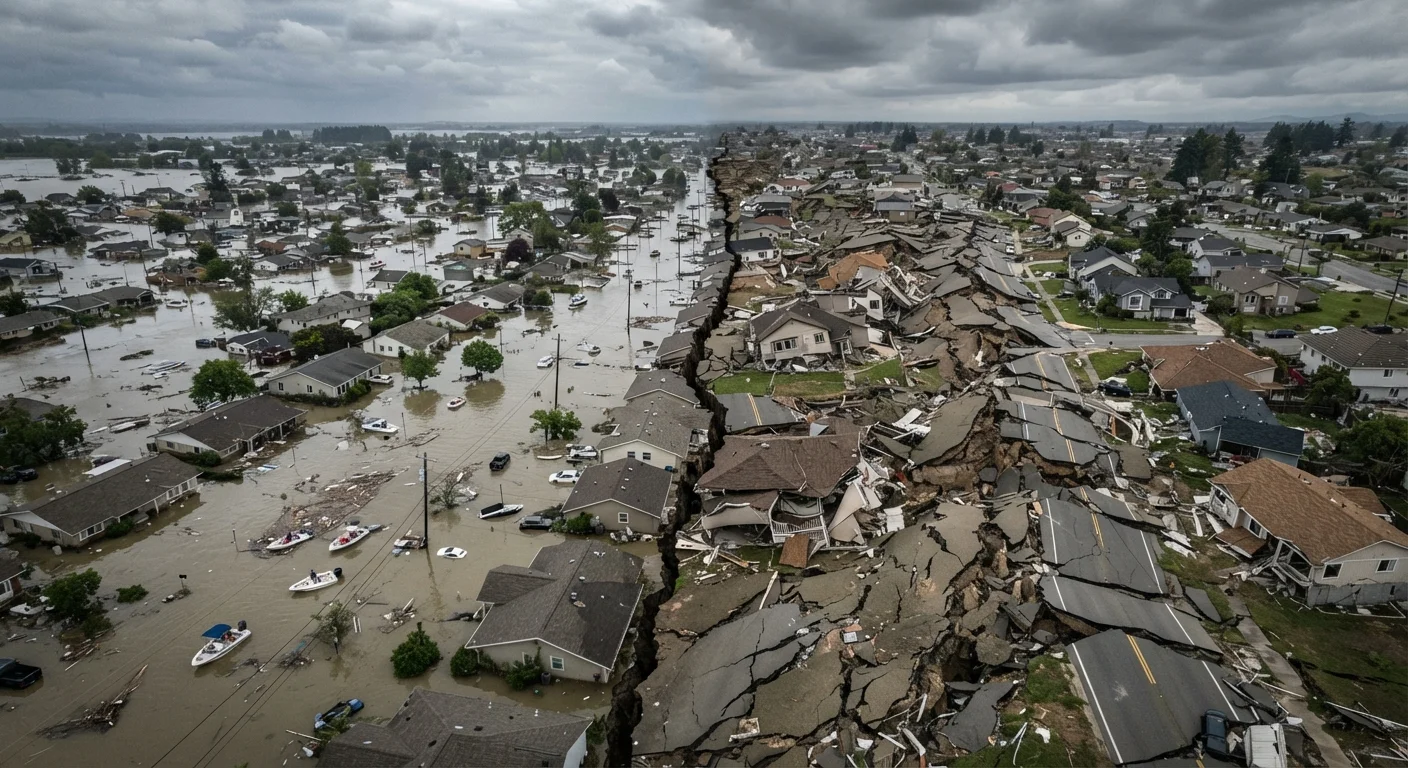
Photo credit: ArticlesHaven.net
In this article
Floods and earthquakes cause enormous losses, yet most standard home policies exclude them. Learn why and what separate coverage looks like.
Key Takeaways
- Standard homeowners policies exclude flood and earthquake damage in nearly all cases.
- Floods and earthquakes are excluded because they create concentrated, widespread losses that standard underwriting cannot price sustainably.
- Separate flood policies are available through the federal NFIP and some private insurers.
- Earthquake coverage is typically purchased as a standalone policy or endorsement, depending on your state.
- Neither type of supplemental coverage is automatic - consumers must actively seek and purchase it.
- Living in a low-risk zone does not mean you are fully protected without supplemental coverage.
Why Standard Policies Draw the Line at Floods and Earthquakes
When most homeowners think about what their insurance covers, they picture fire, wind, theft, or a tree falling on the roof. What they often don't picture is the fine print - specifically, the exclusions list. Floods and earthquakes sit near the top of that list, and the reason is structural to how insurance works.
Standard policies are built around the concept of independent, random risk. A house fire in Ohio is statistically unrelated to a house fire in Nevada on the same day. That independence lets insurers spread risk across a large pool of policyholders and price premiums at a manageable level. Floods and earthquakes don't follow this pattern. A major earthquake or hurricane-driven flood can damage tens of thousands of homes simultaneously in a single region - a scenario where an insurer's entire pool of claims arrives at once.
This is what underwriters call correlated risk. It's the reason catastrophic natural perils are removed from standard policies rather than priced in. Including them would either make standard premiums unaffordable for most consumers, or expose insurers to losses they cannot sustain. As a result, the industry settled on a separation model: standard policies cover most everyday perils, while flood and earthquake protection require independent products.
For a broader view of where policy gaps tend to show up, see common insurance coverage gaps that affect homeowners across multiple policy types.
Renters Are Affected Too
Flood and earthquake exclusions aren't limited to homeowners. Standard renters insurance policies also exclude these perils. Renters who want flood or earthquake protection for their personal belongings need to seek the same type of supplemental coverage. Landlord-held policies cover the building - not your contents inside it.
Flood Insurance: What It Is and How It Works
The federal government entered the flood insurance space in 1968 by creating the National Flood Insurance Program (NFIP), managed by FEMA. The program exists precisely because private insurers could not profitably offer flood coverage to high-risk areas. Today, NFIP policies are sold through private insurance companies but backed by the federal government.
NFIP policies cover two distinct things: the building itself (up to $250,000) and personal contents (up to $100,000). These are separate coverage components that must each be selected. The policy does not automatically bundle both - a detail that surprises some policyholders after a loss.
~40%
Flood claims outside high-risk zones
FEMA has consistently noted that a substantial share of flood insurance claims - roughly 40% - come from properties located outside designated high-risk flood areas.
$250,000
NFIP building coverage limit
The maximum building coverage available under a standard National Flood Insurance Program policy, which may not fully cover higher-value homes.
10-25%
Typical earthquake deductible range
Earthquake insurance deductibles are commonly structured as a percentage of the insured dwelling value, meaning the out-of-pocket threshold can be very high on a costly home.
Private flood insurance has expanded significantly and may offer higher limits, broader definitions of a flood event, or different deductible structures. Terms vary considerably between providers, so comparing options with a licensed agent is worth the effort. The important detail for any consumer is that flood protection - regardless of source - is never included in a standard homeowners policy by default. Flood insurance and homeowners insurance are genuinely different products, with separate applications, premiums, and claims processes.
Earthquake Insurance: A Separate Market
Unlike flood coverage, there is no federal program backstopping earthquake insurance nationally. In most states, earthquake coverage is sold either as a standalone policy or as an endorsement added to a standard homeowners policy. In California - the state with the highest earthquake exposure - the publicly created California Earthquake Authority (CEA) offers policies through participating insurers.
Earthquake policies typically cover structural damage to the dwelling, loss of personal property, and additional living expenses if the home becomes uninhabitable after a quake. What they generally do not cover: masonry fences, pools, pre-existing structural defects, and land itself.
Check for a Waiting Period Before Coverage Kicks In
Both NFIP flood policies and many earthquake policies include a waiting period - commonly 30 days - before coverage becomes effective. This means you cannot purchase a policy after a storm warning or seismic event and expect immediate protection. Plan ahead rather than reacting to a forecasted threat.
The deductible structure for earthquake insurance deserves specific attention. Rather than a flat amount, deductibles are usually calculated as a percentage of the insured dwelling value - often between 10% and 25%. On a home insured for $400,000, a 15% deductible means you'd absorb the first $60,000 in damage before coverage begins. That's a meaningful number to factor into any coverage decision.
For context on how additional living expenses fit into the broader picture after a major event, see how loss of use coverage works in a home policy.
Making a Practical Coverage Decision
Whether supplemental coverage makes sense depends on your specific situation - geography, home value, mortgage requirements, and financial resilience all play a role. That said, a few practical points apply broadly.
Risk zone designations are a starting point, not a conclusion. FEMA flood maps and seismic hazard maps are useful references, but they are updated periodically and reflect statistical probability - not certainty. Floods regularly occur in moderate- and low-risk zones. Earthquakes happen along fault lines that aren't always well-mapped in advance.
Review what you'd be absorbing without coverage. The repair cost for significant flood or earthquake damage routinely runs into six figures. An emergency fund can handle many home setbacks, but emergency funds have real limits that a major structural event can quickly exceed.
If you're navigating the broader question of what your existing policies do and don't cover, understanding policy exclusions is a useful starting point before you sit down with an agent. For anything specific to your situation - coverage amounts, eligibility, or local provider options - consult a licensed insurance professional who can review your actual policy documents.
This article is for general informational purposes only and does not constitute insurance, legal, or financial advice. Coverage terms, availability, and regulations vary by state and provider. Always read your policy documents carefully and consult a licensed insurance agent or adviser for guidance specific to your circumstances.
Frequently Asked Questions

Author
Articles Haven Editorial Contributor
Articles Haven Editorial Team is the collective byline for our editorial team and contributor network. Articles published under this byline or an editorial pen name are researched, written, and reviewed according to our editorial standards for clarity, consistency, and independence before publication.
View all articles →