
Dwelling Coverage vs. Personal Property Coverage in Homeowners Insurance
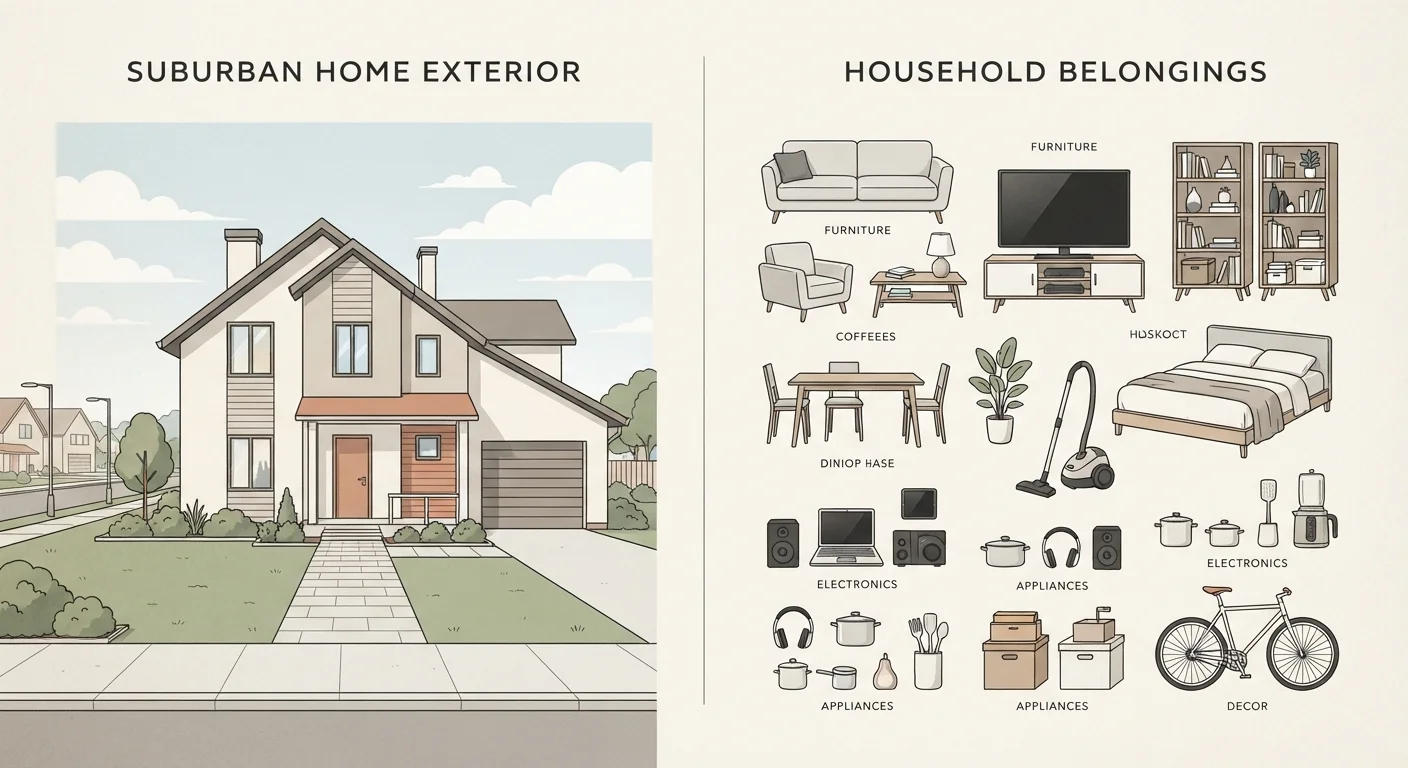
Photo credit: ArticlesHaven.net
In this article
Your home and its contents are covered separately under most policies. Here's what each coverage type protects and where the gaps can appear.
Key Takeaways
- Dwelling coverage pays to repair or rebuild the physical structure of your home after a covered loss.
- Personal property coverage applies to your belongings - furniture, clothing, electronics - not the building itself.
- Both coverages carry separate limits and deductibles, so a gap in one doesn't affect the other.
- High-value items like jewelry and art may exceed standard personal property limits without an endorsement.
- Replacement cost vs. actual cash value is a critical distinction affecting both coverage types.
What Each Coverage Type Actually Does
Most standard homeowners policies divide protection into distinct buckets, and two of the most foundational are dwelling coverage and personal property coverage. They're related but solve different problems.
Dwelling coverage (sometimes labeled Coverage A on a policy declaration page) pays for damage to the physical structure of your home - walls, roof, floors, built-in appliances, and attached structures like a garage. If a windstorm tears off your roof or a fire guts your kitchen, dwelling coverage funds the repair or rebuild, up to your policy limit.
Personal property coverage (typically Coverage C) protects the movable contents inside - furniture, clothing, electronics, kitchenware, sporting goods. It can also extend to belongings kept in your car or a storage unit, depending on the policy. For a deeper look at what's included, see what personal property coverage actually includes.
The key distinction: if the structure burns, dwelling coverage responds. If your laptop or sofa burns with it, personal property coverage handles that separately.
| Criterion | Dwelling Coverage | Personal Property Coverage |
|---|---|---|
| What it protects | Physical structure of the home | Movable belongings and contents |
| Policy label | Coverage A | Coverage C |
| Typical limit basis | Home replacement cost | Percentage of dwelling limit (50-70%) |
| Valuation method options | Replacement cost or ACV | Replacement cost or ACV |
| Sub-limits apply? | Rarely | Yes - jewelry, art, electronics |
| Applies outside the home? | No | Often yes - storage, vehicle |
| Relevant to renters? | No | Yes - via renters policy |
How Coverage Limits and Valuation Work
Each coverage type carries its own limit, and how that limit is calculated matters enormously at claim time.
Dwelling limits are ideally set at the home's replacement cost - what it would cost to rebuild using similar materials and labor at current prices, not the market value of the property. These two numbers can differ significantly, especially in areas where land value is high or construction costs have risen.
Personal property limits are usually set as a percentage of the dwelling limit - commonly 50% to 70% - though this varies by insurer and can be adjusted. The valuation method also matters: replacement cost value (RCV) pays what it costs to buy a comparable new item today, while actual cash value (ACV) deducts depreciation. A five-year-old television replaced at ACV may yield a fraction of what a new equivalent costs.
50-70%
Typical personal property limit as share of dwelling coverage
Most standard homeowners policies set personal property limits at 50% to 70% of the dwelling limit, though this figure can be adjusted.
$1,500
Common per-category jewelry sub-limit
Many standard policies cap jewelry theft or loss claims at $1,000-$1,500 per incident, regardless of actual value owned.
Certain categories of personal property - jewelry, fine art, firearms, collectibles - carry sub-limits within the broader personal property limit. If your total jewelry is worth $10,000 but your policy caps jewelry claims at $1,500, the difference isn't covered unless you add a scheduled endorsement. Scheduled endorsements are worth reviewing if you own items of significant individual value.
Common Gaps and Misconceptions
One of the most frequent misunderstandings is assuming that a high dwelling limit means belongings are well covered too. They're separate calculations, and underinsuring one while adequately covering the other is entirely possible.
Another common gap: flood damage. Standard homeowners policies generally exclude flood, which means neither dwelling nor personal property coverage responds to a flood event. That requires a separate flood policy. Flood insurance and homeowners insurance are not the same thing - a distinction worth understanding before assuming you're covered.
Named Perils vs. Open Perils: Know the Difference
An open perils policy covers losses from any cause not explicitly excluded, offering broader protection. A named perils policy only covers events specifically listed - such as fire, theft, or windstorm. Personal property coverage is sometimes written on a named perils basis even when dwelling coverage is open perils, so the same event may be treated differently depending on what was damaged. Check your policy declarations and ask your insurer if you're unsure which basis applies.
It's also worth checking whether your policy covers belongings on an open perils basis (covering most causes of loss unless explicitly excluded) or named perils basis (covering only the specific events listed). Dwelling coverage on standard policies is often open perils, while personal property coverage may default to named perils - a meaningful difference in how broadly you're protected.
For a broader view of where policies commonly leave gaps, insurance coverage gaps that catch people off guard covers scenarios across multiple policy types.
Making the Most of Both Coverages
Getting the balance right between dwelling and personal property coverage starts with accurate numbers. For dwelling, a professional replacement cost estimate - not your purchase price or tax assessment - gives you a more defensible limit. For personal property, a home inventory is essential.
A detailed inventory, listing items with descriptions, approximate values, and ideally photos or receipts, strengthens any claim. Good practices for documenting your belongings walks through how to build and store that record effectively.
Also check whether your policy includes loss of use coverage, which pays for temporary housing if a covered loss makes your home uninhabitable. That benefit connects directly to both dwelling and personal property losses. Loss of use coverage is often overlooked until it's needed.
When reviewing or shopping for a policy, guidance on choosing a policy can help frame what questions to bring to a licensed insurance agent or adviser, who can assess your specific situation. Coverage terms, exclusions, and limits vary by provider and state, so always read actual policy documents rather than relying on summaries alone.
This article is for general informational purposes only and does not constitute insurance, legal, or financial advice. Coverage terms vary by provider, policy, and state. Consult a licensed insurance professional for guidance specific to your situation.

Author
Articles Haven Editorial Contributor
Articles Haven Editorial Team is the collective byline for our editorial team and contributor network. Articles published under this byline or an editorial pen name are researched, written, and reviewed according to our editorial standards for clarity, consistency, and independence before publication.
View all articles →