
What an Insurance Declarations Page Tells You at a Glance
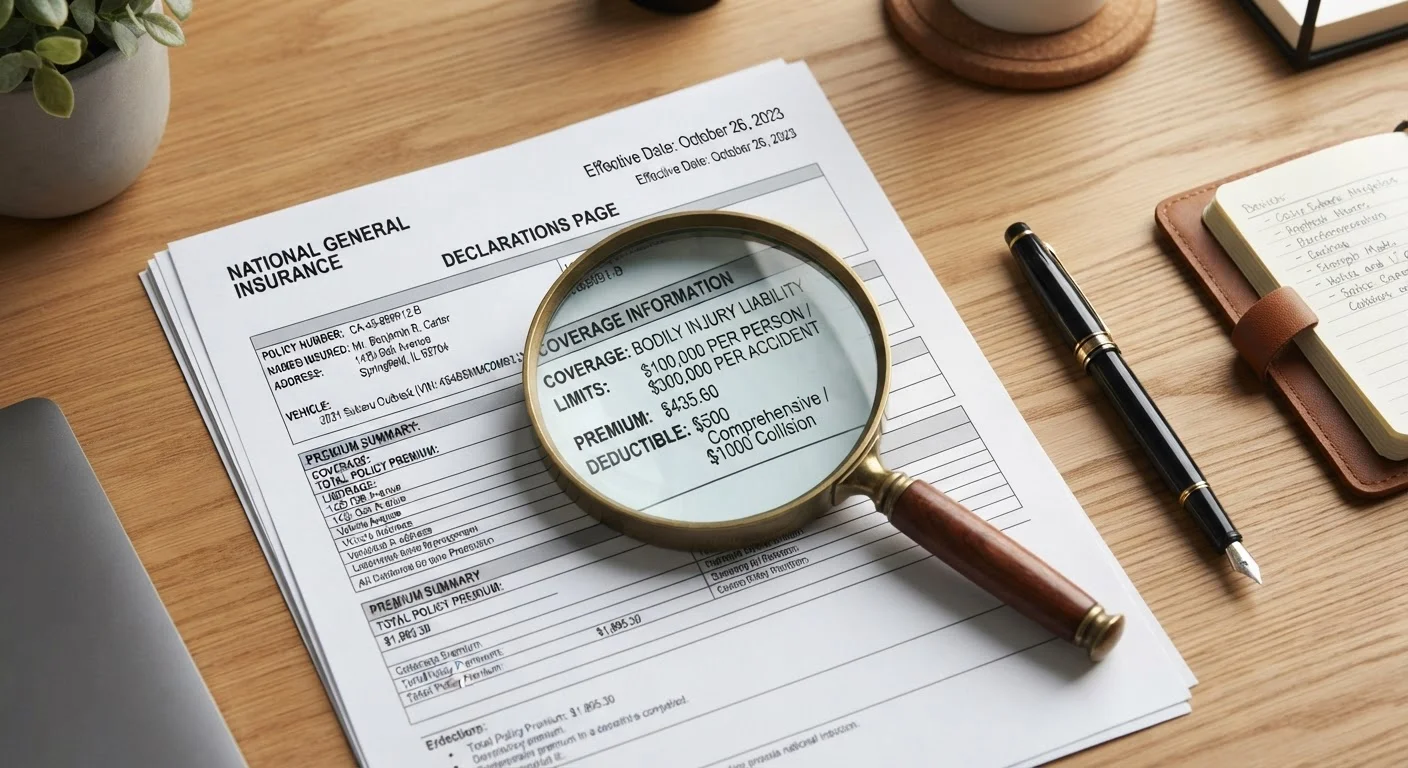
Photo credit: ArticlesHaven.net
In this article
The declarations page is the summary of your policy. Here's how to read each section and what discrepancies to flag immediately.
What Is a Declarations Page?
Every insurance policy - whether it covers your car, home, renters belongings, or health - comes with a declarations page, often called the "dec page." It's the condensed snapshot of your coverage: who's insured, what's covered, for how long, and at what cost. Think of it as the cover sheet that sits on top of the longer, more technical policy document.
The dec page is typically one to two pages long and is issued at the start of a new policy and again at each renewal. It's also updated whenever you make a mid-term change - adding a driver, adjusting a deductible, or changing a coverage limit. You should receive a copy by mail or electronically whenever one is generated.
For a broader breakdown of how this page fits into the full policy structure, see how to read an insurance policy without getting lost - it walks through the declarations page alongside the conditions, definitions, and exclusions sections.
| Also called | Dec page, policy summary, coverage summary |
| Typical length | 1-2 pages |
| When issued | New policy, renewal, and after mid-term changes |
| Applies to | Auto, home, renters, health, life, and most other policy types |
| Contains binding details | Yes - limits, deductibles, and dates shown are legally operative |
Key Fields and What They Actually Mean
Reading a dec page is straightforward once you know what each field represents. Here's what you'll typically find, regardless of insurance type:
- Named insured: The person (or entity) the policy legally covers. Verify the spelling of your name and address - errors here can complicate a claim.
- Policy number: Your unique identifier for this policy. Keep it handy when filing claims or contacting your insurer.
- Policy period: The exact start and end dates of coverage. Coverage does not exist outside these dates.
- Coverage types and limits: Each coverage type (liability, collision, dwelling, personal property, etc.) is listed with its dollar limit - the maximum your insurer will pay per claim or per period.
- Deductibles: The amount you pay out of pocket before coverage kicks in. A higher deductible generally means a lower premium, and vice versa.
- Premium: The total cost of coverage for the policy period, often broken down by coverage type.
- Endorsements or riders: Added-on coverages that modify the base policy. These appear by name or form number.
- Lienholder or additional insured: If a lender or landlord has an interest in the insured property, their name appears here.
For a closer look at auto-specific dec page fields, understanding your auto insurance declarations page covers vehicle-specific entries in detail.
Named insured
The individual or entity listed as the primary covered party on a policy. This person has full rights under the policy, including the ability to make changes or file claims.
Coverage limit
The maximum dollar amount an insurer will pay for a covered loss under a specific coverage type. Losses exceeding the limit are the policyholder's responsibility.
Deductible
The amount the insured pays out of pocket before the insurer begins paying on a covered claim. Higher deductibles typically lower the premium.
Endorsement
A written modification to a standard policy that adds, removes, or changes coverage. Endorsements are listed on the dec page and attached to the policy document.
Policy period
The date range during which an insurance policy is in force. Coverage does not apply to events that occur before the start date or after the expiration date.
Lienholder
A lender or financial institution with a legal interest in an insured asset, such as a mortgage company on a home or an auto lender on a financed vehicle. They are listed on the dec page to receive claim payments up to their interest.
Discrepancies to Flag Immediately
A declarations page error isn't just a paperwork nuisance - it can mean reduced or denied coverage when you need it most. Review your dec page carefully every time you receive one.
Your Dec Page Is Not Your Full Policy
The declarations page summarizes your coverage but does not contain all the terms, conditions, and exclusions that govern your policy. Important limitations - such as what events are excluded from coverage - are found in the full policy document. Always read both documents together. For guidance on reading the complete policy, see reading an insurance policy before you sign.
Common errors worth catching early:
- Misspelled name or wrong address - can affect claims processing and legal coverage
- Wrong vehicle year, make, model, or VIN on an auto policy
- Coverage limits that don't match what you agreed to when you purchased or renewed
- Missing endorsements you paid for
- Incorrect lienholder listed (or a former lender still listed after a loan is paid off)
- Policy period start date that doesn't align with when you expected coverage to begin
If you spot something off, contact your insurer or agent in writing as soon as possible. Request a corrected dec page and keep a record of all correspondence. Most corrections are straightforward, but the sooner you address them, the less likely a discrepancy is to cause problems during a claim.
To understand how the dec page connects to the rest of your policy - including exclusions and definitions that can affect your actual coverage - see navigating a policy document from declarations to exclusions.
1 in 3
Policyholders who rarely review their dec page at renewal
Industry surveys suggest a significant share of consumers do not carefully review their declarations page when renewing, leaving errors undetected.
~40%
Claims involving a coverage gap the policyholder didn't know existed
Insurance educators and consumer advocates frequently cite mismatched expectations between what consumers assume is covered and what dec pages actually reflect.
This article is for general informational purposes only and does not constitute insurance, legal, or financial advice. Coverage terms, limits, and regulations vary by insurer, policy, and state. Always review your actual policy documents and consult a licensed insurance agent or adviser for guidance specific to your situation.

Author
Articles Haven Editorial Contributor
Articles Haven Editorial Team is the collective byline for our editorial team and contributor network. Articles published under this byline or an editorial pen name are researched, written, and reviewed according to our editorial standards for clarity, consistency, and independence before publication.
View all articles →