
Self-Insuring vs. Buying a Policy: When Carrying the Risk Yourself Makes Sense
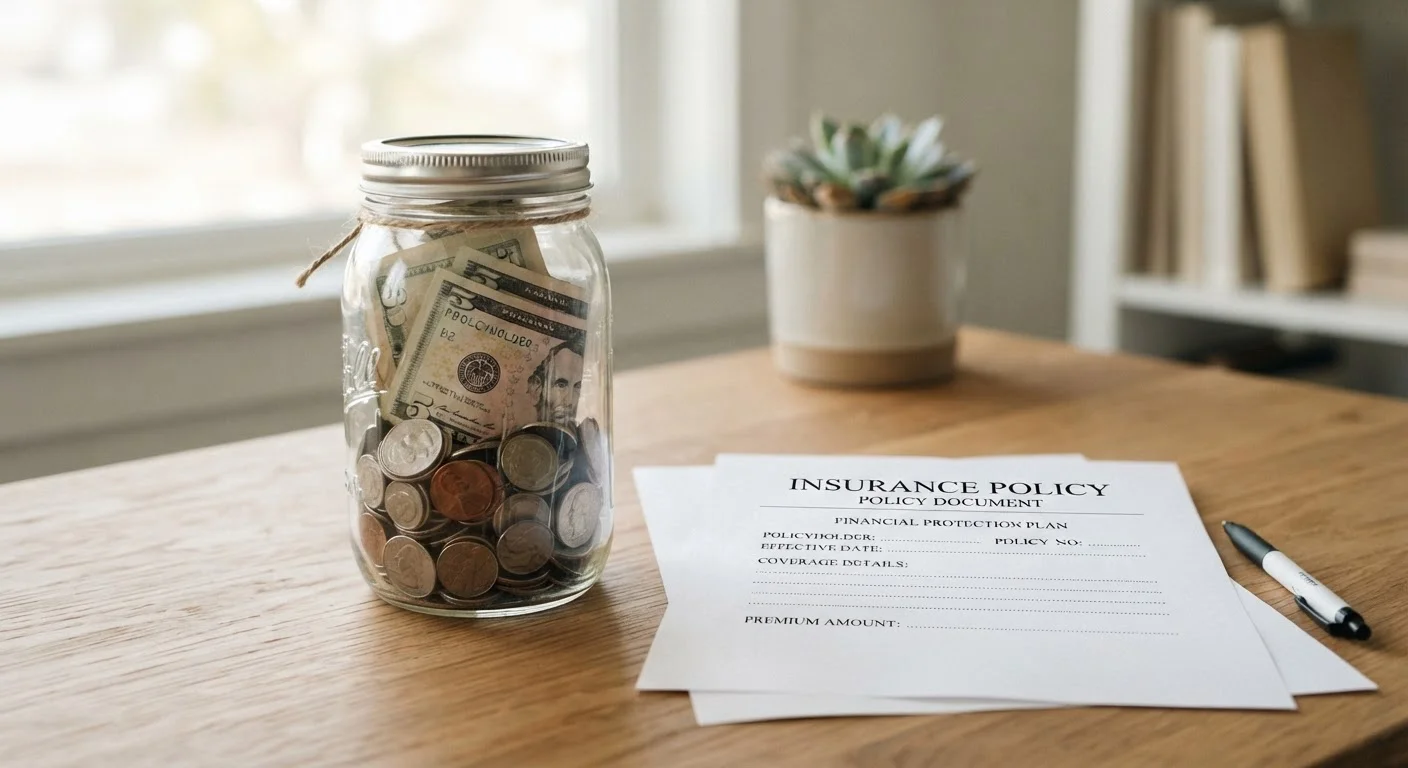
Photo credit: ArticlesHaven.net
In this article
For some low-risk, low-cost scenarios, foregoing a policy and reserving funds instead is a legitimate strategy — but it requires honest self-assessment.
Key Takeaways
- Self-insuring means deliberately setting aside funds to cover potential losses instead of paying premiums to a carrier.
- The strategy is most defensible when the maximum possible loss is affordable and the risk frequency is low.
- Mandatory coverage requirements - like auto liability - cannot be legally replaced by self-insurance for most consumers.
- Catastrophic or unpredictable risks, such as major medical events or house fires, are generally poor candidates for self-insuring.
- Honest self-assessment of your actual liquid reserves is essential before skipping any policy.
Eliminates ongoing premium costs for low-risk items
For risks with a low probability of loss and a manageable maximum cost, avoiding premiums over many years can result in meaningful savings that stay in your pocket.
Reserves can grow and earn returns
Money set aside in a high-yield savings account or similar vehicle earns interest, unlike premiums paid to a carrier, which are a sunk cost regardless of whether a claim occurs.
No claims process or coverage disputes
When you self-insure, a loss is handled directly from your reserve - no waiting on adjuster approvals, no risk of a denied claim, and no impact on a policy renewal.
Simplifies finances when risk is genuinely minor
Dropping a policy on a low-value asset reduces administrative overhead and removes one more renewal decision from your annual financial to-do list.
Requires liquid reserves, not just net worth
A large retirement account or home equity does not constitute a functional self-insurance reserve if those funds cannot be accessed quickly and without penalty. Self-insuring requires truly accessible cash.
Catastrophic losses can exceed any realistic reserve
A single major event - a serious liability claim, a total home loss, a significant medical episode - can reach six or seven figures, far beyond what most individuals could absorb without severe financial damage.
No protection against legally required coverage gaps
State and lender mandates mean self-insuring is not legally available for auto liability or mortgage-required homeowners coverage, making the choice moot in many common situations.
Behavioral risk of neglecting reserve maintenance
Unlike a renewing policy, a self-insurance reserve requires deliberate upkeep. Inflation, increased asset values, or changed life circumstances can silently erode its adequacy over time.
Loss of carrier negotiating power and legal support
When a third-party claim is involved - say, an at-fault accident - an insurer provides legal defense and negotiation resources that an individual would otherwise have to fund and coordinate entirely alone.
What Self-Insuring Actually Means
Self-insuring isn't a loophole or a workaround - it's a deliberate decision to absorb potential financial losses yourself rather than transferring that risk to an insurance carrier via premiums. In its most practical form, it means setting aside a dedicated pool of money, often called a self-insurance reserve, that you would draw on if a covered loss occurred.
This is different from simply skipping coverage and hoping nothing goes wrong. Genuine self-insuring requires actually having the funds available. That distinction matters enormously. When people say they're "self-insuring" without the reserves to back it up, they're not managing risk - they're ignoring it.
Self-insuring as a formal strategy is common among large corporations and municipalities, which pool enough exposure across thousands of assets to make it actuarially sound. For individual consumers, the math is far less forgiving, but it can still make sense in specific, limited situations. Understanding the main categories of insurance is a useful starting point before deciding which, if any, you might forgo.
When Self-Insuring Can Be a Rational Choice
The clearest candidates for self-insuring are situations where three conditions align: the maximum possible loss is affordable to you, the probability of that loss is genuinely low, and no law or lender requires you to carry a policy.
Extended warranties on consumer electronics are a common example. The item's replacement value is known, relatively small, and the failure rate within a given window is often lower than manufacturers suggest. Paying a premium that approaches the item's value over time rarely pencils out.
Similarly, collision coverage on an older, low-value vehicle may be worth reconsidering. Liability-only vs. full coverage auto insurance is a decision many drivers face as their car depreciates - once a vehicle's market value drops low enough, the math can shift in favor of dropping collision and comprehensive, provided your savings can absorb a total loss.
~1 in 20
Annual probability of a homeowner filing a claim
Industry data suggests roughly 5-6% of homeowners file a claim in any given year, illustrating why catastrophic home risk is a poor self-insurance candidate for most people.
$1,000-$2,000
Average annual auto insurance premium in the US
According to data compiled by industry analysts, average full-coverage auto premiums vary widely by state but generally fall in this range, making the premium-vs-reserve math worth calculating explicitly.
The key question to ask honestly: if the worst-case loss occurred tomorrow, could you cover it from liquid savings without taking on debt or significantly disrupting your finances? If the answer is anything other than a clear yes, self-insuring that risk deserves more scrutiny.
Pros and Cons of Carrying the Risk Yourself
Self-insuring has genuine advantages, but they come with real trade-offs that are easy to underestimate before a loss occurs.
Eliminates ongoing premium costs for low-risk items
For risks with a low probability of loss and a manageable maximum cost, avoiding premiums over many years can result in meaningful savings that stay in your pocket.
Reserves can grow and earn returns
Money set aside in a high-yield savings account or similar vehicle earns interest, unlike premiums paid to a carrier, which are a sunk cost regardless of whether a claim occurs.
No claims process or coverage disputes
When you self-insure, a loss is handled directly from your reserve - no waiting on adjuster approvals, no risk of a denied claim, and no impact on a policy renewal.
Simplifies finances when risk is genuinely minor
Dropping a policy on a low-value asset reduces administrative overhead and removes one more renewal decision from your annual financial to-do list.
Requires liquid reserves, not just net worth
A large retirement account or home equity does not constitute a functional self-insurance reserve if those funds cannot be accessed quickly and without penalty. Self-insuring requires truly accessible cash.
Catastrophic losses can exceed any realistic reserve
A single major event - a serious liability claim, a total home loss, a significant medical episode - can reach six or seven figures, far beyond what most individuals could absorb without severe financial damage.
No protection against legally required coverage gaps
State and lender mandates mean self-insuring is not legally available for auto liability or mortgage-required homeowners coverage, making the choice moot in many common situations.
Behavioral risk of neglecting reserve maintenance
Unlike a renewing policy, a self-insurance reserve requires deliberate upkeep. Inflation, increased asset values, or changed life circumstances can silently erode its adequacy over time.
Loss of carrier negotiating power and legal support
When a third-party claim is involved - say, an at-fault accident - an insurer provides legal defense and negotiation resources that an individual would otherwise have to fund and coordinate entirely alone.
One underappreciated downside is behavioral: when people eliminate a policy, they sometimes also eliminate the habit of periodically reviewing that risk. A self-insurance reserve that made sense five years ago may no longer be adequate if your assets or liabilities have grown. This is why understanding the difference between being insured and being adequately insured applies equally well to self-insuring - the reserve needs to keep pace with the risk.
Risks That Should Not Be Self-Insured
Certain risks are structurally unsuitable for individual self-insurance, regardless of how financially comfortable a person may be.
Legally mandated coverage is the most obvious category. Auto liability insurance is required in nearly every US state, and most mortgage lenders require homeowners insurance as a loan condition. There is no legal self-insurance alternative for most individuals in these cases.
Catastrophic and unpredictable losses - a serious medical event, a house fire, a liability lawsuit - can reach magnitudes that no realistic personal reserve could cover. These are precisely the risks insurance markets exist to pool. Skipping health or home coverage because premiums feel high is not self-insuring; it is uninsured exposure. Insurance coverage gaps that catch people off guard often emerge from exactly this kind of partial or absent coverage.
Self-Insuring Is Not the Same as Going Uninsured
True self-insuring requires a funded, accessible reserve earmarked for potential losses - not simply the absence of a policy. Going without coverage while lacking adequate reserves is uninsured exposure, which carries a very different risk profile. Before forgoing any policy, verify that your reserve is liquid, sufficient for the realistic worst-case loss, and that no legal or contractual requirement mandates coverage. If you're uncertain, questions worth asking before committing to any policy can help frame your review.
It's also worth recognizing how insurers assess the risks you're considering. How insurers assess risk and why it affects your options can clarify whether a policy you're considering dropping is priced to reflect a risk that's higher than you might assume.
This article provides general information about insurance concepts and is not personalized financial, insurance, or legal advice. Coverage requirements, options, and suitability vary by individual circumstances, provider, and state. Consult a licensed insurance agent or financial adviser before making coverage decisions.

Author
Articles Haven Editorial Contributor
Articles Haven Editorial Team is the collective byline for our editorial team and contributor network. Articles published under this byline or an editorial pen name are researched, written, and reviewed according to our editorial standards for clarity, consistency, and independence before publication.
View all articles →