
Named Perils vs. Open Perils Coverage: What the Difference Means for You
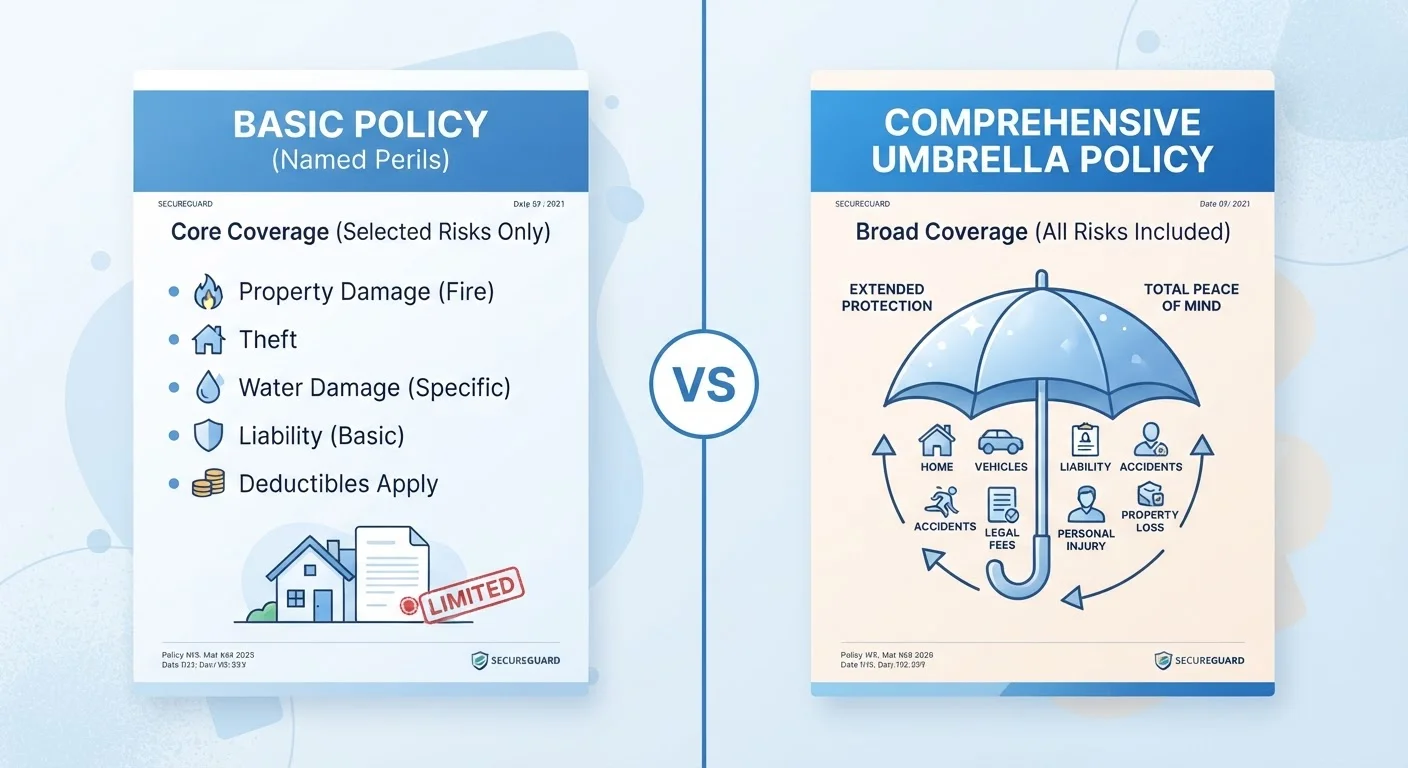
Photo credit: ArticlesHaven.net
In this article
Two very different ways insurers define what they'll pay for. Here's how each works and which situations each tends to suit.
Key Takeaways
- Named perils policies only pay for losses caused by events explicitly listed in the policy.
- Open perils policies cover any loss unless it falls under a named exclusion, giving broader default protection.
- Open perils coverage generally costs more in premiums but creates a stronger starting position when filing a claim.
- Both policy types can carry exclusions; reading the actual policy language is always essential.
- Your dwelling and personal property may actually be covered under different structures within the same policy.
The Core Logic Behind Each Approach
Insurance policies don't just define dollar limits - they define which events trigger a payout in the first place. That's where named perils and open perils diverge, and the distinction matters more than most policyholders realize until they're filing a claim.
A named perils policy works like a whitelist. It contains an explicit list of covered causes of loss - commonly fire, lightning, windstorm, hail, theft, vandalism, and a handful of others. If your loss was caused by something not on that list, the policy does not respond, full stop. The burden of proof sits with you: you need to show the damage matches a listed peril.
An open perils policy (sometimes called an "all-risk" policy, though insurers increasingly avoid that term since no policy covers literally everything) works in reverse. Coverage is the default; exclusions are the exception. The insurer lists specific events it will not cover - typically flood, earthquake, normal wear and tear, and intentional acts - and everything else falls within scope. If a loss occurs, the insurer bears the burden of pointing to an exclusion that removes it from coverage.
That reversal of burden is not a small technical detail. It has real consequences when you file a claim for an unusual or ambiguous loss - a water pipe freezing inside a wall, a tree falling in an unexpected direction, or damage from a source that's hard to categorize cleanly.
"All-Risk" Doesn't Mean All Risks
The term "all-risk" was historically used for open perils policies, but it's misleading enough that many insurers have moved away from it. No policy covers every conceivable loss - exclusions always exist. When you see "all-risk" in a policy description, treat it as shorthand for "open perils" rather than a literal guarantee of universal coverage. Reading the exclusions section is just as important as reading what's included.
How This Plays Out in Real Policies
Most homeowners insurance policies are more layered than a simple named-vs-open binary suggests. A standard HO-3 policy - arguably the most common homeowners form in the US - typically covers the dwelling structure on an open perils basis while covering personal property (furniture, electronics, clothing) on a named perils basis. That gap matters: a bizarre or hard-to-classify event might trigger a payout for structural damage but leave your belongings uncompensated.
Upgrading to an HO-5 policy moves personal property coverage to open perils as well, closing that inconsistency - but premiums rise accordingly. The relationship between dwelling and personal property coverage is worth understanding before you assume your contents are as broadly protected as your walls.
Renters insurance typically defaults to named perils for personal property. This is generally acceptable for most renters, since the listed perils cover the most statistically common household losses. But anyone with high-value items or unusual circumstances should ask whether open perils coverage is available as an upgrade.
| Criterion | Named Perils | Open Perils |
|---|---|---|
| Coverage trigger | Loss must match a listed peril | All losses covered unless excluded |
| Burden of proof in a claim | Policyholder proves the cause | Insurer must cite an exclusion |
| Typical premium level | Lower | Higher |
| Common policy form (homeowners) | HO-1, HO-2, HO-8; personal property under HO-3 | HO-3 dwelling; HO-5 full policy |
| Exclusions still apply? | Yes | Yes |
| Typical renters insurance structure | Default for most renters policies | Available as upgrade on some policies |
| Best for unusual or ambiguous losses | Weaker - may not qualify | Stronger default position |
Cost, Claims, and What to Watch For
Open perils coverage consistently costs more than named perils for equivalent coverage limits. The wider net the insurer casts, the more exposure it absorbs, and premiums reflect that. For many households, the difference is manageable - but for tight budgets, named perils can represent a reasonable trade-off, provided you understand which risks you're absorbing yourself.
~83%
US homeowners with some form of homeowners insurance
According to the Insurance Information Institute, the large majority of US homeowners carry homeowners insurance, though policy form and coverage depth vary widely.
HO-3
Most commonly purchased homeowners policy form
Industry data consistently identifies the HO-3 as the dominant homeowners form in the US, notable for its split structure: open perils on the dwelling, named perils on contents.
Flood & earthquake
Perils excluded from virtually all standard policies
Regardless of whether a policy is named or open perils, flood and earthquake damage require separate coverage - a fact that surprises many policyholders at claim time.
Beyond premiums, consider the claims experience. Named perils claims can stall when an adjuster disputes whether a loss matches a listed category. Open perils claims can stall when an insurer argues an exclusion applies. Neither structure eliminates disputes, but open perils does give you a stronger default position: coverage is presumed until disproven.
Exclusions deserve close reading under either structure. Flood and earthquake damage are excluded from virtually all standard homeowners policies regardless of whether the form is named or open perils - those require separate coverage. For context on how limits interact with these structures, see the guide to coverage limits and how they cap payouts. And if you're evaluating these concepts in an auto context, the distinction between comprehensive and collision coverage follows a similar logic of defined-risk versus broad-risk protection.
This article provides general insurance information for educational purposes only and does not constitute personalised insurance, financial, or legal advice. Coverage terms, exclusions, and eligibility vary by provider and by state. Always read your actual policy documents and consult a licensed insurance agent or adviser before making coverage decisions.

Author
Articles Haven Editorial Contributor
Articles Haven Editorial Team is the collective byline for our editorial team and contributor network. Articles published under this byline or an editorial pen name are researched, written, and reviewed according to our editorial standards for clarity, consistency, and independence before publication.
View all articles →