
Insurance Policy Types Side by Side: Auto, Home, Health, and Life
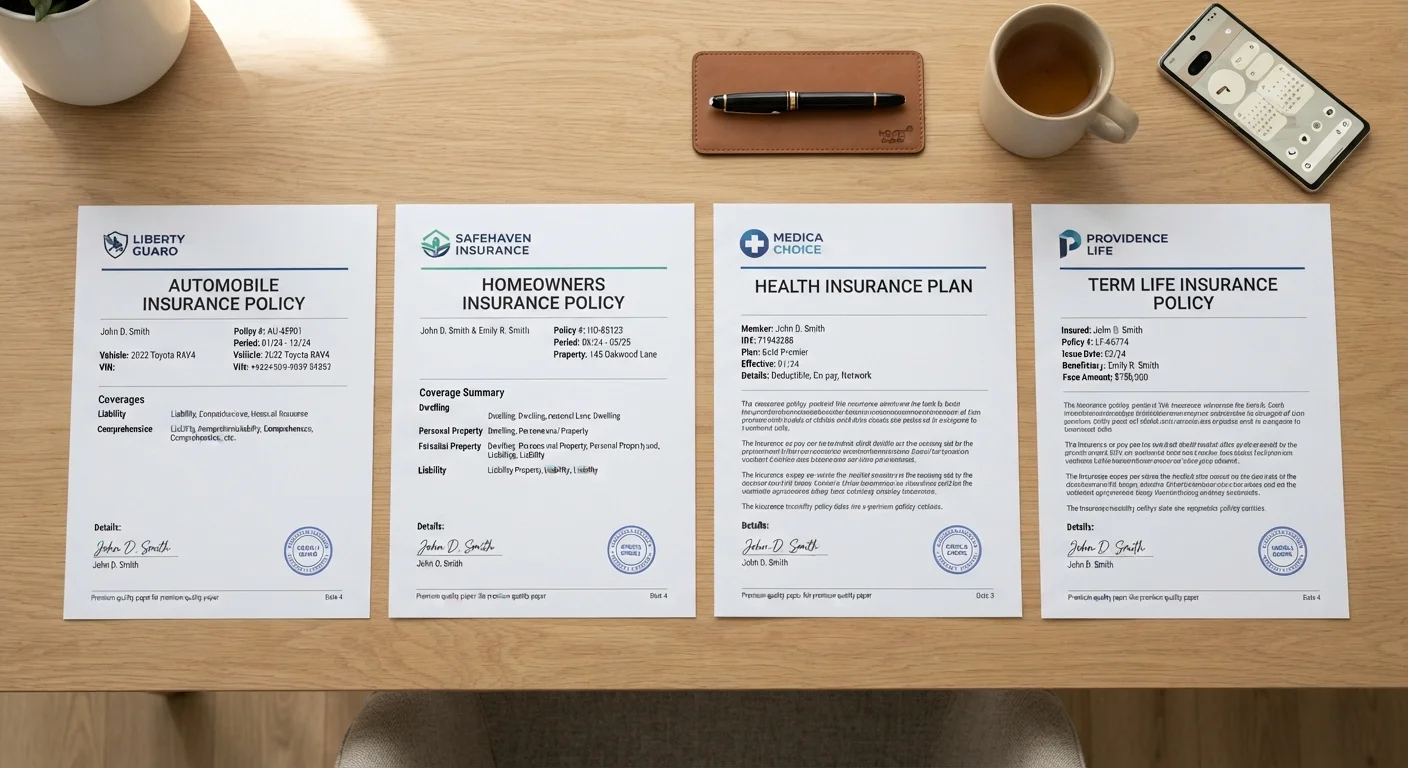
Photo credit: ArticlesHaven.net
In this article
A structured comparison of the four most common personal insurance types — how each is structured, priced, and what it protects.
Key Takeaways
- Each of the four major policy types protects a distinct category of financial risk - vehicle, property, medical, and income replacement.
- Pricing drivers differ significantly: auto uses driving history, health uses age and plan tier, home uses location and rebuild cost, and life uses age and health status.
- Most Americans need more than one type of coverage, but the right mix depends on life stage and financial obligations.
- Gaps between policies are common - knowing what each type excludes is just as important as knowing what it covers.
- This article is general educational information, not personalized insurance or financial advice. Consult a licensed professional for guidance specific to your situation.
What Each Policy Type Is Actually Protecting
Before comparing structure or price, it helps to anchor each policy type to the specific risk it's designed to handle. Conflating them leads to real coverage gaps.
- Auto insurance covers financial liability and physical damage connected to vehicle ownership and operation - including collisions, theft, and injury to others.
- Home insurance protects the physical structure of your home, personal belongings inside it, and your liability if someone is injured on your property.
- Health insurance offsets the cost of medical care - from routine visits to hospitalizations - reducing out-of-pocket exposure to healthcare expenses.
- Life insurance provides a financial benefit to named beneficiaries when the insured person dies, replacing lost income or covering obligations like a mortgage.
For a broader overview of how these categories fit together, see The Main Categories of Insurance Every American Should Understand. If you need a deeper grounding in policy mechanics first, Insurance Policies Explained: What You're Actually Buying is a good starting point.
How Each Policy Is Structured
Each insurance type uses a similar underlying contract - you pay premiums, the insurer covers eligible losses - but the internal structure varies in ways that matter.
| Auto Insurance | Home Insurance | Health Insurance | Life Insurance | |
|---|---|---|---|---|
| What it protects | Vehicle, liability on road | Property, belongings, liability | Medical care costs | Beneficiaries after death |
| Common policy structure | Multiple coverage layers | Single policy with endorsements | Network-based with tiers | Term or permanent |
| Cost-sharing mechanism | Per-claim deductible | Per-claim deductible | Deductible + copay + coinsurance | No deductible (pays or not) |
| Primary pricing factors | Driving record, vehicle, location | Location, home age, rebuild cost | Age, plan tier, location | Age, health status, policy type |
| Legally required? | Yes, in most states (liability) | Required by most mortgage lenders | Not federally mandated currently | No |
| Common notable exclusion | Mechanical breakdown, rideshare | Flood, earthquake damage | Out-of-network, elective care | Contestability period claims |
Deductibles and cost-sharing work differently across types. Auto and home policies typically use a flat deductible per claim. Health insurance layers deductibles with copays and coinsurance, and often has an out-of-pocket maximum. Life insurance (particularly term) generally has no deductible - it either pays or it doesn't, based on whether the policy was in force and the death meets covered conditions.
Coverage triggers also differ. Auto and home policies are event-triggered (a crash, a fire). Health insurance is use-triggered - coverage activates whenever you access care within the network. Life insurance is triggered by death, subject to any contestability period in the early years of a policy.
Auto coverage has several sub-types - liability, collision, comprehensive, and others - each with its own trigger and limit. That layered structure is unique among the four types.
What Drives the Price of Each Policy
Premiums are calculated using risk factors specific to each policy category. Knowing what insurers are measuring helps you understand why quotes vary.
~83%
US adults with some form of health coverage
According to U.S. Census Bureau data, the vast majority of Americans had health insurance coverage, though gaps remain across income and employment groups.
52%
Americans with life insurance coverage
LIMRA's industry research has consistently found that roughly half of US adults carry some form of life insurance, leaving significant coverage gaps in many households.
1 in 20
Homeowners filing a claim each year
Insurance industry data indicates approximately 5-6% of insured homeowners file a claim in any given year, with weather-related damage among the most common triggers.
- Auto: Driving record, vehicle type, annual mileage, location, and credit history (where permitted by state law) are primary factors. Age also plays a role, particularly for younger and older drivers.
- Home: Location matters enormously - proximity to fire stations, flood zones, and crime rates all factor in. The home's age, construction type, and estimated rebuild cost drive the base premium.
- Health: Under the Affordable Care Act, individual market plans can only use age, tobacco use, location, and plan tier (metal level) to set premiums. Employer-sponsored plans work differently - see how group and individual policies differ structurally.
- Life: Age and health status are the biggest drivers. Term life is generally less expensive than permanent (whole or universal) life, which includes a cash-value component.
Review Your Coverage When Life Changes
Major life events - marriage, a new home, a new child, a job change - are natural prompts to revisit your insurance mix. Policies taken out years ago may no longer match your current risk profile or financial obligations. An annual review, even a brief one, can surface gaps before they become costly.
Key Exclusions and Coverage Gaps to Know
Every policy type has limits - what isn't covered is as important as what is. Common exclusions by type:
- Auto: Standard policies don't cover mechanical breakdown, personal belongings left in the car, or rideshare driving without a specific endorsement. See a plain-English reference for auto coverage types for more detail.
- Home: Standard homeowner policies typically exclude flood and earthquake damage - these require separate policies. Business activity run from home may also be excluded.
- Health: Out-of-network care, certain elective procedures, and specific medications may not be covered or may require prior authorization.
- Life: Death during the contestability period due to misrepresentation on the application, and certain exclusions (e.g., suicide within the first two years of many policies) are common.
Gaps between policies are a real risk. Coverage gaps that catch people off guard covers scenarios where even multiple active policies can leave you exposed.
Don't Assume Policies Overlap Cleanly
It's tempting to assume that holding multiple policies means you're fully covered. In practice, each policy has distinct definitions, exclusions, and triggers. A flood that damages your home, for instance, is typically excluded from standard homeowner policies regardless of how comprehensive they appear. Always read the exclusions section of any policy, not just the coverage summary.
Choosing Where to Focus Your Coverage
Most households carry at least two or three of these policy types, but priorities shift based on life stage. A renter in their twenties has different coverage needs than a homeowner with dependents in their forties.
A few general principles help frame the decision:
- Legally required coverage comes first. Auto liability is mandated in nearly every state; skipping it isn't a viable cost-cutting option.
- Protect the largest financial exposures. Your home, your income, and your health are typically your biggest financial risks - coverage in these areas prevents catastrophic out-of-pocket losses.
- Match coverage to current obligations. Life insurance needs are closely tied to dependents and debt. As obligations change, coverage levels may need to change too. Some situations call for more than one life insurance policy - worth understanding as needs evolve.
When comparing options across providers, understanding whether you're working with an agent or a broker affects the range of options you'll see. Insurance agents and brokers serve different roles - a distinction that shapes how you shop.
This article is for general informational purposes only and does not constitute personalized insurance, financial, or legal advice. Coverage terms, exclusions, and regulations vary by provider, policy, and state. Always read policy documents carefully and consult a licensed insurance professional before making coverage decisions.

Author
Articles Haven Editorial Contributor
Articles Haven Editorial Team is the collective byline for our editorial team and contributor network. Articles published under this byline or an editorial pen name are researched, written, and reviewed according to our editorial standards for clarity, consistency, and independence before publication.
View all articles →