
Why a Messy Junk Drawer Is Costing You More Than You Think
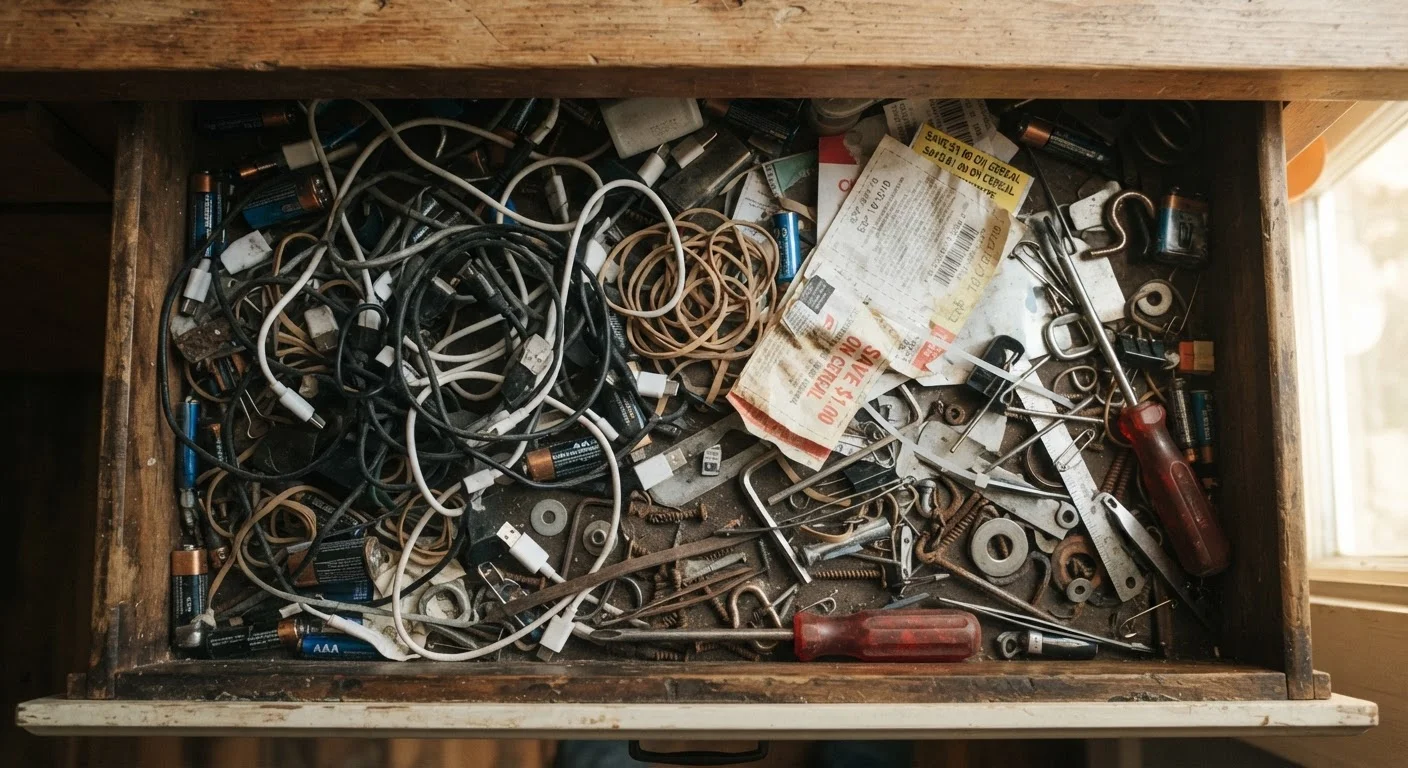
Photo credit: ArticlesHaven.net
In this article
Disorganized catch-all spaces create real friction in daily life. Here's why the junk drawer matters and how to rethink it.
Key Takeaways
- A disorganized junk drawer leads to duplicate purchases and wasted money on items you already own.
- Time lost searching through clutter adds up to meaningful friction in daily household routines.
- Most junk drawer problems stem from the absence of a simple sorting system, not lack of space.
- Treating the junk drawer as a catch-all for everything accelerates the problem and makes it harder to fix.
- Small organizational investments can reduce household stress and prevent ongoing financial waste.
The Real Cost Hiding in That Drawer
Most households have one: a drawer stuffed with batteries that may or may not work, takeout menus from places that closed years ago, stray hardware, and approximately fourteen pens - none of which write. It feels harmless. It's just a drawer.
But that drawer carries a real cost, and it's not just aesthetic. When you can't find something you need, you either waste time hunting or you buy a replacement. Multiply that across a year, and the drain on both your wallet and your patience becomes hard to ignore.
This isn't about achieving a perfectly curated home. It's about recognizing that low-level disorder in high-frequency spaces creates compounding friction - the kind that quietly chips away at your time and budget. See how this connects to broader spending patterns in the hidden cost of disorganized purchasing habits.
55 min
Average time lost daily to disorganization
Research cited by organizational experts suggests adults lose an average of nearly an hour per day searching for misplaced items across the home.
$300+
Estimated annual cost of duplicate household purchases
Consumer behavior studies suggest households regularly rebuy small items - batteries, tape, tools - simply because they couldn't locate what they already owned.
Mistakes That Keep the Drawer Broken
The junk drawer problem is almost never about the drawer itself. It's about the habits and assumptions that feed it. These are the most common errors people make - and why they're harder to break than they look.
Treating the junk drawer as a universal fallback for anything without an obvious home.
Why it happens: It's the path of least resistance - a drawer with no defined purpose absorbs everything. People intend to sort it later, and later never arrives.
Buying duplicates of items already in the drawer because you couldn't find the original.
Why it happens: When a drawer is too full to search quickly, it's faster to buy a new roll of tape or a fresh pack of batteries than to dig. The hidden cost of this habit adds up over months.
Keeping dead, expired, or broken items indefinitely because sorting feels overwhelming.
Why it happens: Once a drawer reaches a critical mass of clutter, the task of dealing with it feels disproportionately large. So it stays untouched, growing slowly worse.
Skipping dividers or containers, leaving everything loose in one open space.
Why it happens: It seems unnecessary - the items are small, the drawer is just a drawer. But without physical zones, loose items shift, tangle, and become harder to retrieve with each use.
Ignoring the junk drawer's role in broader household financial waste.
Why it happens: It's easy to see the junk drawer as a minor nuisance rather than a system failure. The connection between clutter and spending isn't obvious until you track the duplicate purchases.
Don't Reorganize Without Purging First
A common mistake is buying organizers or dividers before removing what doesn't belong. You'll end up neatly storing items that should have been discarded. Always sort and purge before investing in any organizational system, however simple.
How to Rethink the Space Without Overhauling Everything
The fix doesn't require a weekend project or an expensive organizational system. In most cases, three changes make the biggest difference:
- Define what the drawer is actually for. Batteries, basic tools, and a notepad? Fine. Give it a job description and enforce it. Everything else gets relocated or discarded.
- Do a quarterly purge, not an annual one. Expired coupons, dead batteries, and mystery cables accumulate fast. A five-minute sort every few months prevents the pile from becoming unmanageable.
- Use physical dividers, even improvised ones. Loose items in an open drawer migrate and tangle. Repurposed small boxes or low-cost drawer inserts create zones that hold categories in place.
If the junk drawer is a symptom of a broader pattern - papers, receipts, and warranties piling up alongside the clutter - it's worth addressing your document storage separately. Managing paper versus digital records is a related challenge with its own practical trade-offs.
For households where the disorder extends well beyond one drawer, high-impact home organization changes that cost almost nothing offers a grounded starting point. And if clutter feels persistent and hard to address despite repeated attempts, household disorder can sometimes signal something more than clutter - worth understanding the distinction.
Small Spaces, Outsized Impact
High-frequency spaces like the junk drawer get touched multiple times a day. Friction there - even minor friction - compounds over hundreds of interactions per year. Solving a small organizational problem in a high-use space often delivers more practical benefit than tackling a larger, less-used space first.

Author
Articles Haven Editorial Contributor
Articles Haven Editorial Team is the collective byline for our editorial team and contributor network. Articles published under this byline or an editorial pen name are researched, written, and reviewed according to our editorial standards for clarity, consistency, and independence before publication.
View all articles →