
Tree Planting Dos and Don'ts Most Homeowners Get Wrong
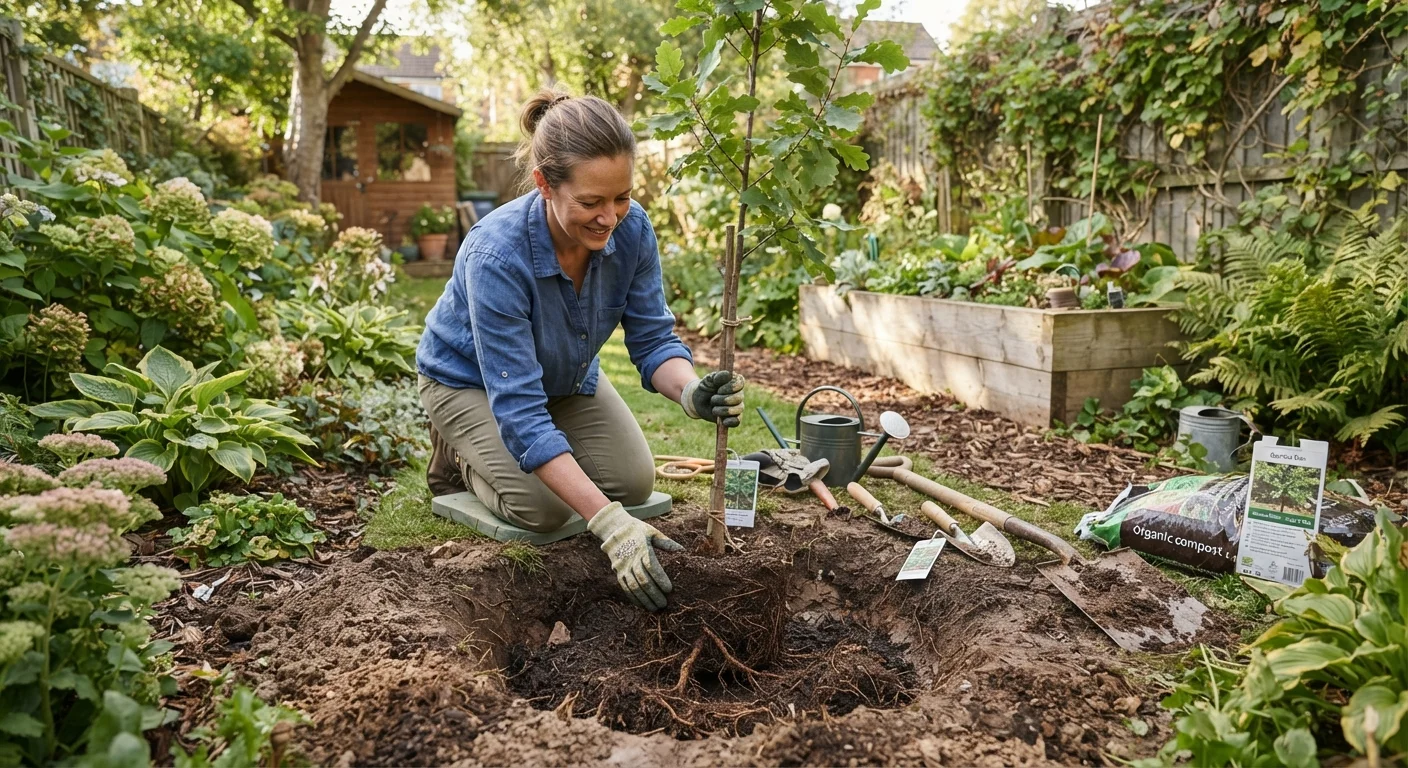
Photo credit: ArticlesHaven.net
In this article
Planting depth, hole size, and watering schedules all affect whether a new tree thrives or declines. Avoid the most common first-year errors.
Key Takeaways
- Planting too deep is one of the most common and damaging mistakes new tree planters make.
- The planting hole should be wide but not deep - roughly two to three times the root ball's diameter.
- Mulch is beneficial only when applied correctly; piling it against the trunk causes rot and pest problems.
- Watering schedules matter more than volume - infrequent deep watering beats daily shallow wetting.
- Staking is rarely necessary and can harm trunk development if left in place too long.
Why the First 12 Months Decide Everything
A tree's fate is largely determined before it reaches 12 months in the ground. The choices made at planting - hole geometry, depth, soil handling, and follow-up watering - create conditions the tree either adapts to successfully or spends years struggling against. The frustrating part is that most of these errors aren't visible right away. A tree planted too deep may look fine through its first spring before quietly declining in years two or three.
Understanding what actually supports healthy root establishment cuts through a lot of well-meaning but counterproductive habits. The mistakes below are drawn from consistent patterns identified by arborists and university extension programs across the country - not edge cases, but everyday errors made in backyards all the time.
~90%
Tree failures tied to establishment errors
Arborist and extension horticulture sources consistently note that the vast majority of young tree deaths trace back to planting and first-year care mistakes rather than disease or pests.
2-3×
Recommended hole width vs. root ball diameter
University extension guidelines broadly recommend a planting hole two to three times wider than the root ball to encourage healthy lateral root development.
1 year+
Minimum establishment period for most trees
Most cooperative extension services estimate that trees require at least one full growing season - and often two to three years - before they're considered fully established.
The Most Damaging Planting Mistakes - and How to Avoid Them
Each of the errors below is fixable, and most are preventable with a small shift in approach before you pick up a shovel.
Planting the tree too deep in the hole.
Why it happens: Many homeowners assume deeper equals more stable. Nursery containers also sometimes bury the root flare, so people inadvertently replicate that depth.
Digging a hole that is too narrow and deep rather than wide and shallow.
Why it happens: It feels intuitive to match hole depth to root ball depth, and digging narrow is less work. However, roots spread outward far more than downward.
Overwatering in the first weeks, then neglecting water once the tree looks established.
Why it happens: Anxiety about a new planting drives daily watering. Once leaves look perky, homeowners often stop - but trees need consistent deep moisture for a full growing season or more.
Staking the tree too tightly and leaving stakes in place too long.
Why it happens: Staking feels like insurance against wind damage. Homeowners install it, then forget about it through subsequent seasons.
Amending the backfill soil heavily with compost or other organic matter.
Why it happens: Rich soil sounds beneficial. Many gardening resources promote soil amendment for planting holes as a matter of course.
Choosing a tree species poorly suited to the planting site.
Why it happens: Homeowners often select trees based on appearance at the nursery rather than mature size, root behavior, soil needs, or regional climate suitability.
Planting Depth Is Non-Negotiable
Burying a tree's root flare - the flared base where the trunk meets the roots - is a leading cause of slow decline in young trees. Even an inch or two too deep can restrict oxygen to roots and invite fungal rot. Always confirm the root flare sits at or slightly above the finished soil grade before backfilling.
If you're weighing whether a tree or a garden bed suits a particular spot, it's worth reading about raised beds versus in-ground planting to understand soil and drainage trade-offs that apply broadly to all in-ground plantings.
Mulch, Staking, and Aftercare: Finishing Strong
Once the tree is in the ground at the right depth, aftercare determines whether that strong start holds. Mulch is one of the most effective tools available - it moderates soil temperature, retains moisture, and suppresses competing weeds. But application method matters enormously.
Volcano Mulching Harms, Not Helps
Piling mulch in a cone shape against the trunk traps moisture against bark, promotes fungal disease, and can attract boring insects. Keep mulch 2-4 inches away from the trunk and spread it in a flat layer 2-3 inches deep across the root zone. More mulch is not always better.
Staking and pruning decisions made in the first year also carry long-term consequences. Avoid pruning for shape in the first season - remove only dead or damaged wood. The tree needs its full leaf canopy to drive photosynthesis and root energy. For guidance on timing future pruning correctly, pruning timing mistakes outlines the most common errors season by season.
Consistent deep watering through the first full growing season remains the single highest-impact action a homeowner can take after planting. Set a reminder if needed - it's easy to assume a tree is managing on its own before its roots have the reach to do so.

Author
Articles Haven Editorial Contributor
Articles Haven Editorial Team is the collective byline for our editorial team and contributor network. Articles published under this byline or an editorial pen name are researched, written, and reviewed according to our editorial standards for clarity, consistency, and independence before publication.
View all articles →