
Organic vs. Synthetic Fertilizers: What the Difference Means in Practice
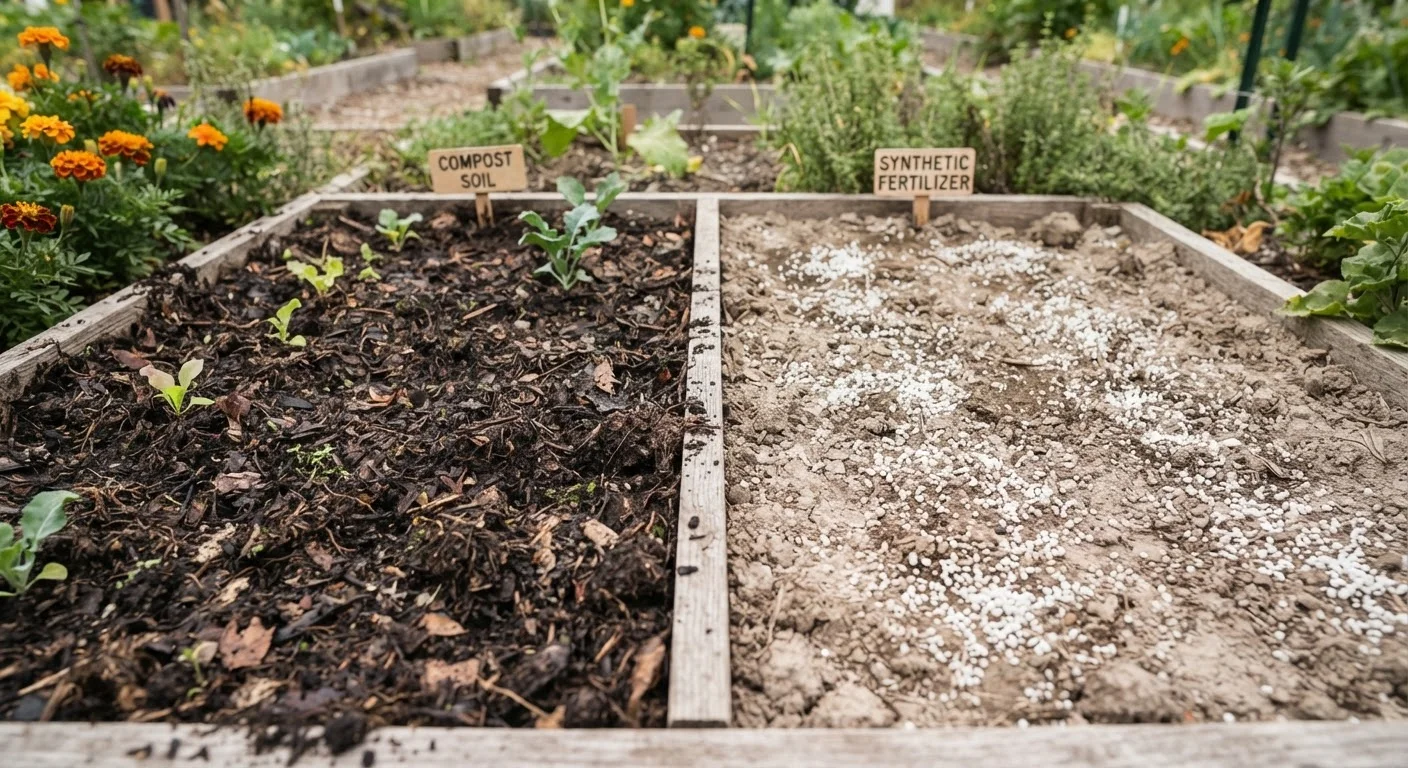
Photo credit: ArticlesHaven.net
In this article
Organic and synthetic fertilizers both deliver nutrients, but they behave very differently in soil. Here's a clear, unbiased comparison.
Key Takeaways
- Organic fertilizers feed soil biology over time; synthetic fertilizers deliver nutrients directly to plant roots quickly.
- Synthetic options carry a higher risk of nutrient runoff and salt buildup if over-applied.
- Organic fertilizers improve soil structure long-term; synthetics generally do not.
- Neither type is universally superior - the right choice depends on your soil, plants, and goals.
- Soil testing before fertilizing is the most reliable way to avoid waste and plant stress.
What Sets Them Apart at the Root Level
Both organic and synthetic fertilizers supply the three primary macronutrients plants need - nitrogen (N), phosphorus (P), and potassium (K) - but they do so through entirely different mechanisms.
Organic fertilizers are derived from natural sources: composted manure, bone meal, blood meal, kelp, worm castings, and similar materials. They contain nutrients bound in organic compounds that must be broken down by soil bacteria, fungi, and other organisms before plants can absorb them. That breakdown takes time - days to weeks depending on soil temperature and moisture - but the process simultaneously feeds the microbial ecosystem that makes healthy soil function.
Synthetic fertilizers are manufactured from mineral salts and chemical processes. Their nutrients are already in forms that dissolve readily in water, meaning plant roots can absorb them almost immediately after application. The tradeoff is that this speed and precision come without the biological benefits organic matter provides.
Understanding this distinction helps explain nearly every practical difference between the two - from how quickly you see results to what happens to your soil over years of use. See also how soil structure affects nutrient availability for context on why the delivery pathway matters.
| Criterion | Organic Fertilizers | Synthetic Fertilizers |
|---|---|---|
| Nutrient availability | Slow release (days to weeks) | Fast release (within days) |
| Soil biology impact | Feeds and supports microbes | Neutral to minimal impact |
| Risk of over-application | Low - self-limiting release | Higher - burn risk possible |
| Nutrient precision | Variable by source | Exact N-P-K ratios labeled |
| Cost per application | Often higher upfront | Generally lower upfront |
| Long-term soil structure | Improves over time | No structural benefit |
| Leaching / runoff risk | Lower | Higher, especially nitrogen |
Practical Trade-Offs Every Gardener Should Know
The choice between organic and synthetic isn't simply philosophical - it has real, measurable effects on your garden's performance and the work you'll do year after year.
~50%
Synthetic nitrogen lost before plant uptake
Research from the University of California Cooperative Extension estimates that roughly half of applied synthetic nitrogen can be lost to leaching, volatilization, or runoff depending on conditions.
6-12 weeks
Typical release window for slow-release organics
Most granular organic fertilizers break down over a six-to-twelve week period under typical soil temperatures, providing a sustained nutrient supply rather than a single spike.
Speed vs. Longevity
Synthetic fertilizers act fast. If a tomato plant is yellowing due to nitrogen deficiency mid-season, a water-soluble synthetic can show visible improvement within a week. Organic sources can't match that timeline. However, many organic fertilizers release nutrients over six to twelve weeks, reducing the need for repeated applications and providing a more steady supply.
Salt Buildup and Burn Risk
Synthetic fertilizers are mineral salts, and excess applications can raise soil salinity, damaging roots and disrupting the moisture balance plants depend on. This is commonly called fertilizer burn. Organic fertilizers rarely cause this problem because their nutrient release is naturally throttled by microbial activity.
Soil Biology Over Time
Repeated reliance on synthetics doesn't actively harm soil biology in all cases, but it does nothing to support it. Organic fertilizers, by contrast, increase organic matter content, improve drainage in clay soils, improve water retention in sandy soils, and support the microbial populations that naturally suppress some plant diseases. For a broader view of how these inputs compare with other soil amendments, see when to use compost, mulch, or fertilizer.
Test Your Soil Before You Fertilize
Many gardeners apply fertilizer based on habit rather than need, which can waste money and stress plants. A basic soil test - available through most cooperative extension services and garden centers - will tell you which nutrients are actually lacking and in what amounts. This applies whether you're choosing organic or synthetic: more fertilizer is rarely better, and the right starting point is knowing what your soil already has.
Environmental Considerations
Synthetic nitrogen is particularly prone to leaching through soil before plants can absorb it, especially in sandy or heavily watered conditions. That leached nitrogen can contaminate groundwater and contribute to algal blooms in waterways. Organic forms release nitrogen more gradually, which generally reduces this risk - though large applications of any nutrient source can still contribute to runoff if poorly timed.

Author
Articles Haven Editorial Contributor
Articles Haven Editorial Team is the collective byline for our editorial team and contributor network. Articles published under this byline or an editorial pen name are researched, written, and reviewed according to our editorial standards for clarity, consistency, and independence before publication.
View all articles →