
Why Most New Year's Health Resolutions Collapse by February
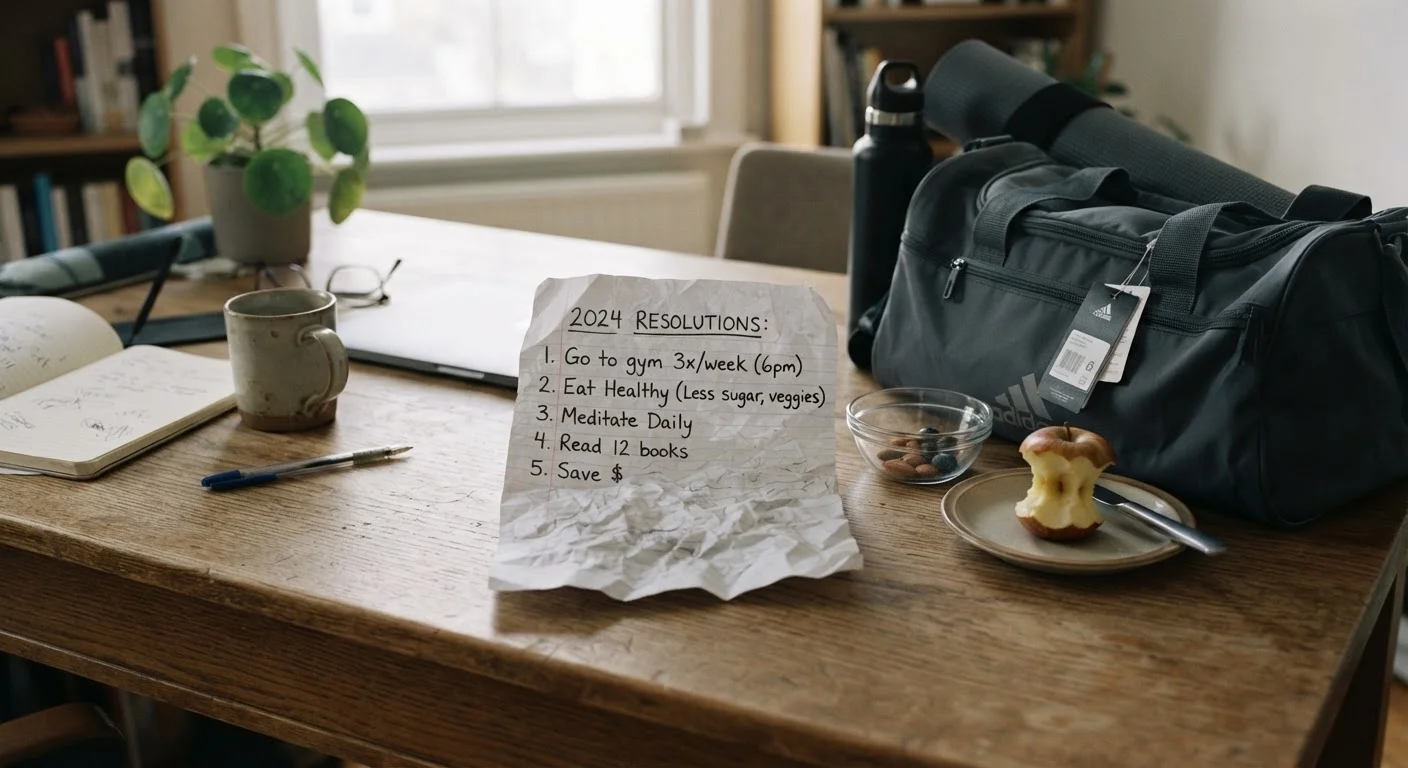
Photo credit: ArticlesHaven.net
The common behavioral traps that derail wellness goals — and what lasting change actually requires.
Key Takeaways
- Overly ambitious goals set in January routinely collapse because they demand too much change too fast.
- Motivation-dependent habits are fragile; environment and routine design are more reliable drivers.
- Tracking progress realistically and celebrating small wins significantly improves long-term follow-through.
- Most habit failures are predictable and correctable - not signs of personal inadequacy.
The Resolution Cycle Most People Recognize
January arrives with genuine intent. People cut calories, join gyms, commit to sleeping eight hours, and swear off processed food - all at once. By mid-February, a large share of those commitments have quietly dissolved. This isn't a motivation problem. It's a design problem.
Research in behavioral science consistently shows that the way most people set health goals - big, vague, and emotionally charged - almost guarantees early drop-off. Understanding why resolutions fail is the first step to building changes that actually hold. For a broader foundation on this, see the complete guide to habit building.
Setting multiple large goals simultaneously rather than focusing on one behavior at a time.
Why it happens: The optimism of a fresh calendar year makes dramatic overhauls feel achievable. People bundle sleep, diet, exercise, and stress management into a single resolution package.
Relying on motivation as the primary engine for new habits.
Why it happens: Motivation is high in January and feels like a reliable force. People assume that feeling is durable, so they build plans that require it to show up every day.
Setting goals that are vague or unmeasurable, like 'get healthy' or 'eat better.'
Why it happens: Broad goals feel inspiring without feeling intimidating. The lack of specificity seems freeing at first.
Treating any setback as evidence the goal has failed.
Why it happens: All-or-nothing thinking is common and often intensified by the high expectations attached to New Year's resolutions. One missed session feels like a broken streak that can't be recovered.
Ignoring the environment while relying entirely on willpower.
Why it happens: People underestimate how much their physical surroundings shape behavior. They focus on mental commitment while leaving their environment set up for old habits.
What Sustainable Change Actually Requires
Lasting health behavior is less about discipline and more about structure. When your environment, schedule, and expectations are aligned with a goal, you're far less reliant on daily willpower - which fluctuates with stress, sleep, and circumstance.
~80%
Resolutions abandoned by February
Various behavioral studies and self-reported surveys consistently estimate the majority of New Year's resolutions fail within the first six to eight weeks.
66 days
Average time to form a new habit
A frequently cited 2010 study published in the European Journal of Social Psychology found habit formation averaged around 66 days, with a wide range depending on complexity.
One of the most underrated strategies is starting smaller than feels productive. A 10-minute walk repeated consistently builds more long-term fitness than an aggressive gym plan that burns out in three weeks. The case for incremental change explains this compounding effect in more depth.
Aggressive Starts Often Backfire
Jumping from a sedentary routine into daily intense workouts is one of the most common January patterns - and one of the most reliable paths to burnout or injury. Intensity that feels manageable on day one can be unsustainable by week two. Gradual progression isn't a compromise; it's how lasting fitness adaptation actually works. Always consult a healthcare provider before significantly increasing physical activity, especially if you have existing health conditions.
Your surroundings also matter more than most people realize. If healthy food isn't accessible, if your workout clothes are buried in a closet, or if your evenings have no built-in wind-down time, motivation alone won't compensate. The role of environment in habit formation is worth understanding before redesigning any routine.
Finally, one missed day is not a failed resolution. The people who recover quickly from a skipped workout or an indulgent meal tend to sustain habits far longer than those who treat a single slip as total collapse. If you notice your habits becoming rigid rules rather than flexible supports, the line between supportive and restrictive routines is worth examining.
Failure Is Predictable - Not Personal
Most people who abandon health resolutions interpret the outcome as a personal failing. Behavioral science suggests otherwise: the goal structure, not the person, is usually at fault. Poorly designed habits fail by default - even for highly disciplined people. Reframing setbacks as design feedback, rather than character flaws, is one of the most evidence-supported shifts you can make.
This article is for general informational and educational purposes only. It does not constitute medical advice. Please consult a qualified healthcare professional before making significant changes to your diet, exercise, or wellness routine.

Author
Articles Haven Editorial Contributor
Articles Haven Editorial Team is the collective byline for our editorial team and contributor network. Articles published under this byline or an editorial pen name are researched, written, and reviewed according to our editorial standards for clarity, consistency, and independence before publication.
View all articles →