
How Environment Shapes Your Health Habits More Than Motivation Does
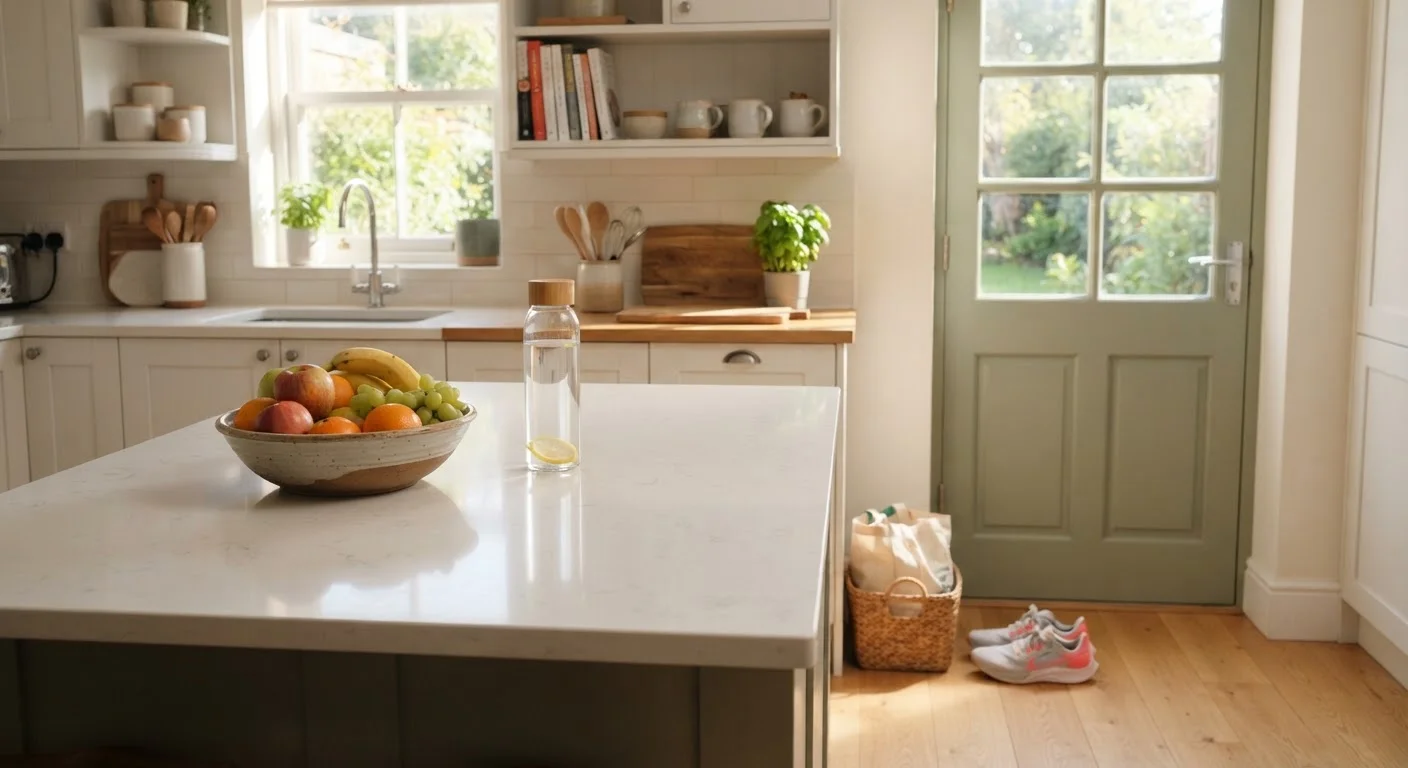
Photo credit: ArticlesHaven.net
In this article
Why your surroundings — not willpower — often determine whether healthy behaviors happen consistently.
Key Takeaways
- Your physical environment influences health habits more reliably than motivation or willpower.
- Visible, accessible healthy options get chosen more often than hidden or inconvenient ones.
- Small environmental changes - like rearranging a kitchen counter - can shift behavior measurably.
- Designing your surroundings for defaults removes the need for repeated decision-making.
- Environment design works alongside habit formation, not instead of it.
Why Willpower Is the Wrong Tool for the Job
Most people approach health goals the same way: decide to do better, muster motivation, and push through on willpower. It works - briefly. Then life gets busy, motivation dips, and the habit collapses. This isn't a character flaw. It reflects a genuine mismatch between the tool being used and the task at hand.
Motivation is unreliable by nature. It peaks when a goal is new and fades as novelty wears off. Willpower, similarly, is a finite resource - researchers sometimes describe it as depleting across decisions made throughout a day. Relying on either to sustain a health habit over weeks or months sets most people up for frustration rather than success.
What behavioral science suggests instead is that the design of your surroundings does much of this work more effectively. When your environment defaults to a healthy choice, the habit doesn't depend on your mood that morning. That's the core shift worth understanding. For a deeper look at how habits form neurologically, see what a habit actually is and why your brain makes them hard to break.
“Every choice is made in a context. If we want people to make better choices, we need to change the context - not lecture people about their willpower.”
— Richard Thaler, Nobel laureate in Economics and co-author of 'Nudge'
How Environment Quietly Steers Your Decisions
Behavioral economists use the term choice architecture to describe how the structure of options around us influences what we pick - often without conscious awareness. Cafeteria studies, for example, have consistently shown that placing healthier foods at eye level and at the front of a line increases their selection, even when identical foods are available elsewhere.
The same dynamic plays out in your own home. A fruit bowl on the counter gets reached for more often than fruit stored in the back of a refrigerator drawer. A water bottle left on your desk gets used more than one stored in a cabinet. Running shoes placed near the door get put on more readily than shoes buried in a closet.
~35%
Of daily behaviors estimated to be habitual
Research published in behavioral psychology literature suggests roughly a third of everyday actions are habit-driven rather than deliberately chosen.
2-3x
More likely to select visible food options
Studies in food environment research consistently show that foods placed at eye level or on countertops are selected significantly more often than those stored out of sight.
None of these outcomes depend on motivation. They depend on what's in front of you and easy to reach. This is why environment design is sometimes described as making the healthy choice the default - the thing that happens when you're not actively thinking about it.
Practical Ways to Redesign Your Environment
You don't need to renovate your home or overhaul your schedule to apply this concept. Small, targeted changes to your existing environment can shift behavior meaningfully.
- Kitchen counter test: What's visible? Whatever sits on the counter gets eaten. Swap chips for a bowl of whole fruit or nuts.
- Water visibility: A filled water bottle at your workstation is one of the simplest friction-reducing moves available. See our guide on how to actually make drinking more water happen.
- Workout prep: Lay out exercise clothes or equipment the night before. Removing the setup step lowers the barrier to starting.
- Phone and screen placement: Charging devices outside the bedroom reduces blue-light exposure at night - a change that supports sleep without requiring nightly discipline.
- Social environment: Who you spend time with shapes expectations and norms around health behaviors. Research on social connection as a health habit underscores how much this matters.
Start With One Room, One Change
Rather than redesigning your entire environment at once, pick a single space - your kitchen counter, your desk, your bedside table - and make one concrete change. Give it two weeks before evaluating. Small, sustained changes tend to outperform dramatic overhauls; see the case for incremental change.
The goal isn't a perfect environment - it's a more favorable one. Even partial changes reduce the cognitive load of healthy decision-making across a day.
Environment Design as Part of a Broader Habit Strategy
Environment design is most effective when paired with other evidence-informed habit strategies, not used in isolation. Understanding healthy habit building from the ground up gives this approach fuller context - including how to identify which habits are worth targeting and how to sustain them over time.
It's also worth noting that environment design works in the other direction. Cluttered, stressful, or chaotic surroundings can increase cortisol, disrupt sleep, and make healthy choices feel harder. Spaces that support calm - good lighting, reduced noise, organized surfaces - tend to support better overall mental wellness as well.
Environment Doesn't Replace Professional Guidance
Environment design is a behavioral strategy with solid research backing, but it's not a substitute for professional health advice. If you're managing a specific condition, working toward a significant health goal, or feeling stuck despite environmental changes, speaking with a healthcare provider or behavioral health specialist is a worthwhile step.
Finally, keep balance in mind. Healthy routines can become rigid rules if they're applied without flexibility. Environment design should feel enabling, not constraining. The aim is to make good defaults easier - not to eliminate all choice or spontaneity from daily life.
This article provides general health information and education only. It is not a substitute for advice from a qualified healthcare professional. Individual health needs vary - please consult a licensed provider for personal guidance.
Frequently Asked Questions

Author
Articles Haven Editorial Contributor
Articles Haven Editorial Team is the collective byline for our editorial team and contributor network. Articles published under this byline or an editorial pen name are researched, written, and reviewed according to our editorial standards for clarity, consistency, and independence before publication.
View all articles →