
What Community Health Centers Offer and Who Qualifies to Use Them
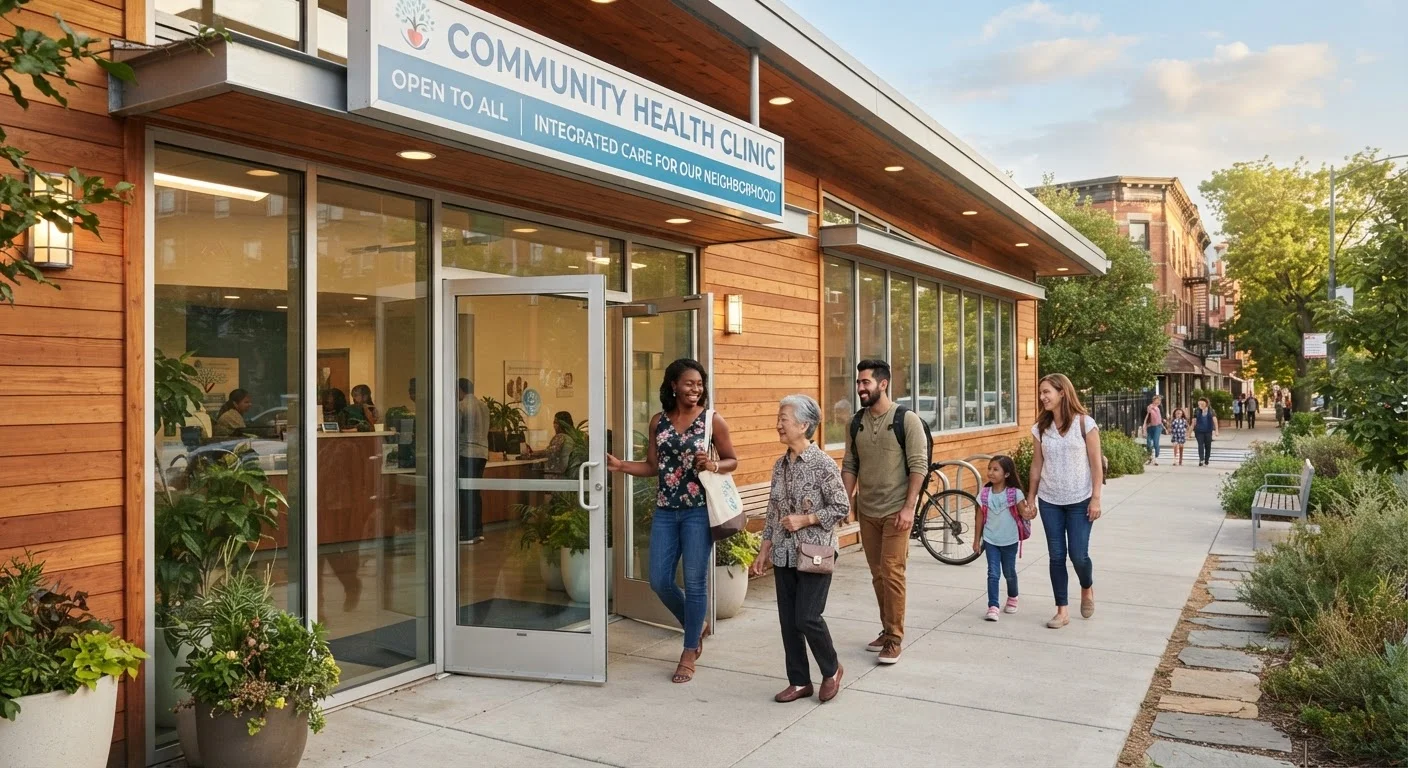
Photo credit: ArticlesHaven.net
In this article
Federally qualified health centers provide care on a sliding-fee scale. Learn what services they offer and how eligibility is typically determined.
Key Takeaways
- FQHCs must serve all patients in their area regardless of insurance or ability to pay.
- Fees are adjusted on a sliding scale based on household income and family size.
- Services typically include primary care, dental, mental health, and pharmacy.
- Immigration status does not affect eligibility at most federally qualified health centers.
- Over 1,400 FQHC organizations operate more than 14,000 clinic sites across the U.S.
What Makes a Health Center 'Federally Qualified'
The term Federally Qualified Health Center isn't just a title - it carries legal obligations. To earn and keep FQHC designation from the Health Resources and Services Administration (HRSA), a clinic must meet a specific set of requirements: it must be located in a designated medically underserved area or serve a medically underserved population, it must provide care regardless of ability to pay, it must use a sliding-fee discount schedule, and it must be governed by a board of which a majority are patients of the center.
In return, FQHCs receive federal grant dollars through Section 330 of the Public Health Service Act and qualify for enhanced Medicaid and Medicare reimbursement. That funding structure is what makes reduced-cost care financially viable. FQHCs also receive coverage under the Federal Tort Claims Act, which functions as their malpractice insurance - another cost offset that helps keep operations affordable.
Look-Alike Centers Are Similar but Distinct
Some clinics operate as 'FQHC Look-Alikes' - they meet most FQHC requirements and must also use a sliding-fee scale, but they don't receive Section 330 grant funding. Look-alikes still serve uninsured patients at reduced cost and qualify for enhanced Medicaid reimbursement, making them a comparable option in areas where full FQHCs aren't available.
What Services Are Typically Available
FQHCs are required to offer a core set of services, though the exact depth of services varies by location and center size. At a minimum, most community health centers provide:
- Primary care - routine checkups, chronic disease management (diabetes, hypertension, asthma), and sick visits
- Preventive services - immunizations, cancer screenings, and well-child exams
- Dental care - cleanings, fillings, extractions, and basic oral health services
- Mental health and substance use services - counseling, psychiatric evaluation, and sometimes medication-assisted treatment
- Pharmacy services - many FQHCs participate in the 340B drug pricing program, which allows them to offer medications at significantly reduced cost
- Enabling services - transportation assistance, translation, case management, and health education
Larger centers may also offer OB-GYN care, vision services, HIV care, and pediatric specialty visits. For services beyond their scope, FQHCs typically maintain referral networks.
30M+
Patients served by FQHCs annually
According to HRSA data, federally qualified health centers serve more than 30 million patients across the United States each year.
62%
FQHC patients at or below poverty level
HRSA reports that roughly 62% of FQHC patients live at or below 100% of the Federal Poverty Level.
14,000+
FQHC clinic sites nationwide
More than 1,400 FQHC organizations operate over 14,000 clinic delivery sites across all 50 states, D.C., and U.S. territories, per HRSA.
Who Qualifies - and How Eligibility Actually Works
There's a common misconception that community health centers are exclusively for people on Medicaid or with very low incomes. In practice, anyone who lives or works in an FQHC's service area can use it. The sliding-fee scale applies to uninsured patients and those who can't afford their cost-sharing - it doesn't bar higher-income patients from being seen.
Here's how eligibility and payment typically break down:
- Uninsured patients
- Assessed for the sliding-fee discount based on income relative to the Federal Poverty Level. Those below a certain threshold may pay nominal or no fees.
- Medicaid and CHIP enrollees
- Accepted at all FQHCs; the center bills Medicaid directly. See how CHIP works for families for more on that program's basics.
- Medicare enrollees
- Accepted and billed under Medicare's FQHC benefit, which covers primary care visits. For a broader comparison of those programs, see how Medicaid and Medicare differ.
- Privately insured patients
- Also accepted; the center bills private insurance like any provider. The sliding fee does not typically apply unless there are out-of-pocket gaps.
Immigration status does not affect access. FQHCs serve all residents of their service area regardless of citizenship or documentation.
Bring Income Documentation to Your First Visit
To qualify for the sliding-fee discount, most FQHCs will ask for proof of income - recent pay stubs, a tax return, or a self-attestation form if you have no documentation. Bringing this to your first appointment speeds up the process and ensures you're charged the correct discounted rate from the start.
How Community Health Centers Fit Into the Broader Care Landscape
FQHCs fill a specific gap: they function as a primary care home for patients who might otherwise have none. They are not emergency rooms, and they are not urgent care clinics, though some operate extended hours. If you're weighing where to go for a particular health situation, choosing the right care setting can help clarify which option fits which scenario.
For patients who are uninsured or underinsured, FQHCs often make sense as a starting point because they can connect patients with enrollment assistance for programs like Medicaid. Understanding how Medicaid eligibility varies by state matters here, because enrollment can change what you owe at an FQHC significantly. More broadly, understanding how insurance coverage and costs work can help you make better use of any care setting, including FQHCs.
This article is for general informational purposes only and does not constitute medical or insurance advice. Consult a qualified healthcare provider for personal health decisions, and verify program details directly with your local health center or a licensed benefits counselor.
Frequently Asked Questions

Author
Articles Haven Editorial Contributor
Articles Haven Editorial Team is the collective byline for our editorial team and contributor network. Articles published under this byline or an editorial pen name are researched, written, and reviewed according to our editorial standards for clarity, consistency, and independence before publication.
View all articles →