
Telehealth vs. In-Person Care: Matching the Visit Type to Your Situation
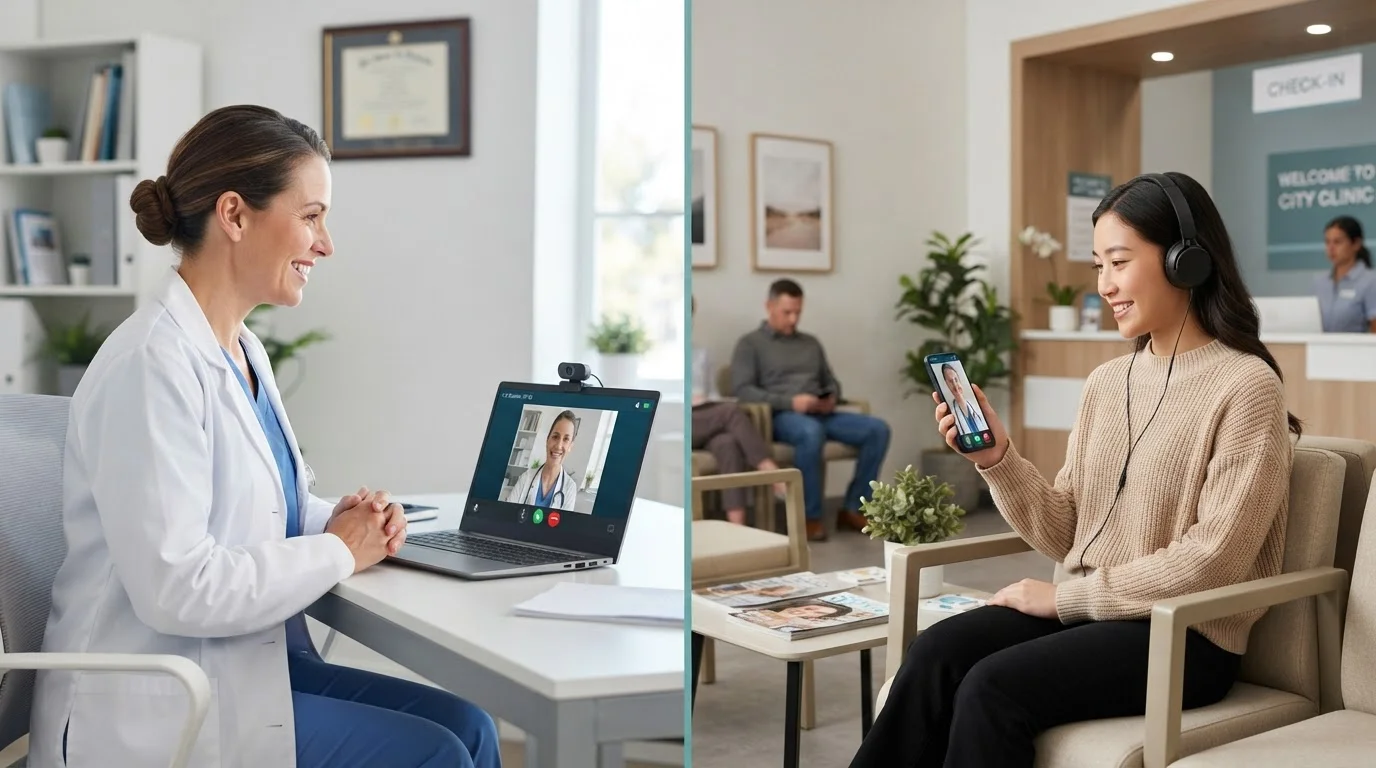
Photo credit: ArticlesHaven.net
In this article
Telehealth is convenient, but it isn't always the right fit. Explore how virtual and in-person visits differ across common care scenarios.
Key Takeaways
- Telehealth works well for routine, low-acuity visits but has clear limits for physical diagnosis.
- In-person care remains essential when a provider needs to examine, test, or treat you directly.
- Your insurance coverage for telehealth may differ significantly from in-person visit coverage.
- Some situations - like chest pain or high fever in a child - always warrant in-person or emergency care.
- Hybrid approaches, using telehealth for some needs and in-person for others, often make practical sense.
Why the Choice Isn't Always Obvious
Telehealth expanded rapidly in recent years, and many patients now expect to have a choice between virtual and in-person visits. That choice, however, isn't purely about convenience - it has real implications for the quality and completeness of your care.
The core distinction is straightforward: telehealth connects you with a clinician through video, phone, or messaging, while in-person care involves a physical visit where a provider can directly examine you. What makes the decision harder is that both formats serve legitimate purposes, and the right answer depends heavily on what you're being seen for.
Think of it similarly to how the channel you choose shapes your experience when shopping - as explored in this comparison of online and in-store shopping. Neither option is universally superior; the situation determines the fit.
| Criterion | Telehealth | In-Person Care |
|---|---|---|
| Physical examination | Not possible | Full hands-on assessment |
| Lab tests & imaging | Cannot be performed | Available on-site or by referral |
| Scheduling convenience | Often same-day or faster | May involve longer wait times |
| Travel required | None | Yes - clinic or hospital visit |
| Best for chronic disease management | Stable, established conditions | New or worsening conditions |
| Mental health support | Well-supported for many needs | Preferred for complex cases |
| Insurance coverage consistency | Varies by plan and platform | Generally more standardized |
| Emergency suitability | Not appropriate | Essential - use ER or 911 |
Where Telehealth Genuinely Holds Up
Telehealth performs well in a clearly defined range of scenarios. Conditions that are already diagnosed, stable, and being actively managed are strong candidates. Medication follow-ups, minor respiratory symptoms like cold or mild sinus congestion, urinary tract infection symptoms in adults with a prior history, and routine chronic disease check-ins - such as for diabetes or hypertension - are commonly handled effectively via video.
Mental health support is another area where telehealth has shown solid footing. Individual and group therapy formats both translate reasonably well to virtual delivery for many people, and psychiatric medication management visits often don't require physical presence.
Convenience is real and meaningful. No commute, no waiting room exposure, and easier scheduling can reduce barriers that otherwise lead people to skip care altogether - which is a genuine health risk in itself.
37%
US adults who used telehealth in the past year
According to the CDC's National Center for Health Statistics, roughly 37% of US adults reported a telehealth visit in a recent 12-month period.
~80%
Telehealth users reporting satisfaction with their visit
A McKinsey & Company consumer health survey found high satisfaction rates among patients who used telehealth for appropriate visit types.
6x
Growth in telehealth use since 2019
McKinsey estimates telehealth utilization stabilized at levels roughly 38 times higher than pre-pandemic baselines across some specialties, though overall rates have moderated.
Where In-Person Care Remains Necessary
The limits of telehealth become clear when a provider needs their hands, tools, or a lab. Skin conditions may look very different on a screen versus in direct light. Abdominal pain, joint swelling, lymph node changes, or heart rhythm concerns require physical assessment. Anything requiring blood draws, cultures, imaging, or biopsies simply cannot be completed remotely.
Pediatric care, in particular, often benefits from direct evaluation - a provider can assess a child's breathing pattern, hydration status, or ear canal in ways a camera cannot replicate. And any situation that might be an emergency should bypass telehealth entirely.
If you're choosing or evaluating a primary care practice as your ongoing care base, these questions about primary care practices can help you assess how well they coordinate between virtual and in-person options. Similarly, understanding when urgent care or an ER is the right call - rather than either telehealth or a scheduled visit - is covered in detail in this guide on care settings.
When to Skip the Appointment Queue Entirely
Chest pain, difficulty breathing, sudden severe headache, signs of stroke, heavy bleeding, or loss of consciousness are all situations requiring emergency services - not a telehealth call or a scheduled appointment. Call 911 or go to the nearest emergency room. Telehealth providers are generally trained to redirect you in these situations, but don't rely on a video call as a first step when time is critical.
Coverage, Cost, and Platform Quality
Insurance coverage for telehealth has expanded significantly, but it remains inconsistent. Some plans cover virtual visits at the same cost-sharing rate as in-person visits; others apply different copays or may exclude certain telehealth platforms from their network. Before scheduling a telehealth visit, it's worth confirming with your insurer what's covered - and whether the specific platform you're using is considered in-network.
Not all telehealth platforms are equivalent in quality or scope. Evaluating telehealth platforms beyond surface convenience - including credential verification, prescribing policies, and EHR integration with your existing providers - is worth doing before you commit to one for ongoing use.
For those managing both physical and behavioral health needs, integrated care models offer a third path that coordinates both under a unified care team, which can reduce the friction of navigating separate telehealth and in-person providers.
This article is for general informational purposes only and does not constitute medical advice. Always consult a qualified healthcare professional for questions about your specific health situation, symptoms, or treatment options.

Author
Articles Haven Editorial Contributor
Articles Haven Editorial Team is the collective byline for our editorial team and contributor network. Articles published under this byline or an editorial pen name are researched, written, and reviewed according to our editorial standards for clarity, consistency, and independence before publication.
View all articles →