
Understanding the Monroney Sticker: Reading a New Car's Window Label
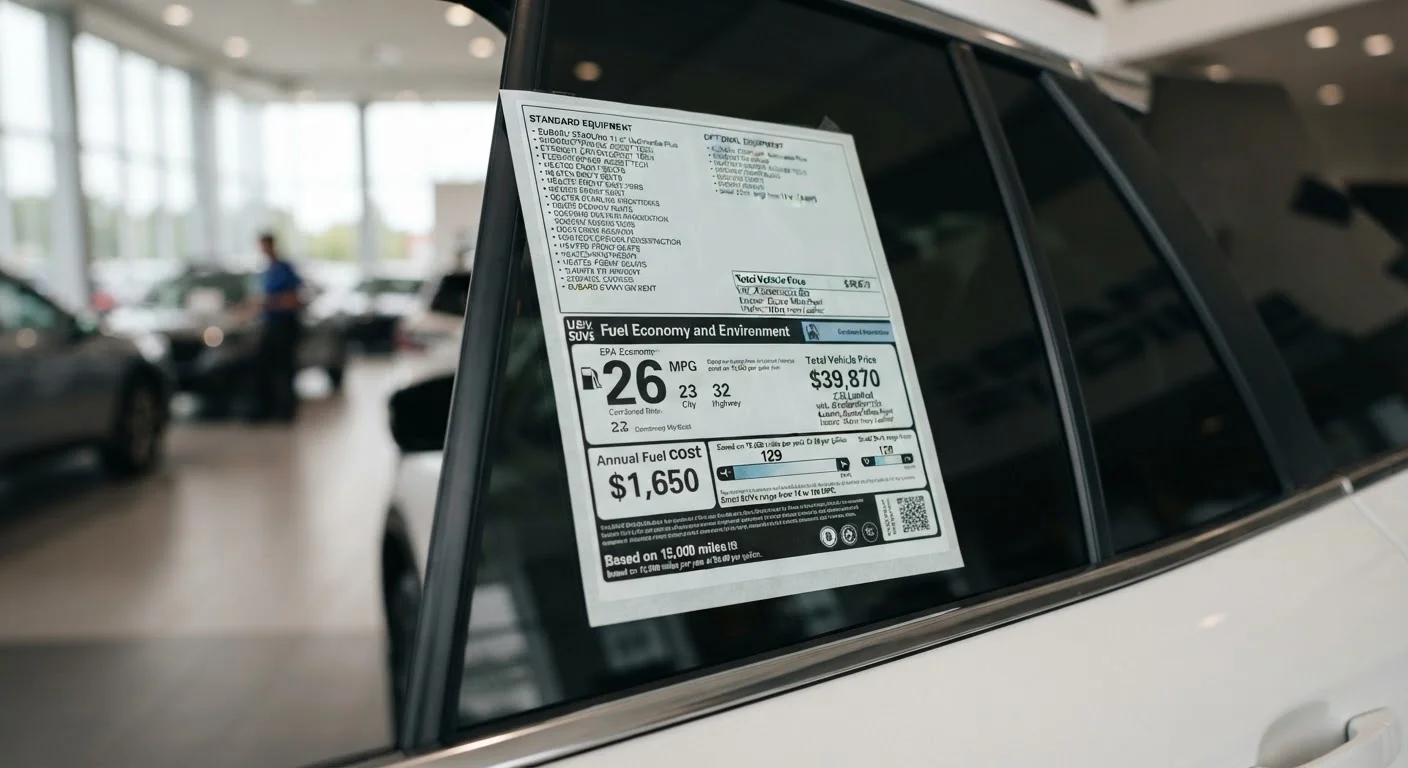
Photo credit: ArticlesHaven.net
In this article
The window sticker contains everything from EPA ratings to standard features. Here's how to read every section before you negotiate.
What Is the Monroney Sticker?
The Monroney sticker - officially called the Manufacturer's Suggested Retail Price (MSRP) label - is a federally mandated document attached to the window of every new passenger vehicle sold in the United States. It takes its name from Oklahoma Senator Mike Monroney, whose 1958 legislation required automakers to disclose pricing and equipment information directly to consumers.
Removing or altering the sticker before sale is a federal violation. That legal backing means you can trust the sticker as a baseline of verified information - though it's worth understanding what each section actually tells you, and what it doesn't.
| Legal Basis | Automobile Information Disclosure Act (1958) |
| Who Creates It | The vehicle manufacturer, not the dealership |
| Removal Before Sale | Federal violation; only the buyer may remove it |
| Fuel Economy Ratings | Set by the U.S. Environmental Protection Agency (EPA) |
| Safety Ratings Source | National Highway Traffic Safety Administration (NHTSA) |
| MSRP vs. Sale Price | MSRP is a starting point; actual transaction price is negotiable |
Think of it like reading any other disclosure document. Just as the nutrition label on packaged food organizes information in a standardized format, the Monroney sticker follows a defined structure so shoppers can compare vehicles side by side.
Breaking Down Each Section
Vehicle Identification and Basic Info
At the top of the sticker you'll find the make, model, trim level, and model year, along with the Vehicle Identification Number (VIN). The VIN is a 17-character code unique to that specific vehicle - useful for running a history check or confirming the car's spec matches the sticker.
Standard and Optional Equipment
This section lists what comes with the vehicle at its base trim level, followed by any factory-installed options or packages the dealer ordered. Each optional item includes an individual price. This is where the math starts adding up: a moonroof package, premium audio, or driver-assist bundle all appear here with their respective costs.
Monroney Sticker
The federally required window label on new cars disclosing price, equipment, and fuel economy information. Mandated by the Automobile Information Disclosure Act of 1958.
MSRP
Manufacturer's Suggested Retail Price. The price the automaker recommends for the vehicle, not necessarily what a dealer will accept. Options and destination charges are added on top of the base figure.
EPA Fuel Economy Rating
Standardized city, highway, and combined MPG estimates produced by the U.S. Environmental Protection Agency through controlled testing. Real-world results typically differ.
VIN
Vehicle Identification Number. A unique 17-character alphanumeric code assigned to each vehicle. Used to verify specs, check history reports, and confirm title records.
Destination Charge
A fixed fee set by the manufacturer covering transportation of the vehicle from the factory to the dealership. It appears on the sticker and is not subject to dealer negotiation.
Trim Level
A specific configuration of a vehicle model that defines its standard features and base price. Higher trims typically include more equipment and carry a higher MSRP.
MSRP Breakdown
The bottom of the sticker shows a price summary. The base MSRP is the starting price for that trim. Add all the listed options, and you arrive at the total vehicle MSRP - sometimes labeled "Total Suggested Retail Price." Destination and delivery charges are listed separately and are non-negotiable (they're set by the manufacturer, not the dealer).
The MSRP is a starting point, not a final price. Dealers may sell above or below it depending on demand and inventory. Understanding the sticker prepares you to negotiate from a position of knowledge rather than reacting to the first number offered.
Fuel Economy and Environmental Information
The EPA fuel economy section - often in a distinct yellow-and-black block - shows city, highway, and combined miles-per-gallon (MPG) ratings. These are standardized estimates based on lab testing. Real-world results vary depending on driving habits, climate, and vehicle load.
This section also includes an annual fuel cost estimate (calculated at a standard price per gallon and assumed miles driven), a fuel economy range for similar vehicles, and a greenhouse gas and smog rating on a 1-10 scale. Higher numbers mean lower emissions.
5-15%
Typical real-world MPG gap below EPA estimate
The EPA acknowledges that actual fuel economy varies; its own estimates are based on standardized lab conditions, not real traffic or climate.
1-10
EPA smog and greenhouse gas rating scale
Scores appear on the Monroney sticker; a 10 indicates the lowest emissions in that vehicle class.
Because these specs are often more nuanced than they appear, it's worth reading how headline specs can mislead buyers before drawing firm conclusions from fuel economy numbers alone.
Safety Ratings
Some Monroney stickers include a space for federal safety ratings from the National Highway Traffic Safety Administration (NHTSA). If ratings are available, they appear as a 1-5 star scale across categories including overall, frontal crash, side crash, and rollover resistance. Not all vehicles have ratings published at time of sale - for the most current data, check NHTSA's website directly.
Using the Sticker Before and After the Sale
Before you sit down to negotiate, photograph the sticker on any vehicle you're seriously considering. This creates a record of exactly what options are on that specific car and what the manufacturer says they're worth.
Dealer-Added Stickers Are Not the Same
Dealerships sometimes attach a secondary sticker listing additional markups - such as "market adjustment" fees, paint protection film, or accessories. These are dealer-set charges, not manufacturer-set ones, and are generally negotiable. Don't confuse dealer add-on stickers with the official Monroney label, which is always produced by the manufacturer and carries the standard format.
After purchase, the sticker helps you verify that the contract reflects what you actually agreed to buy. Compare the VIN and option list on your signed paperwork to the sticker's details. Discrepancies - even minor-looking ones - are worth flagging before you leave the lot. For a broader checklist of what to confirm at delivery, see what every new car owner should handle before driving off the lot.
If you're financing the purchase, keep in mind that the vehicle price on the sticker feeds into your loan amount and therefore your monthly payments. Once you've sorted out the sticker price, reviewing documentation like your auto insurance declarations page follows naturally - both documents shape your ongoing ownership costs.

Author
Articles Haven Editorial Contributor
Articles Haven Editorial Team is the collective byline for our editorial team and contributor network. Articles published under this byline or an editorial pen name are researched, written, and reviewed according to our editorial standards for clarity, consistency, and independence before publication.
View all articles →