
Flight Alerts and Price Tracking: How They Work and Their Limits
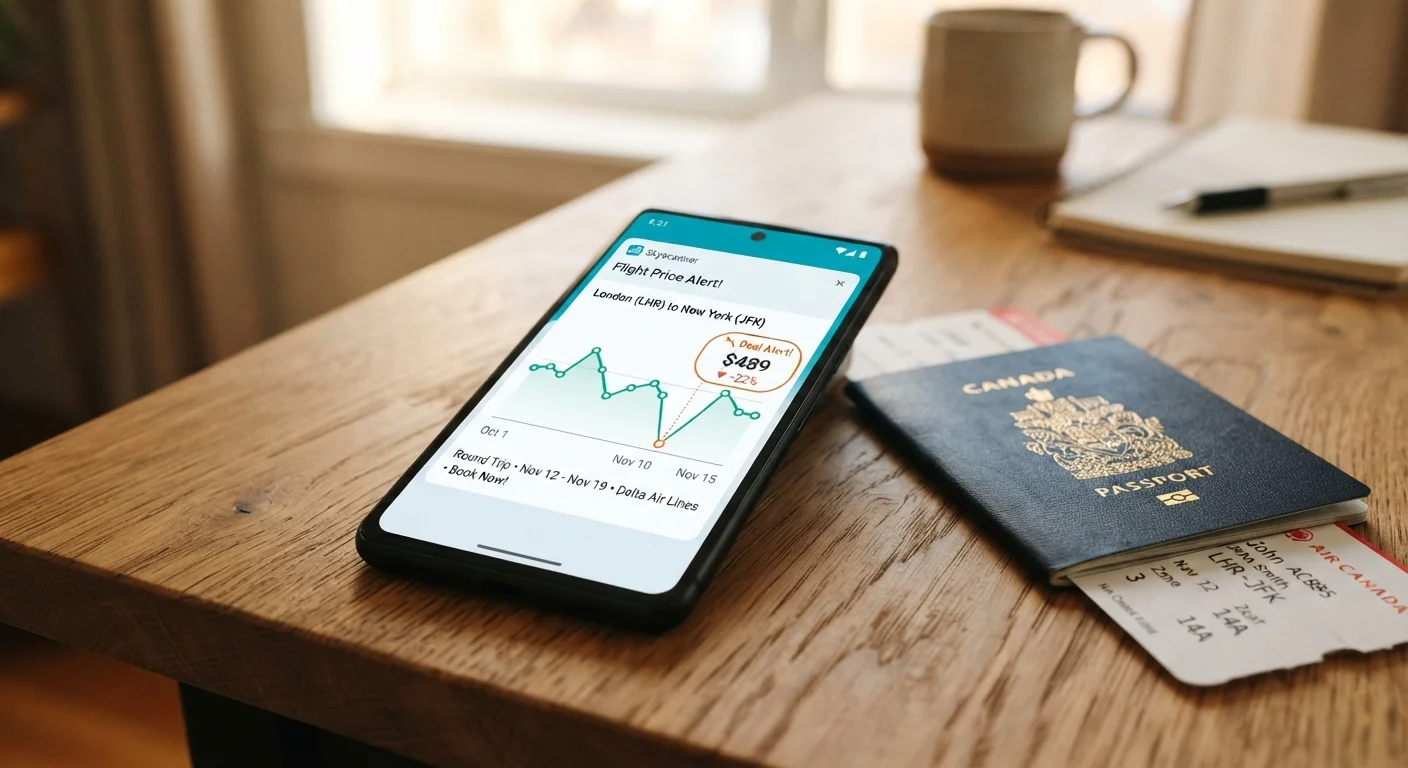
Photo credit: ArticlesHaven.net
In this article
Learn what fare alert tools actually monitor, how they notify you, and what they can't predict.
Key Takeaways
- Flight alerts notify you of fare changes but cannot guarantee you'll catch the lowest price.
- Most tools check prices at intervals, so alerts can arrive after a fare has already risen again.
- Alerts work best for flexible travelers who can act quickly when a drop is detected.
- No alert tool can reliably predict when fares will fall - they only report what has already happened.
- Combining alerts with an understanding of fare structures improves your chances of acting wisely.
What Flight Alert Tools Actually Monitor
Fare alert tools are built around a simple loop: save a search, check prices periodically, send a notification when something changes. What they monitor is the published fare for a given origin-destination pair and date range - the price visible through the aggregator or metasearch platform the tool is connected to.
That matters because not every fare is visible in every place. As explained in our article on how flight search tools pull and display prices, metasearch engines and booking platforms often draw from Global Distribution Systems (GDS) rather than directly from every airline. Some carriers - particularly budget airlines - distribute fares selectively, meaning an alert tool may not see all available prices for a route.
Most tools let you set a target price or simply alert you to any significant change. The definition of "significant" varies by platform. Some trigger alerts at a fixed dollar threshold; others use percentage-based logic or compare against a historical baseline for the route.
Alerts Track Published Fares, Not All Fares
Many low-cost and regional carriers distribute fares exclusively through their own websites, bypassing the aggregator feeds that most alert tools monitor. If your route includes budget carriers, always check their direct sites alongside any alert you've set up - you may find fares that never appear in a third-party alert.
The Lag Problem: Why Alerts Aren't Real-Time
The most important limitation travelers overlook is timing. Airline fares can change within minutes - sometimes because a batch of seats at a given price class sold out, sometimes because an airline's revenue management system recalibrated demand. Alert tools, however, don't monitor fares in true real-time. They poll at intervals - often every few hours - which creates a structural lag between a fare movement and the notification you receive.
The practical result: by the time an alert reaches your inbox, the price you were notified about may no longer exist. It could have risen back to its previous level or sold out entirely. Conversely, a fare might drop and recover without ever triggering an alert if the change happened between polling windows.
This is why acting quickly matters when you do receive an alert - but it's equally why you should verify the current price on the booking page before assuming the deal is still live.
Hourly+
Typical fare polling frequency for alert tools
Most fare tracking services refresh prices every few hours rather than in real time, creating an inherent gap between a price change and the notification delivered to the traveler.
~500
Estimated daily fare adjustments per major airline route
Industry observers note that major carriers can adjust fares hundreds of times per day on a single route based on seat inventory and demand signals, far outpacing the polling speed of most alert systems.
What Alerts Can't Do: The Prediction Problem
Fare alerts report what has happened. They don't - and cannot - tell you what will happen next. Some platforms display historical price graphs for a route, which can give a rough sense of typical fare ranges, but these are descriptive, not predictive. Airfare pricing is driven by a mix of seat inventory, competitive pressure, demand surges, schedule changes, and airline policy decisions that no external tracking tool can model reliably.
For a deeper look at why fares move the way they do, the article on the forces behind airfare fluctuation is worth reading before you set expectations around alert tools.
The upshot: if you're holding out for "the lowest possible price," alerts won't reliably deliver it. What they can do is help you recognize when a fare is meaningfully lower than what you've been seeing - and let you decide whether that's good enough to book.
Use Historical Fare Graphs as Context, Not a Crystal Ball
When a platform shows you a price history chart for a route, use it to understand the typical fare range - not to time a purchase. Historical patterns don't guarantee future behavior, especially around holidays, schedule changes, or sudden demand shifts. A fare at the lower end of its historical range is worth noting; it's not a promise the price will drop further.
How to Use Alerts Effectively
Alerts work best for travelers with flexibility on travel dates or booking timing. If you can move your trip by a few days, an alert showing a dip on an adjacent date gives you real options. If your dates are fixed and non-negotiable, the value of alerts is more limited - you're watching a narrow window of prices with fewer levers to pull.
Timing your monitoring period also matters. Seasonal demand cycles affect how much fare variation you're likely to see and when. Setting an alert six weeks before a peak-season holiday, for instance, will likely show you less dramatic swings than monitoring the same route during a shoulder period.
One practical approach: set alerts across a date range rather than a single date. This surfaces the natural fare variation across nearby travel days, giving you a clearer picture of where the relative value sits. When an alert comes in, check the fare rules carefully before booking - especially if the price is a non-refundable restricted fare. Our overview of what refundable and non-refundable airfares actually cover explains what you're agreeing to when you lock in a low fare.
Finally, keep an eye on common flight booking misconceptions - including the belief that watching a fare for long enough will always reward you with a better price. Sometimes the fare you see today is the floor, not the ceiling.
Frequently Asked Questions

Author
Articles Haven Editorial Contributor
Articles Haven Editorial Team is the collective byline for our editorial team and contributor network. Articles published under this byline or an editorial pen name are researched, written, and reviewed according to our editorial standards for clarity, consistency, and independence before publication.
View all articles →