
When Five-Star Reviews Should Make You Skeptical
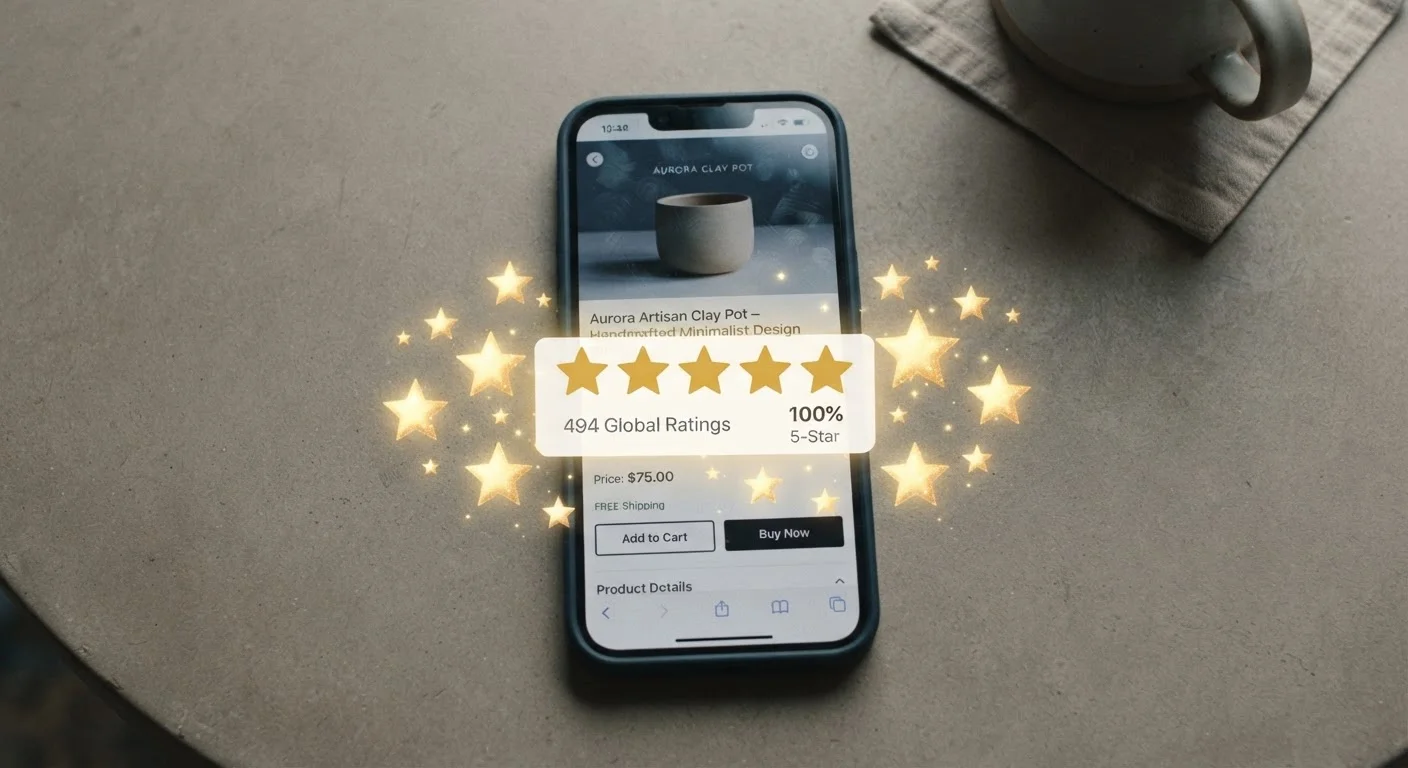
Photo credit: ArticlesHaven.net
Perfect ratings aren't always a good sign. Learn the patterns that suggest review manipulation and how to find more trustworthy signals.
Key Takeaways
- A perfect 5.0 rating with few reviews is often a red flag, not a green light.
- Review patterns - timing, language, and volume - reveal more than the star average.
- Cross-checking ratings across multiple platforms helps surface more reliable signals.
- Moderate, detailed reviews from verified purchasers tend to be the most trustworthy.
Why Perfect Scores Can Signal a Problem
Most shoppers treat a 4.9 or 5.0 star rating as a shortcut to confidence. That's understandable - the logic seems sound. But review systems on major retail and service platforms are routinely gamed, and a flawless score is one of the cleaner signals that something may be off.
Genuine products and services almost always accumulate a mix of ratings over time. Real customers have different expectations, notice different flaws, and express satisfaction differently. A perfectly uniform rating - especially on a product with hundreds of reviews - statistically defies normal variation. When every reviewer is delighted, ask yourself why.
This isn't about assuming bad faith everywhere. It's about applying the same critical eye you'd use on a vague product description to the ratings sitting right next to it.
Treating a 5.0 average as proof of quality without checking the review count or distribution.
Why it happens: Star averages are displayed prominently, and round numbers feel authoritative. Shoppers rarely scroll to the histogram.
Ignoring the language patterns across reviews - generic praise repeated almost word-for-word.
Why it happens: When browsing quickly, repetitive phrasing blends together. Readers skim for sentiment, not specificity.
Relying on a single platform's rating without cross-referencing elsewhere.
Why it happens: Shoppers tend to stay within one ecosystem - one retailer, one app store, one booking site - without thinking to check others.
Dismissing low-star reviews as outliers posted by unreasonable customers.
Why it happens: There's a natural tendency to discount negativity, especially when the overall score is high and the critical reviews are few.
Assuming 'Verified Purchase' labels guarantee an authentic review.
Why it happens: Platform verification badges feel official and trustworthy, which makes shoppers less likely to question them.
How to Find More Reliable Signals
Once you know what inflated ratings look like, there are practical ways to find more grounded information.
42%
Online reviews estimated to be fake or unreliable
A 2023 analysis by the World Economic Forum cited estimates suggesting a substantial share of online consumer reviews may be inauthentic or incentivized.
4.0-4.7
Star range associated with highest purchase conversion
Research published by Spiegel Research Center found that products rated in the 4.0-4.7 range often convert better than those rated 5.0, as perfect scores raise credibility concerns.
Look at the rating distribution, not just the average. A product with 600 five-star reviews and 4 one-star reviews follows a very different pattern than one where reviews are spread across all five levels. Most platforms show a histogram - use it. A healthy distribution typically has a peak in the 4-5 range but a visible tail of lower scores.
Filter by critical reviews first. Reading 3-star and 2-star reviews often tells you more about real-world use than the glowing ones. These tend to be more specific: battery life shorter than claimed, fabric quality that didn't hold up after washing, customer service that was hard to reach.
Cross-reference across platforms. If a product appears on multiple retail sites or a service is listed on more than one review platform, compare averages. Significant gaps - say, 4.8 on one platform and 3.4 on another - suggest platform-specific manipulation. For a deeper look at how individual reviews can be faked, these specific patterns and techniques are worth bookmarking.
Incentivized Reviews Are Still Common
Some sellers offer discounts, refunds, or free products in exchange for positive reviews - a practice that violates platform policies but remains widespread. These reviews may carry a 'Verified Purchase' badge because a real transaction did occur. The FTC requires disclosure when a reviewer received compensation, but enforcement is inconsistent. Always look for specificity and variation in reviews, not just badge status.
Check when reviews were posted. A sudden spike of five-star reviews over a one-week window - especially after a long gap in activity - can indicate an incentivized review campaign. Steady, ongoing review activity over months is more credible.
These same principles apply beyond product shopping. If you're evaluating accommodation, understanding the difference between structured rating systems and crowd-sourced scores - as covered in this breakdown of hotel ratings - helps put any single number in context.
Before making a final decision based on reviews, it's also worth vetting the seller itself. These practical steps for evaluating online sellers can help you avoid counterfeit goods and marketplace fraud regardless of how good the ratings look.

Author
Articles Haven Editorial Contributor
Articles Haven Editorial Team is the collective byline for our editorial team and contributor network. Articles published under this byline or an editorial pen name are researched, written, and reviewed according to our editorial standards for clarity, consistency, and independence before publication.
View all articles →