
How to Spot a Fake Online Review: Signals, Patterns, and Tools
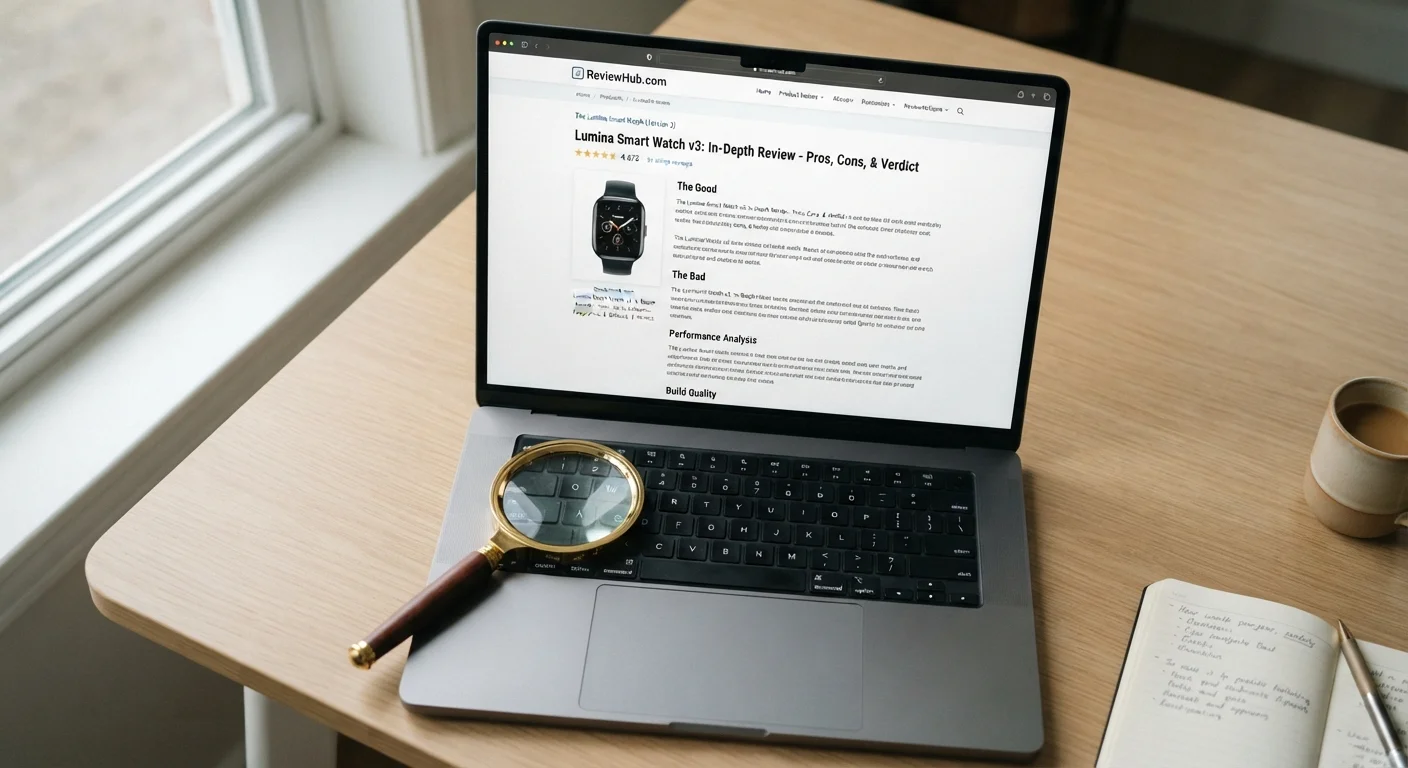
Photo credit: ArticlesHaven.net
In this article
Fake reviews are widespread on major platforms. These specific patterns and practical techniques help you identify them before making a decision.
Key Takeaways
- Clusters of five-star reviews posted within days of each other are a common red flag.
- Generic, emotionally vague language often signals a paid or incentivized review.
- Free browser tools can analyze review patterns and flag suspicious activity.
- Cross-referencing multiple platforms gives a more reliable picture than any single source.
Why Fake Reviews Are Worth Taking Seriously
Fake reviews are not a minor nuisance. Studies from consumer advocacy groups and academic researchers consistently find that a significant portion of reviews on major e-commerce platforms are either incentivized, fabricated, or manipulated in some way. For everyday shoppers, that distortion can translate directly into wasted money on products that don't perform as advertised.
The problem exists across product categories - electronics, supplements, household goods, and personal care items are particularly affected. Understanding the signals doesn't require technical expertise; it requires knowing what patterns to look for before you trust a rating. For a fuller picture of how to approach any purchase with skepticism, it's worth pairing this with a critical look at product descriptions too.
~30-40%
Estimated share of online reviews that may be fake
Independent researchers and consumer advocacy organizations have estimated that a substantial minority of reviews on major platforms are inauthentic, though exact figures vary by category and platform.
93%
Consumers influenced by online reviews before buying
Multiple consumer research surveys have found that the large majority of online shoppers consult reviews before making a purchase decision.
Patterns That Suggest Manipulated Reviews
No single signal is conclusive, but several patterns together should raise your caution level:
Check the reviewer's profile and posting history
Fake reviewers often have a very short account history, limited review diversity, and post clusters of five-star reviews in a short window. A profile with dozens of reviews all posted within a week - especially across unrelated product categories - is a strong indicator of a review farm.
Look at the timing distribution of reviews
Organic reviews accumulate gradually over time. A sudden spike in reviews - especially right after a product launch or around a particular date - suggests coordinated posting, which can indicate a paid campaign or manipulation.
Read for vague, emotional language without specifics
Fake reviews frequently use sweeping positive language without describing the actual product experience. Phrases like 'absolutely love it!' or 'life-changing product' without context are common in manufactured feedback.
Cross-reference ratings across multiple platforms
A product praised overwhelmingly on one platform but rated poorly or barely reviewed on another may have concentrated manipulation on the first site. Different platforms have different fraud detection capabilities.
Filter by lowest-rated reviews and sort by most recent
One-star and two-star reviews are harder to game because sellers who pay for fake reviews typically target positive ratings. Sorting by recent also surfaces reviews posted after any review purge or manipulation campaign.
Tools That Do Some of the Work for You
Several free browser extensions analyze review data automatically and flag anomalies you'd take much longer to spot manually. These tools pull metadata - reviewer history, posting dates, language patterns - and surface a reliability score.
Free Tools Worth Bookmarking
Browser extensions like Fakespot and ReviewMeta analyze review patterns automatically and assign a grade or reliability score to product listings. They're not infallible, but they can quickly flag outliers and save you significant research time. Neither tool requires account creation to use basic features.
For a broader pre-purchase process that includes review verification, the comparison shopping routine is worth bookmarking. And if you're evaluating a third-party seller rather than a product, vetting the seller directly adds another layer of protection.
What Trustworthy Reviews Actually Look Like
Genuine reviews tend to share common characteristics. They are specific - mentioning the actual use case, how long the reviewer has owned the item, and what did or didn't work. They often include minor criticisms even in positive reviews, because real experiences are rarely perfect. Verified purchase labels add some credibility, but they're not foolproof since some platforms allow incentivized buyers to qualify as verified.
Verified Purchase Doesn't Mean Unbiased
A 'Verified Purchase' badge confirms that an account associated with the review made a purchase - it does not confirm the review is honest or uninfluenced. Sellers sometimes offer refunds or gift cards in exchange for positive reviews, which can still result in a verified purchase label. Treat verification as one weak signal, not a guarantee of authenticity.
Perfect ratings should prompt extra scrutiny, not automatic confidence. A product with 4.2 stars across 800 reviews is often more trustworthy than one with a suspiciously round 5.0 across 40. Before you finalize any decision, the pre-checkout verification checklist can help you catch anything you might have missed.

Author
Articles Haven Editorial Contributor
Articles Haven Editorial Team is the collective byline for our editorial team and contributor network. Articles published under this byline or an editorial pen name are researched, written, and reviewed according to our editorial standards for clarity, consistency, and independence before publication.
View all articles →