
Standing Desks vs. Traditional Desks: The Ergonomics Behind the Choice
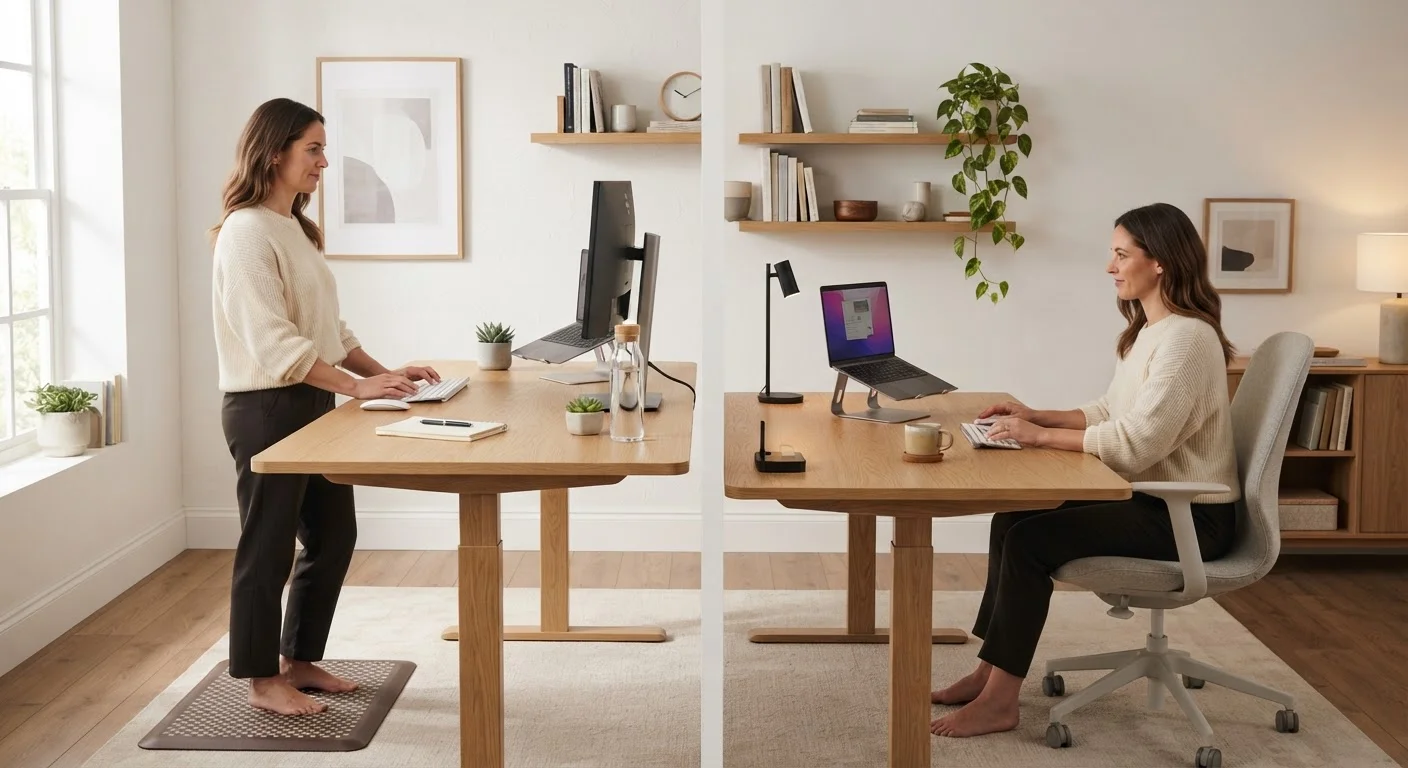
Photo credit: ArticlesHaven.net
In this article
Standing desks promise health benefits, but the reality is nuanced. Compare both desk types on posture, productivity, and cost.
Key Takeaways
- Standing desks can reduce prolonged sitting but aren't a cure-all for sedentary work habits.
- Traditional desks are generally more affordable and widely available in ergonomic configurations.
- Alternating between sitting and standing - not standing all day - is what ergonomics research supports.
- Both desk types require proper monitor height, chair or mat support, and correct arm positioning.
- Individual health conditions, workspace size, and budget should all factor into the decision.
What the Ergonomics Research Actually Says
The case for standing desks is often overstated in marketing. The honest picture from ergonomics research is more nuanced: prolonged standing is not inherently better than prolonged sitting - both are associated with discomfort and musculoskeletal strain when held for too long. What research does support is postural variety: regularly alternating between sitting and standing throughout the day.
A widely cited framework from occupational health researchers suggests breaking up seated work every 30-60 minutes, ideally with light movement. Height-adjustable desks make that easier without requiring you to leave your workstation entirely. But a standing desk used exclusively for standing provides limited benefit and may introduce new problems - leg fatigue, varicose vein risk, and lower limb discomfort with extended use.
Traditional desks, when paired with a well-adjusted ergonomic chair, monitor at eye level, and keyboard at elbow height, can meet most ergonomic standards effectively. The desk itself is less important than the full workstation setup around it.
| Criterion | Standing Desk | Traditional Desk |
|---|---|---|
| Typical price range | Higher (especially motorized) | Lower to moderate |
| Posture support | Good when alternating positions | Good with proper chair and setup |
| Setup complexity | Moderate to high | Low to moderate |
| Adjustability | Height-adjustable (key feature) | Fixed height |
| Space requirements | Larger footprint typical | More compact options available |
| Durability and stability | Variable; motors can wear | Generally stable long-term |
| Best ergonomic outcome | Requires consistent sit-stand habit | Requires quality chair and positioning |
Cost, Setup, and Practical Trade-Offs
One of the most concrete differences between the two options is price. Traditional desks span a wide range, from basic flat-pack models to solid hardwood pieces, but a functional ergonomic setup - desk plus a quality adjustable chair - is generally more accessible than a motorized sit-stand desk alone.
~$300-$800+
Typical motorized standing desk price range
Consumer-grade electric height-adjustable desks generally fall in this range, with premium models exceeding $1,000 at retail.
66%
Workers reporting reduced back discomfort with sit-stand desks
A study published in the journal Occupational and Environmental Medicine found meaningful reductions in upper back and neck pain after sit-stand desk use over several weeks.
30 min
Recommended maximum unbroken sitting interval
Occupational health guidelines commonly suggest breaking up seated postures every 30-60 minutes, regardless of desk type.
Height-adjustable desks with electric motors typically cost significantly more than fixed-height alternatives. Manual crank models exist at lower price points but are less convenient to adjust during a workday, which means they often get adjusted less frequently. If a desk is too cumbersome to change heights, the intended ergonomic benefit rarely materializes in practice.
Space is another factor. Standing desks, especially motorized ones, require clearance for the lifting mechanism and may have a larger footprint. Traditional desks offer more flexibility in tight or oddly shaped rooms. If you're also deciding what devices go on that desk, the laptop vs. tablet comparison is worth reading alongside this one - your hardware setup affects which desk type works best.
Posture, Productivity, and the Bigger Picture
Neither desk type guarantees better productivity. Some studies have found modest self-reported improvements in mood and energy among sit-stand desk users, but the evidence for measurable output gains is mixed. What tends to matter more than the desk itself is how you structure your day - taking breaks, moving between tasks, and managing mental fatigue.
Posture is shaped by the entire workstation, not just the desk surface. A standing desk at the wrong height forces shoulder elevation; a traditional desk with the monitor too low encourages forward head posture. Both errors are common and correctable without replacing the desk.
It's also worth considering the desk decision in the context of your overall activity habits. If you're already active outside of work hours, the incremental benefit of a standing desk may be smaller than if you lead a largely sedentary lifestyle. The structured exercise vs. incidental activity comparison offers useful context on how everyday movement fits into the bigger wellness picture.
Your Chair May Matter More Than Your Desk
Ergonomics professionals often point out that a high-quality adjustable chair does more to prevent discomfort than a desk upgrade alone. If budget is limited, investing in a well-adjusted seat - with lumbar support, correct seat height, and appropriate armrests - often delivers more ergonomic value than switching desk types. Consider your full workstation as a system rather than focusing on any single piece.
This article is for general informational purposes only and does not constitute medical or ergonomic advice. If you have specific musculoskeletal concerns or a diagnosed condition, consult a qualified healthcare or occupational health professional before making changes to your workspace.

Author
Articles Haven Editorial Contributor
Articles Haven Editorial Team is the collective byline for our editorial team and contributor network. Articles published under this byline or an editorial pen name are researched, written, and reviewed according to our editorial standards for clarity, consistency, and independence before publication.
View all articles →