
Single-Cup Coffee Makers vs. Drip Machines: A Brew-by-Brew Comparison
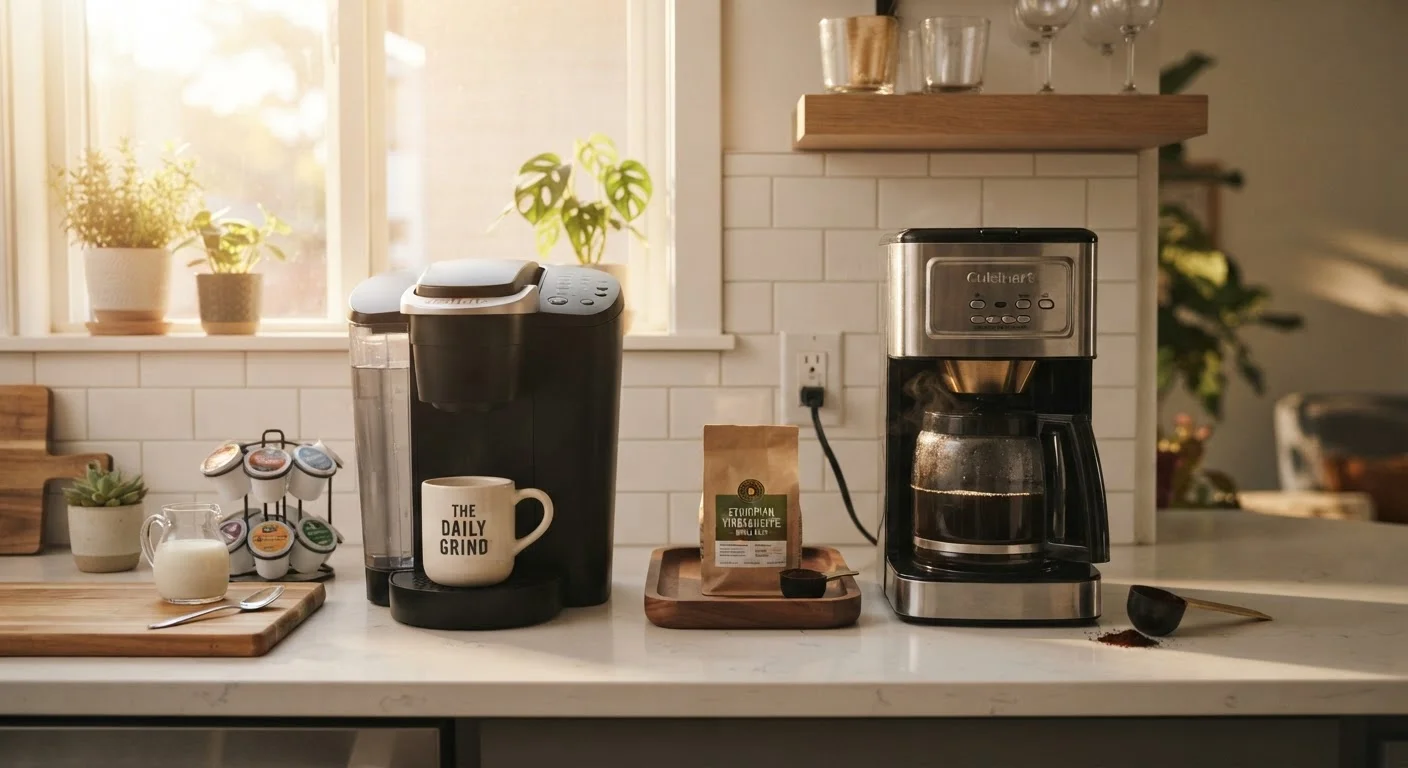
Photo credit: ArticlesHaven.net
In this article
Convenience versus capacity—compare pod and drip coffee makers on cost per cup, flavor variety, and household fit.
Key Takeaways
- Single-cup machines excel at convenience and variety but cost more per cup over time.
- Drip machines are more economical for households brewing multiple cups daily.
- Pod machines generate more plastic waste; drip machines use reusable filters.
- Flavor variety is broader with single-cup systems; drip offers more control over brew strength.
- Your household size and daily coffee volume are the most practical deciding factors.
How Each Machine Actually Works
A drip coffee maker heats cold water and passes it through ground coffee held in a filter basket, dripping brewed coffee into a carafe below. The process is straightforward, produces multiple cups in one cycle, and uses either paper or reusable mesh filters.
Single-cup machines - most commonly associated with pod or capsule systems - work differently. Each pod contains pre-measured, pre-ground coffee sealed in a plastic or aluminum capsule. The machine punctures the pod, forces pressurized hot water through it, and delivers a single serving directly into your mug. Some models also accept reusable pods that you fill with your own ground coffee.
Understanding this mechanical difference sets up every trade-off that follows: one is optimized for batch brewing, the other for on-demand, per-cup service.
Cost Per Cup: The Number That Matters Most
Upfront machine prices vary widely for both types, so the more revealing comparison is cost per cup over time.
| Single-Cup Machine | Drip Machine | |
|---|---|---|
| Cost per cup | $0.40-$1.00 (pods) | $0.05-$0.20 (ground coffee) |
| Brew time per serving | Under 1 minute | 4-8 minutes for full pot |
| Batch capacity | 1 cup at a time | 8-12 cups per cycle |
| Flavor variety | Very high (hundreds of pods) | Moderate (depends on beans) |
| Environmental impact | Higher (pod waste) | Lower (reusable filters available) |
| Brew control | Limited | Higher (ratio, grind, filter) |
| Cleanup | Minimal | Moderate (carafe, filter basket) |
Drip coffee using bulk ground coffee typically costs between $0.05 and $0.20 per cup depending on the blend and how much coffee you use per brew. Single-serve pods generally run between $0.40 and $1.00 per pod at standard retail pricing, though subscription services and store-brand pods can reduce that somewhat. That gap compounds quickly - a household brewing two cups a day could spend two to four times more annually on pods versus ground coffee.
For a deeper look at how subscription coffee services stack up against one-time pod purchases, see our breakdown of subscription vs. one-time purchase models.
Reusable Pods Can Cut Costs Significantly
Many single-cup machines are compatible with refillable pods that you fill with your own ground coffee. This keeps the convenience of pod brewing while bringing the cost per cup much closer to drip-machine territory. If you already own a single-cup machine, a reusable pod is usually worth the small upfront investment.
Flavor, Variety, and Brew Quality
Single-cup machines have a clear edge in variety. Hundreds of pod flavors, roasts, and coffee styles - including lattes, cappuccinos, and cold brew concentrates - are widely available. For households where one person drinks dark roast and another prefers flavored coffee, a pod machine eliminates the need to compromise.
Drip machines, however, give the brewer more control. Adjusting the coffee-to-water ratio, grind size, and filter type all affect flavor. If you enjoy dialing in your brew, drip offers more room to experiment. Specialty coffee enthusiasts generally consider freshly ground beans brewed in a drip machine to produce a cleaner, more nuanced cup than most pod systems.
Watch for Proprietary Pod Lock-In
Some single-cup machine models are designed to work exclusively with the manufacturer's own pod line, limiting your flavor and price options over time. Before purchasing, confirm whether the machine accepts third-party or universal pods. Proprietary systems can seem cost-effective at first but may reduce your flexibility and increase long-term costs.
Pod coffee freshness is also worth noting. Pods are sealed to preserve shelf life, but some coffee professionals argue that pre-ground, pre-packaged coffee loses volatile aromatics over time compared to coffee ground immediately before brewing.
Convenience, Speed, and Household Fit
Speed and simplicity favor single-cup machines. Most brew a cup in under a minute with minimal setup - no measuring, no filter placement, no cleaning a carafe. For early mornings or offices with varying schedules, that frictionless experience has genuine value.
Drip machines require slightly more involvement: measuring grounds, setting up a filter, waiting four to eight minutes for a full pot. However, if multiple people drink coffee around the same time, a drip machine's batch capacity (typically 8-12 cups) is simply more practical and efficient.
41%
US coffee drinkers using single-serve machines
According to the National Coffee Association's 2023 National Coffee Data Trends report, about 41% of American coffee drinkers used a single-cup brewer in the past day.
3-5x
Higher cost per cup for pods vs. ground coffee
Consumer cost comparisons consistently find pod-based brewing costs three to five times more per serving than drip brewing with bulk ground coffee at standard retail prices.
Environmental footprint is another practical consideration. Standard single-use pods create plastic and aluminum waste that is difficult to recycle in most municipal programs. Some brands offer recyclable or compostable pods, but they remain the minority. Drip machines, especially those using reusable metal filters, produce far less packaging waste per cup.
Kitchen space is more neutral: both machine types occupy roughly similar counter space, though drip machines with larger carafes tend to be taller. If you're already navigating a compact kitchen, the same logic that applies to other appliance comparisons - like the one in our countertop vs. built-in dishwasher comparison - holds here: measure your available space before committing.

Author
Articles Haven Editorial Contributor
Articles Haven Editorial Team is the collective byline for our editorial team and contributor network. Articles published under this byline or an editorial pen name are researched, written, and reviewed according to our editorial standards for clarity, consistency, and independence before publication.
View all articles →