
The Difference Between a Rebate and a Discount — and Why It Matters
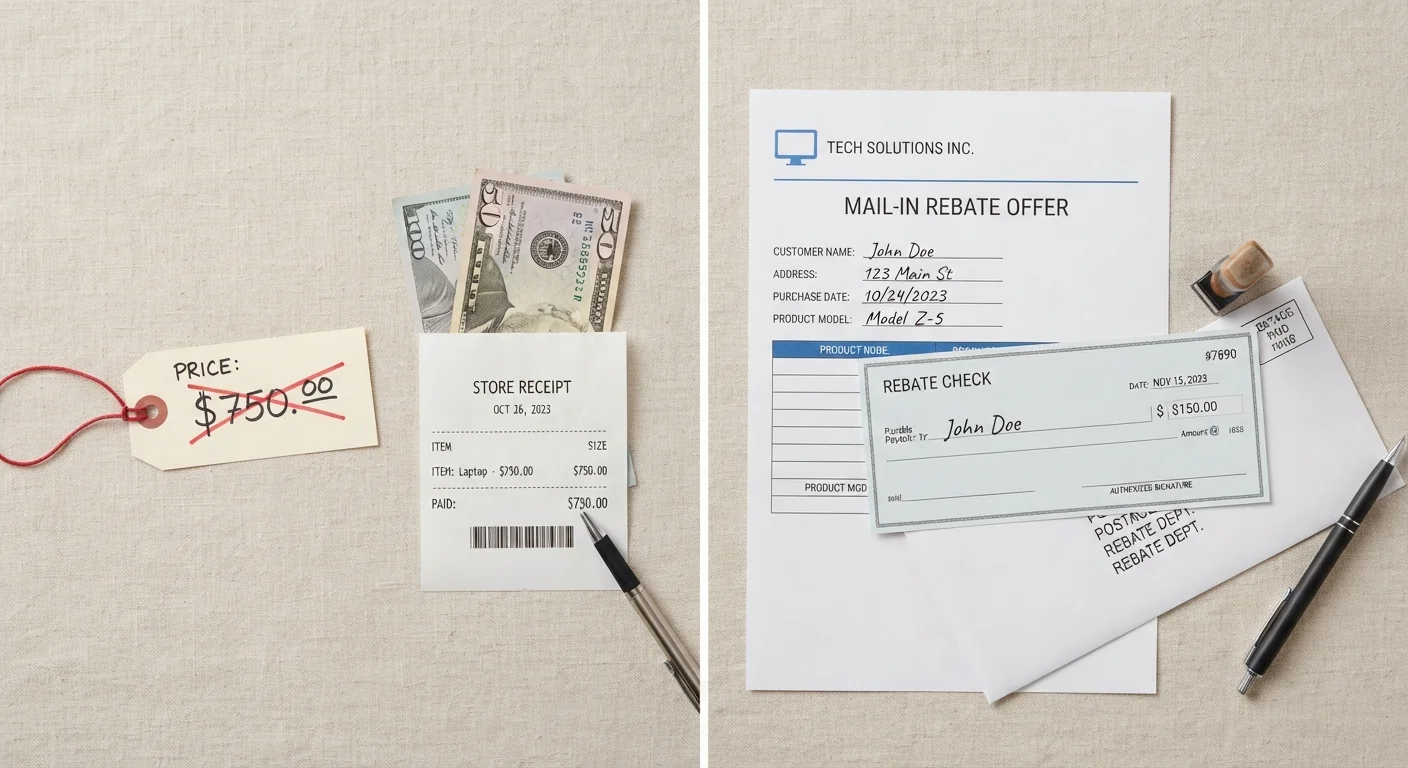
Photo credit: ArticlesHaven.net
In this article
Rebates and discounts both reduce what you pay, but through very different mechanisms. Understanding both helps you avoid surprises.
Key Takeaways
- Discounts reduce the price immediately at checkout - no follow-up required.
- Rebates require action after purchase and often have deadlines and eligibility rules.
- Not all rebates are honored if paperwork or deadlines are missed.
- Understanding both helps you assess the true cost of a purchase before you buy.
- Rebates are common in auto, appliance, electronics, and utility markets.
How Each Mechanism Actually Works
A discount is straightforward: the seller reduces the listed price before or at checkout. You see the lower number, you pay the lower number, and you're done. There's no follow-up, no paperwork, and no waiting.
A rebate works differently. You pay the full price - or at least a higher price - at the point of sale, and then you submit a claim (online or by mail) to receive a partial refund. That refund might come as a check, a prepaid card, or a credit, and it typically arrives weeks or months later.
This distinction matters because the rebate process introduces friction and risk. You must meet eligibility requirements, submit the right documentation within a specific window, and wait for processing. Sellers know that a meaningful percentage of rebates are never redeemed - this is sometimes called breakage, and it's built into their business model.
Rebate Terms Vary Significantly
There is no standardized rebate process across retailers or manufacturers. Eligibility requirements, submission methods, deadlines, and fulfillment timelines are set individually by each program. Always read the specific terms for the rebate you're claiming - don't assume the rules match a previous experience.
For a broader look at how savings tools compare, the savings landscape explainer covers coupons, promo codes, and cashback alongside rebates.
Why Rebates Exist (and Why Sellers Prefer Them)
If a seller wants to move inventory or compete on price, why not just lower the sticker price? The answer is that rebates give sellers more control.
- Breakage revenue: A portion of buyers won't claim the rebate, so the seller's effective cost per unit sold is lower than the face value of the offer.
- Price image protection: A product priced at $199 with a $30 rebate looks different on a shelf than one listed at $169, even if the net cost is the same.
- Data collection: Rebate submission forms often capture customer information useful for marketing.
- Targeted incentives: Rebates can be structured to reward specific behaviors - buying within a date range, purchasing a qualifying model, or being a new customer.
~40-60%
Estimated rebate redemption rate across industries
Industry estimates suggest that a substantial share of eligible rebates go unclaimed, a phenomenon retailers refer to as 'breakage' - the gap between offered and redeemed rebate value.
6-12 weeks
Typical rebate fulfillment timeline
Most mail-in and online rebate programs disclose a processing period in their terms, often ranging from six to twelve weeks after a valid submission is received.
30 days
Common minimum rebate submission window
Many rebate offers set a submission deadline as short as 30 days from date of purchase, making prompt action essential for buyers expecting to receive the refund.
For auto purchases specifically, rebate mechanics get more complex. The dealer incentives and manufacturer rebates explainer walks through how cash-back offers interact with financing terms.
What to Watch Out For With Rebates
Rebates are legitimate savings tools, but they require attention to detail. Here's where shoppers commonly run into trouble:
Photograph Everything Before You Submit
Before sending in a rebate claim - whether online or by mail - photograph or scan every document: the receipt, the UPC, the completed form, and the submission confirmation. If a processor claims they didn't receive something, your documentation is your only recourse. Store these records until you receive the rebate payment.
- Missing the deadline: Most rebates have submission windows - sometimes as short as 30 days from purchase. Missing it typically means losing the rebate entirely.
- Incomplete documentation: Rebate processors often require an original receipt, UPC barcode, and a completed form. Submitting the wrong version of any of these can result in rejection.
- Qualifying product confusion: Not every model or SKU in a product line may qualify. Read the terms carefully before purchasing.
- Processing time: Even after a successful claim, fulfillment can take 6-12 weeks. Budget accordingly - don't count on that money arriving quickly.
The core question to ask yourself before purchasing on the strength of a rebate: Am I comfortable paying the full price if the rebate doesn't come through? If the answer is no, treat the rebate as a bonus rather than a certainty.
For a framework on evaluating whether a savings offer genuinely changes the value of a purchase, see what actually makes something worth buying.
When a Discount Is Clearly Better
For most everyday purchases, an immediate discount is simpler and lower-risk than an equivalent rebate. You know exactly what you're paying, there's nothing to submit, and there's no waiting period.
That said, comparing a discount to a rebate requires looking at the actual net numbers. A 10% discount on a $500 appliance saves you $50 at checkout. A $75 mail-in rebate on the same item is worth more in dollar terms - if you actually claim it. The math favors the rebate only if you follow through.
When comparing offers side by side, factor in your realistic likelihood of completing the rebate process. If past experience suggests you often miss deadlines or lose receipts, a smaller immediate discount may be the smarter financial decision. What makes a discount actually worth it covers how to evaluate the real value of any price reduction, not just the headline number.
Frequently Asked Questions

Author
Articles Haven Editorial Contributor
Articles Haven Editorial Team is the collective byline for our editorial team and contributor network. Articles published under this byline or an editorial pen name are researched, written, and reviewed according to our editorial standards for clarity, consistency, and independence before publication.
View all articles →