
Clearance vs. Closeout vs. Liquidation: What Each Label Actually Signals
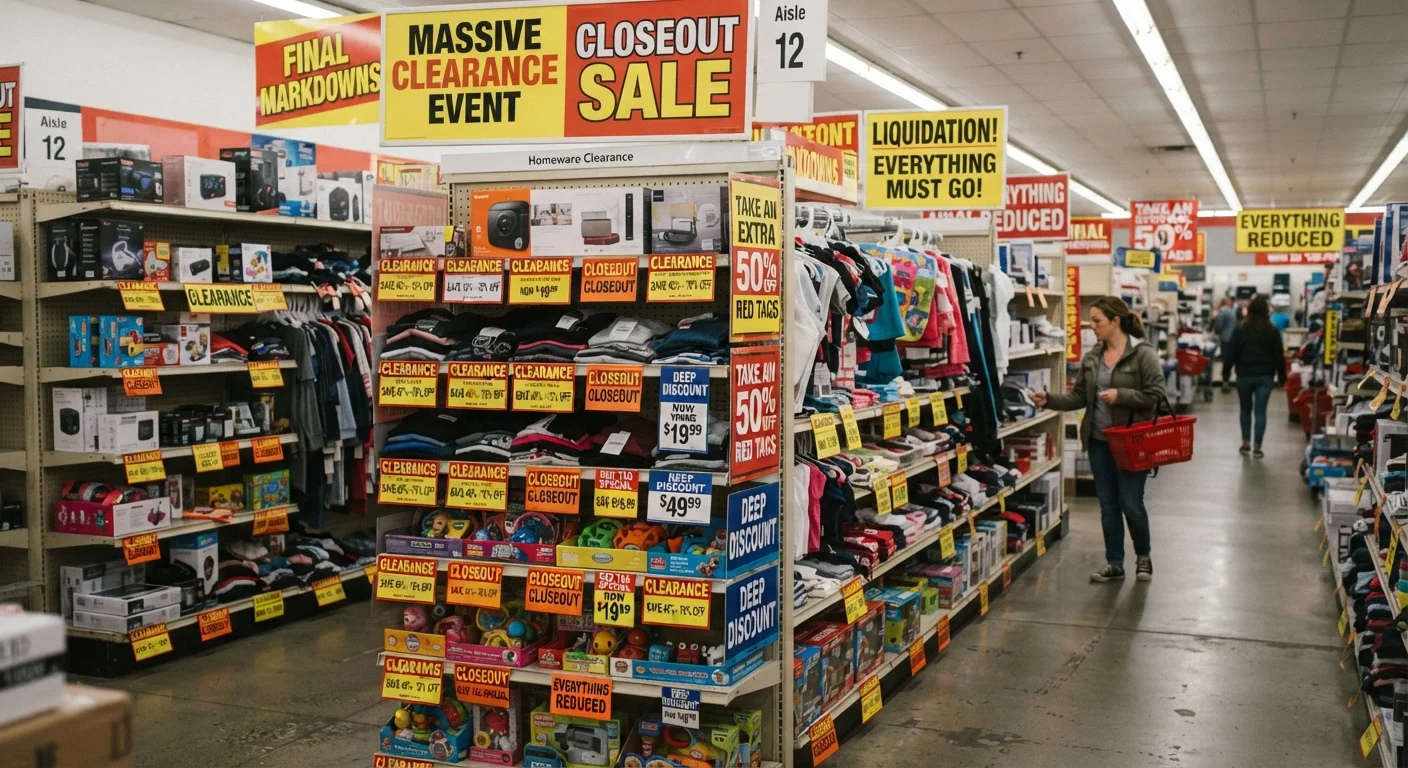
Photo credit: ArticlesHaven.net
In this article
These three markdown terms are often confused, but they signal different things about product quality, availability, and return policies.
Three Labels, Three Different Stories
Walk through any discount section at a major retailer or scroll through a deal site, and you'll likely spot all three terms within minutes: clearance, closeout, and liquidation. Retailers use them interchangeably in casual signage, but they're not synonyms. Each label reflects a distinct reason why merchandise is being sold at a reduced price - and that reason has real consequences for product condition, return eligibility, and how long the deal will last.
Understanding what each term signals can help you make a more confident buying decision rather than simply reacting to a marked-down price tag. For a broader look at how retail language can mislead, see how vague product descriptions work.
| Clearance trigger | Retailer needs shelf space for new inventory |
| Closeout trigger | Product line permanently discontinued |
| Liquidation trigger | Business closure, bankruptcy, or bulk overstock disposal |
| Typical return eligibility | Clearance: sometimes; Closeout: usually; Liquidation: rarely (Varies by retailer - always verify in writing) |
| Product condition | Clearance & Closeout: typically new; Liquidation: varies widely |
| Manufacturer warranty | Usually intact for Clearance/Closeout; verify for Liquidation (Confirm directly with manufacturer when purchase value is significant) |
Clearance: Inventory the Store Wants Gone
Clearance is a retailer-initiated markdown, typically applied to in-store stock that needs to move - often to make room for new seasonal inventory or updated product lines. The item itself is usually new and undamaged; the discount reflects the store's urgency to free up shelf space, not a flaw in the product.
Key things to understand about clearance items:
- Selection is finite and shrinks fast - once it's gone, it's gone.
- Prices may drop in stages, meaning waiting can get you a steeper discount but risks losing the item entirely.
- Return policies on clearance can be restricted. Some retailers mark clearance items as final sale. Always check before you buy.
- Warranty coverage is typically the same as any new item from that retailer.
Clearance doesn't automatically equal a good deal. Markdowns may start from an inflated original price. The myths around marked-down merchandise are worth reading before you assume a clearance sticker equals savings.
Closeout: The Product Line Is Ending
Closeout signals that a particular product, model, or product line is being permanently discontinued. The manufacturer or retailer won't be reordering it. This is different from clearance in an important way: a closeout item may still be widely available right now, but once stock is depleted, there's no resupply.
What this means practically:
- The product itself is typically new and fully functional - it's the business decision to discontinue, not a quality issue, driving the price drop.
- Replacement parts, accessories, or manufacturer support may become harder to find over time.
- For electronics or appliances, software updates or customer service may eventually wind down depending on the brand's support timeline.
- Return policies vary by retailer; closeout designation alone doesn't restrict returns, but verify before purchasing.
Closeout and Future Support: A Key Consideration
When a product line is closed out, the manufacturer may eventually discontinue firmware updates, replacement parts, or customer service support - especially for electronics. There's no standard industry timeline for how long support continues after a product is discontinued. If long-term support matters to you, check the manufacturer's published end-of-life policy before purchasing a closeout item.
Closeout deals can be genuinely strong buys for durable goods where ongoing support isn't critical - a basic kitchen tool, for example, versus a smart device dependent on a connected app or firmware updates.
Liquidation: Business Circumstances, Not Just Merchandise
Liquidation is the most consequential label of the three. It usually means a business is selling off its entire inventory - often because of a store closing, bankruptcy, restructuring, or a wholesale operation clearing excess stock. The goal is to convert inventory to cash as rapidly as possible.
Shoppers should approach liquidation sales with a specific mindset:
- All sales are typically final. Returns and exchanges are rarely available. The entity selling may not even exist by the time you'd want to return something.
- Merchandise condition varies widely. Liquidation lots can include new stock, shelf pulls, customer returns, or damaged goods mixed together.
- Manufacturer warranties may or may not transfer, depending on the brand's policies. Don't assume they do.
- Prices can be deeply discounted - but inspect carefully and factor in the no-return reality.
Liquidation merchandise sold through secondary resellers (online auction platforms, discount chains) adds another layer of uncertainty. The item may have changed hands multiple times before reaching you. For context on grading secondhand and returned goods, open-box and refurbished condition grades explains what to look for.
Clearance
A retailer-initiated markdown on existing inventory, typically applied to make room for new stock. The product is usually new and undamaged; the price reduction reflects the store's need to move inventory, not a product defect.
Closeout
A permanent end-of-line sale signaling that a specific product or model will no longer be manufactured or restocked. Closeout items are generally new but will not be replenished once sold.
Liquidation
A sale driven by a business need to convert inventory to cash quickly - often due to store closure, bankruptcy, or bulk overstock disposal. Sales are typically final, and merchandise quality can vary significantly.
Final Sale
A sales term indicating that no returns, exchanges, or refunds will be accepted after purchase. Common in clearance and liquidation contexts; always verify before completing a transaction.
Shelf Pull
Merchandise that was displayed on retail shelves but never sold, then returned to a warehouse or redistributed through liquidation channels. Shelf pulls are usually new but may show minor cosmetic wear from handling.
Price Anchor
The original or "was" price displayed alongside a sale price to make the discount appear larger. Consumers should independently verify that the anchor price reflects genuine prior retail pricing.
Before You Buy: Questions That Apply to All Three
Regardless of which label is on the tag, a few due-diligence questions apply every time:
- What is the return or exchange policy - in writing? Don't rely on verbal assurances. Return policy fine print can make or break a discounted purchase.
- Is the manufacturer warranty still valid? Confirm directly with the manufacturer's support channel if the amount of money is significant.
- What's the original price reference? Verify that the "was" price reflects real prior retail pricing, not an inflated anchor. Cross-check with other retailers or price-history tools.
- Does the product require ongoing support? For connected devices, software-dependent products, or items needing consumables, a discontinued or liquidated product may cost more to own over time.
For a full reference to the retail terminology you'll encounter while shopping these categories, common shopping terms decoded is a useful companion resource.
~30%
Estimated share of liquidation lots containing mixed-condition goods
Industry estimates suggest a significant portion of liquidation pallets include a mix of new, shelf-pull, and returned merchandise - proportions vary widely by source and seller.
Final sale
Return status at most liquidation events
Most in-store and online liquidation sales explicitly exclude returns; shoppers absorb all condition and compatibility risk.

Author
Articles Haven Editorial Contributor
Articles Haven Editorial Team is the collective byline for our editorial team and contributor network. Articles published under this byline or an editorial pen name are researched, written, and reviewed according to our editorial standards for clarity, consistency, and independence before publication.
View all articles →