
What Deprioritization and Throttling Mean on Your Phone Plan
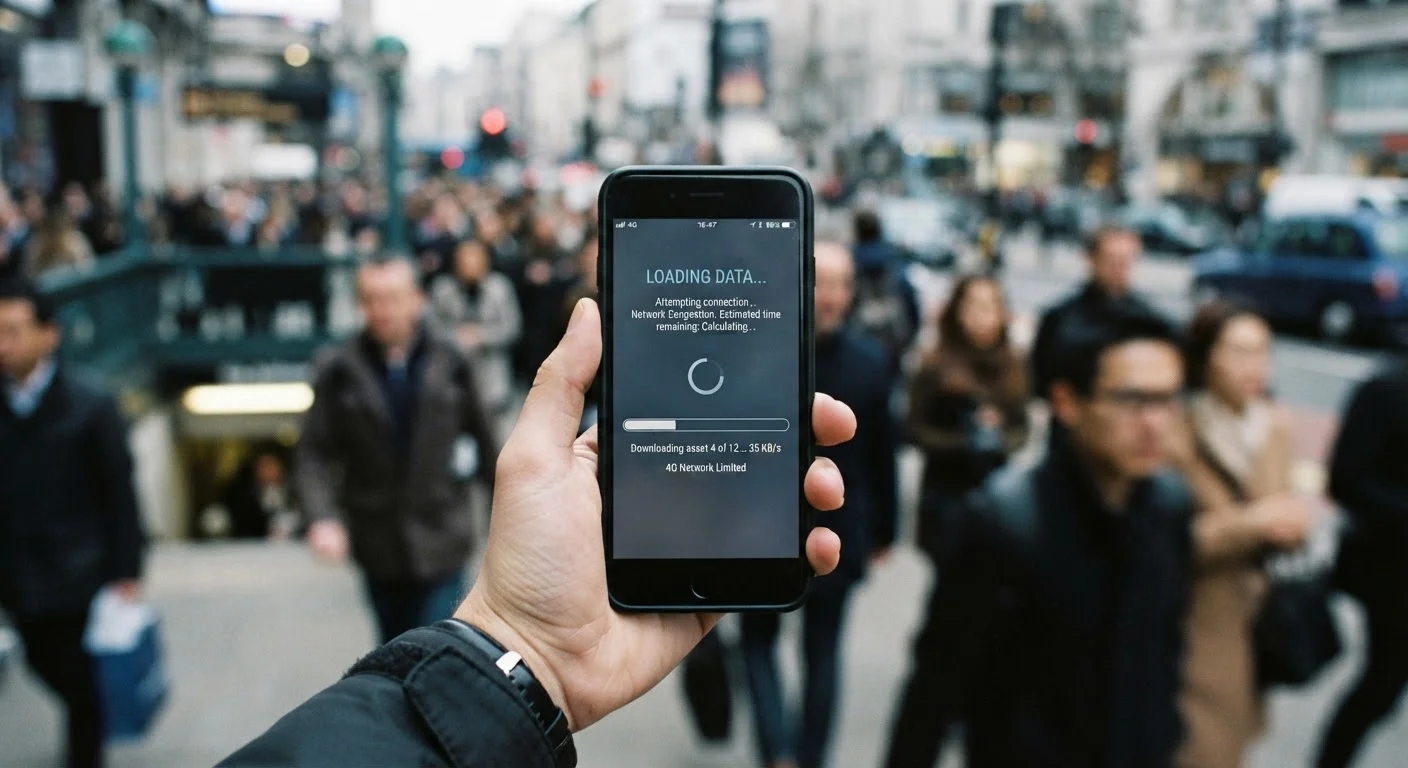
Photo credit: ArticlesHaven.net
In this article
Carriers slow down data in different ways. Learn how deprioritization differs from throttling and when each is most likely to affect you.
Key Takeaways
- Throttling cuts your speed based on data usage hitting a set cap; deprioritization cuts your speed based on network congestion at a specific time and place.
- Deprioritization is temporary - it lifts when congestion eases; throttling typically lasts until your billing cycle resets.
- Higher-tier plans often deprioritize you later or not at all, but rarely eliminate the policy entirely.
- Both practices are disclosed in carrier fine print, though the language can be easy to miss.
- Understanding which policy applies to you helps you decide if a plan upgrade or switch is actually worth it.
Two Different Reasons Your Data Slows Down
If your phone feels slow mid-stream or mid-scroll, one of two things is probably happening - and they aren't the same problem. Carriers use both throttling and deprioritization to manage their networks, but each policy is triggered differently and resolves differently. Confusing the two can lead you to upgrade your plan when you don't need to, or stay on a plan that's genuinely holding you back.
The short version: throttling is about how much data you've used; deprioritization is about how busy the network is right now. Both slow you down, but only one is within your direct control.
How Throttling Works
Throttling means your carrier has set a data ceiling - once you cross it, your speeds drop to a much lower rate for the rest of your billing period. This is common on plans that advertise a set amount of high-speed data (say, 15GB or 30GB) before speeds are reduced. Some plans throttle to speeds around 1-3 Mbps, which is enough for basic browsing but not for HD video or large file transfers.
The key characteristic: throttling is predictable and persistent. It doesn't matter if the network around you is nearly empty - if you've hit your cap, you're throttled until the cycle resets. This is especially relevant if you stream a lot of video or use your phone as a mobile hotspot, since both burn through data quickly.
For a deeper look at how carriers package these limits inside so-called unlimited plans, see what unlimited plan fine print actually means.
How Deprioritization Works
Deprioritization is more nuanced. Carriers divide their subscribers into priority tiers - often based on plan level and how much data you've used that month. When a cell tower gets congested (think a stadium, a commuter train platform, or a busy downtown area at noon), the carrier's network management system serves higher-priority customers first. Lower-priority users get whatever bandwidth is left.
This means deprioritization is location-dependent and time-dependent. You might notice no slowdown at home but significant drag whenever you're in a densely populated area during peak hours. Once congestion clears, your speeds return to normal automatically - no billing cycle reset required.
Most unlimited plans disclose a deprioritization threshold - often 50GB or more of monthly usage - after which you drop to a lower priority tier. Users under that threshold may still be deprioritized depending on their plan level relative to premium subscribers.
Understanding how priority tiers shift between plan levels is worth the effort. Comparing mobile plan tiers within a carrier can clarify exactly what changes when you move up or down.
Which One Is Actually Affecting You - and What to Do About It
Start by running a speed test at different times and locations. If speeds are consistently low regardless of where you are or what time it is, throttling is the more likely culprit - check your data usage in your carrier's app to see if you've crossed a cap. If slowdowns are tied to specific locations or peak hours, deprioritization is the better explanation.
Neither issue necessarily means you need to switch carriers. A few practical steps:
- Track your monthly data usage so throttling surprises you less.
- Wi-Fi offloading - using Wi-Fi at home or work - reduces how fast you hit a throttling threshold.
- Check your plan's priority tier language before assuming an upgrade solves a deprioritization problem; some mid-tier plans have the same deprioritization thresholds as entry plans.
These same dynamics appear in home internet, where data caps and network congestion operate under similar logic - see how data caps work and when they matter for context. Evening slowdowns on home broadband, explained in why your internet slows at night, follow the same congestion pattern as mobile deprioritization.
This article provides general information about mobile carrier network practices and is not a substitute for reviewing your specific carrier's terms of service or contacting your provider directly.
Frequently Asked Questions

Author
Articles Haven Editorial Contributor
Articles Haven Editorial Team is the collective byline for our editorial team and contributor network. Articles published under this byline or an editorial pen name are researched, written, and reviewed according to our editorial standards for clarity, consistency, and independence before publication.
View all articles →