
Phone Plan Glossary: Terms Every Consumer Should Know
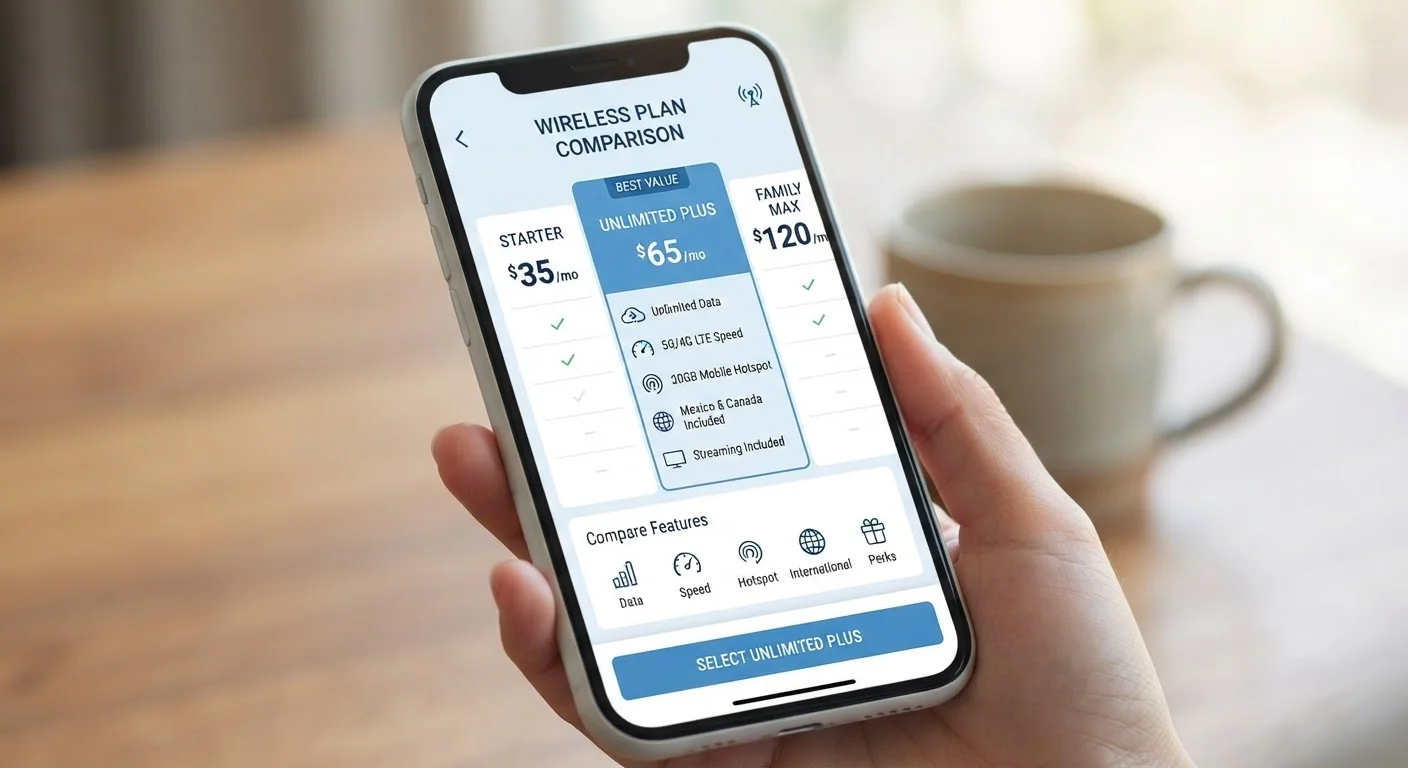
Photo credit: ArticlesHaven.net
In this article
From data caps to network slicing, wireless jargon can be confusing. This reference glossary defines the key terms you'll encounter shopping for plans.
Why Wireless Jargon Matters When You Shop
Cell phone plan marketing is built on terminology that sounds straightforward but often masks important trade-offs. Words like "unlimited," "5G," and "hotspot" appear on virtually every plan - but what they actually deliver depends on definitions buried in the fine print. Before comparing carriers, it helps to build a working vocabulary so you can read plan details critically rather than taking headline claims at face value.
This glossary covers the core terms you'll encounter across most wireless plan comparisons. For a broader look at how the US carrier market is structured - including the difference between major networks and budget resellers - see our plain-English overview of the US mobile carrier landscape.
| Most common plan type in the US | Postpaid (pay after use) |
| Typical high-speed data cap on "unlimited" plans | 20-100 GB before deprioritization (Varies by carrier tier) |
| eSIM availability | Standard on most flagship smartphones since 2018 |
| MVNO network access | Leased from major carriers (not independently owned) |
| Device installment length | Typically 24-36 months |
Core Plan Terms Defined
Use the definitions below as a quick reference while evaluating any wireless plan. Terms are grouped by category for easier scanning.
Data cap
The maximum amount of data (measured in gigabytes) you can use at full speed within a billing cycle. Exceeding this limit typically results in throttled speeds or extra charges.
Throttling
A deliberate reduction in mobile data speeds by a carrier, usually triggered after you exceed a plan's high-speed data allowance or during periods of heavy network traffic.
Deprioritization
A network management practice where your data traffic is placed behind other users during congestion. Unlike throttling, it only affects speeds during busy periods, not constantly.
MVNO
Mobile Virtual Network Operator - a carrier that resells access to a major network's infrastructure, often at lower prices but with potentially lower priority during congestion and fewer premium perks.
eSIM
An embedded SIM built into a compatible phone that stores carrier credentials digitally. It allows you to switch carriers or add a second line without inserting a physical SIM card.
Mobile hotspot
A feature that lets your phone share its cellular data connection with nearby devices via Wi-Fi. Hotspot use typically draws from a separate, often smaller, high-speed data allowance within your plan.
Postpaid plan
A wireless plan where you pay at the end of each billing cycle after using service. These plans usually require a credit check and often include device financing options.
Unlocked phone
A device not restricted to a single carrier, allowing it to operate on any compatible network. Essential for BYOD arrangements or switching carriers without buying a new phone.
Data & Speed
Data cap - The maximum amount of data you can use in a billing cycle before your carrier slows your speeds or charges you extra. Plans labeled "unlimited" almost always have a cap on full-speed data, after which speeds are throttled.
Throttling - A deliberate reduction in your connection speed by the carrier, typically triggered after you reach a data threshold or during network congestion.
Deprioritization - Different from throttling in an important way: your speeds aren't automatically reduced, but during congested periods, your data traffic is placed behind other users. Common on lower-tier "unlimited" plans.
Mobile hotspot - A feature that lets your phone share its cellular data connection with other devices (laptops, tablets) via Wi-Fi. Most plans that include hotspot use allocate a separate, often smaller, high-speed data bucket specifically for hotspot traffic.
For a deeper look at network generation labels - 5G, LTE, 4G - and what they mean for real-world speeds, see our article on what 5G, LTE, and 4G labels actually mean.
"Unlimited" Doesn't Mean Unrestricted
Nearly every unlimited plan in the US includes a high-speed data threshold after which speeds may be throttled or your traffic deprioritized. The specific threshold - and whether it applies to hotspot data separately - varies significantly between plan tiers and carriers. Always check the plan's full terms, not just the headline label.
Plan Structure
Postpaid - You use service throughout the month and pay at the end of the billing cycle. Postpaid plans typically require a credit check and often come with device financing options.
Prepaid - You pay before using service. No credit check is typically required, and there's no contract. Unused data may or may not roll over depending on the plan.
MVNO (Mobile Virtual Network Operator) - A carrier that doesn't own its own network towers but instead leases access from a major network operator. MVNOs often offer lower prices but may have fewer perks and lower network priority during congestion.
Bring Your Own Device (BYOD) - A plan option that lets you use an existing unlocked phone rather than purchasing one through the carrier. Often cheaper monthly, but you'll need to confirm your device is compatible with the carrier's network bands.
Contract, Billing, and Compatibility Terms
Contracts & Commitments
Month-to-month - No long-term commitment required. You can cancel or switch at any time, typically without a fee. Most postpaid and all prepaid plans in the US now operate this way.
Device installment plan - A financing arrangement where the cost of a phone is spread over 24 or 36 monthly payments, usually interest-free. Switching carriers before the balance is paid typically means you owe the remaining amount immediately.
Early termination fee (ETF) - A penalty for canceling a contract before the end of a commitment period. Less common than they once were, but still appear in some business or device-financing agreements.
Device Compatibility
Unlocked phone - A device not locked to a specific carrier's network, allowing it to be used with any compatible carrier's SIM card.
SIM card / eSIM - A SIM (Subscriber Identity Module) is the small chip that connects your phone to a carrier's network. An eSIM is a digital version built into the phone - no physical card required - and can be switched between carriers without swapping hardware.
Network bands - Specific radio frequencies a carrier uses to deliver service. A phone must support the right bands to access a carrier's full network, including 5G coverage. Checking band compatibility is especially important with BYOD or international phones.
If you're approaching a new plan decision, our article on questions to ask before signing up for any cell phone plan covers what to clarify before you commit - including roaming policies and cancellation terms.
3+
Major US network operators that MVNOs lease from
Most MVNOs operate on infrastructure owned by one of the three largest US carriers.
24-36 mo
Typical device installment plan length
Switching carriers mid-installment generally requires paying the remaining device balance in full.
Wireless plan terms overlap with broader telecom concepts. If you're also evaluating bundled home service, compare this glossary against our telecom bundle glossary for terms specific to combined internet, TV, and phone packages.

Author
Articles Haven Editorial Contributor
Articles Haven Editorial Team is the collective byline for our editorial team and contributor network. Articles published under this byline or an editorial pen name are researched, written, and reviewed according to our editorial standards for clarity, consistency, and independence before publication.
View all articles →