
Big Carrier vs. MVNO: What You Gain and Give Up on Each Side
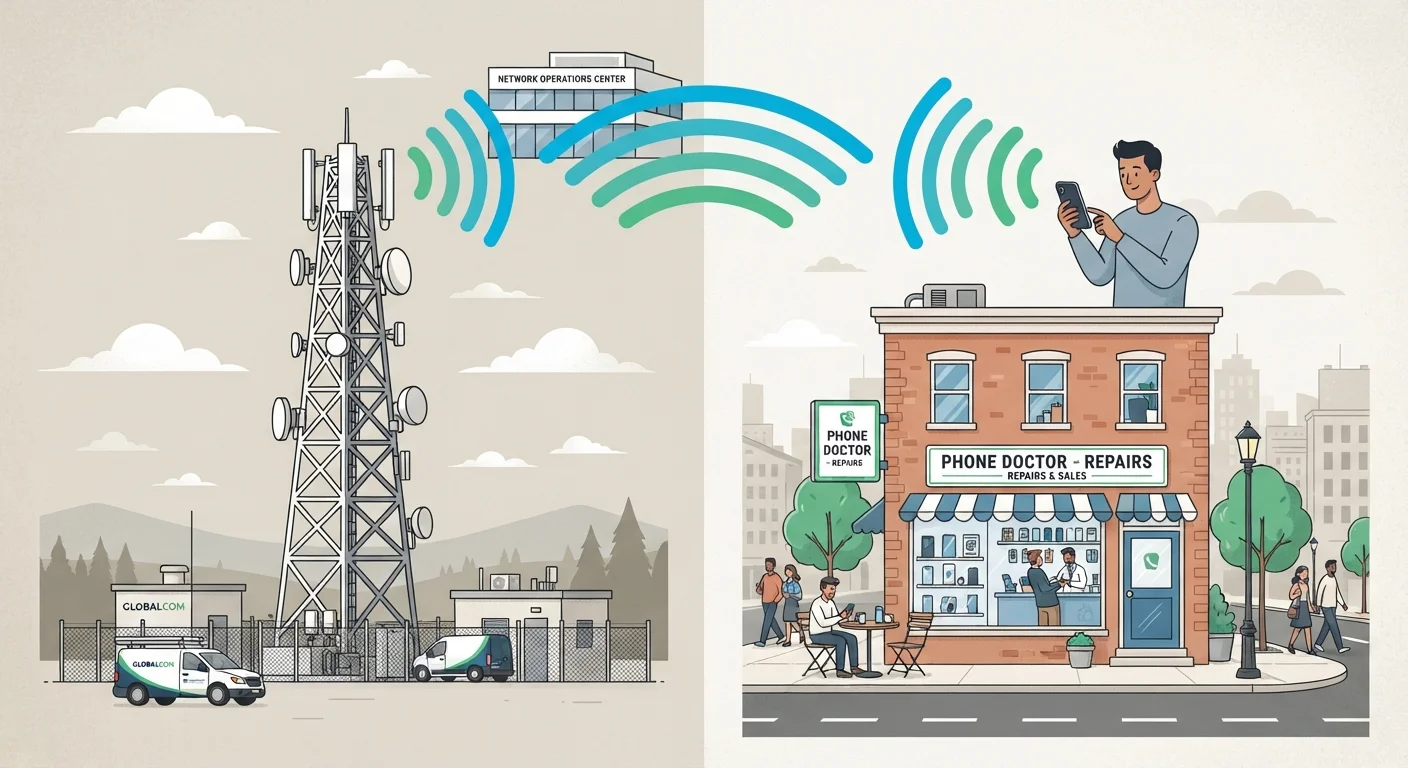
Photo credit: ArticlesHaven.net
In this article
MVNOs often cost less but may have fewer perks and lower priority on shared networks. Here's a balanced look at what each tier offers.
Key Takeaways
- MVNOs (Mobile Virtual Network Operators) lease network access from major carriers and typically charge less.
- Big carriers generally offer better network priority, more device options, and broader customer support.
- MVNOs can deprioritize your data during congestion, which may affect speeds in busy areas.
- Switching between carriers has become easier with unlocked phones and no-contract plans.
- Your usage habits - data needs, travel patterns, and budget - should drive the decision.
What's the Actual Difference Between a Big Carrier and an MVNO?
Major wireless carriers - the companies that own and physically operate cell towers and spectrum - provide the backbone of mobile service in the US. MVNOs, or Mobile Virtual Network Operators, are companies that purchase wholesale access to those same networks and resell it under their own brand, often at a lower price point.
Crucially, an MVNO customer uses the same physical towers as a big-carrier customer. The difference isn't the signal source - it's the terms under which you access it. MVNOs typically have no infrastructure costs to recover, which allows them to offer lower monthly rates. The trade-off is that they generally have less leverage when it comes to network priority, device financing, and support infrastructure.
If you want to understand how commitment levels play into this comparison, see our look at phone plan contracts vs. month-to-month options, since MVNOs almost exclusively offer no-contract plans.
What You Gain With a Big Carrier
The main advantages of a major carrier come down to priority, perks, and presence.
- Network priority: During periods of heavy congestion - think a stadium or a busy urban area - big-carrier subscribers on premium plans are typically served before MVNO customers on the same towers.
- Device ecosystem: Major carriers offer wide device financing options, trade-in programs, and early access to new hardware, often with carrier-exclusive promotions baked in.
- In-person support: Physical retail stores are still a meaningful advantage for users who want face-to-face help with setup, repairs, or account issues.
- International roaming: Most premium big-carrier plans include international talk, text, and data options that MVNOs may not match in breadth or quality.
- Bundle opportunities: Some carriers integrate with home internet or streaming services, which can simplify billing. For a broader look at bundling, see our overview of bundled internet, TV, and phone service.
Check Which Network an MVNO Uses Before Signing Up
Not all MVNOs run on the same underlying network, and coverage quality varies significantly by region. Before committing, confirm which major carrier's infrastructure the MVNO uses and compare that carrier's coverage map for your home area and regular travel routes. This one step eliminates most unpleasant post-switch surprises.
What You Give Up With a Big Carrier
The premium comes at a real cost. Big carrier plans at the mid and upper tiers can run significantly higher per month than comparable MVNO options - sometimes two to three times the price for similar data allowances. Autopay discounts and multi-line requirements add complexity to what looks like a simple monthly fee.
Contracts, while less common than they once were, still exist in the form of device financing agreements that can lock you in for 24-36 months. Missing a payment or switching early may involve paying off the remaining device balance. Our article on comparing plan tiers within a single carrier breaks down what actually changes as you move between entry-level and premium options.
Device Financing Can Hide the True Monthly Cost
Big carrier plan prices are frequently advertised alongside device credits that require you to stay on a specific plan for 24-36 months. If you switch or downgrade before the term ends, you may lose remaining credits or owe the device balance outright. Always calculate your total monthly obligation - plan plus device payment - rather than comparing advertised rates alone.
What You Gain - and Give Up - With an MVNO
MVNOs can offer genuine value, especially for users who don't need cutting-edge perks or high-volume data. The core advantages:
- Lower monthly rates: Many MVNOs offer plans with several gigabytes of data for a fraction of what major carriers charge.
- No-contract flexibility: Month-to-month is the norm, meaning you can switch without early termination fees tied to device financing.
- Simplified plans: Fewer tiers and add-ons can make budgeting easier and reduce decision fatigue.
The genuine limitations are worth naming plainly. During network congestion, MVNO subscribers are typically deprioritized - this means your data speeds may slow noticeably in densely populated areas or at busy times. International coverage is often limited or requires purchasing add-ons. Customer service is usually online or phone-based only, with no retail walk-in option. And while MVNOs ride on major networks, not all of them offer access to every band or 5G tier - worth verifying before you sign up.
For device considerations, see our breakdown of unlocked vs. carrier-locked phones, since MVNOs typically require or strongly prefer unlocked devices.
| Big Carrier | MVNO | |
|---|---|---|
| Monthly cost | Generally higher | Generally lower |
| Network priority during congestion | Higher priority on premium plans | Typically deprioritized |
| Contract/commitment | Device financing common (24-36 months) | Usually month-to-month |
| International coverage | Broad, often included in premium plans | Limited; add-ons often required |
| In-person support | Retail stores available | Online or phone support only |
| Device financing | Wide options available | Usually bring your own device |
| 5G access | Full access including premium bands | Varies by MVNO; may be limited |
40+
Active MVNOs operating in the US
The US wireless market hosts dozens of MVNOs operating on the three major nationwide networks, according to industry tracking data.
~$15-$35
Typical MVNO monthly plan range
Many MVNO plans with several gigabytes of data fall well below the $50+ per-line average seen on major carrier mid-tier plans.
How to Decide Which Tier Fits Your Situation
A few practical questions sharpen the decision quickly:
- How much data do you actually use? Light users - under 5-10 GB per month - often find MVNO plans more than adequate. Heavy streamers or remote workers may find deprioritization during peak hours frustrating enough to justify the higher carrier cost.
- Where do you spend most of your time? Rural or suburban users in lower-traffic areas often see little practical difference in speeds between a big carrier and an MVNO on the same network. Dense urban commuters may notice more.
- Do you travel internationally? If yes, verify whether the MVNO you're considering covers your destinations, and at what data speeds and additional cost.
- How do you prefer to get help? If you rely on walking into a store for support, MVNOs are a weaker fit. If you're comfortable resolving issues via app or chat, that gap matters less.
- What's your device situation? If you already own an unlocked phone, MVNO entry is straightforward. If you need financing for a new flagship device, a big carrier may be a more practical starting point.

Author
Articles Haven Editorial Contributor
Articles Haven Editorial Team is the collective byline for our editorial team and contributor network. Articles published under this byline or an editorial pen name are researched, written, and reviewed according to our editorial standards for clarity, consistency, and independence before publication.
View all articles →