
Promotional Pricing vs. Regular Rates: What Happens After Your Internet Intro Period Ends
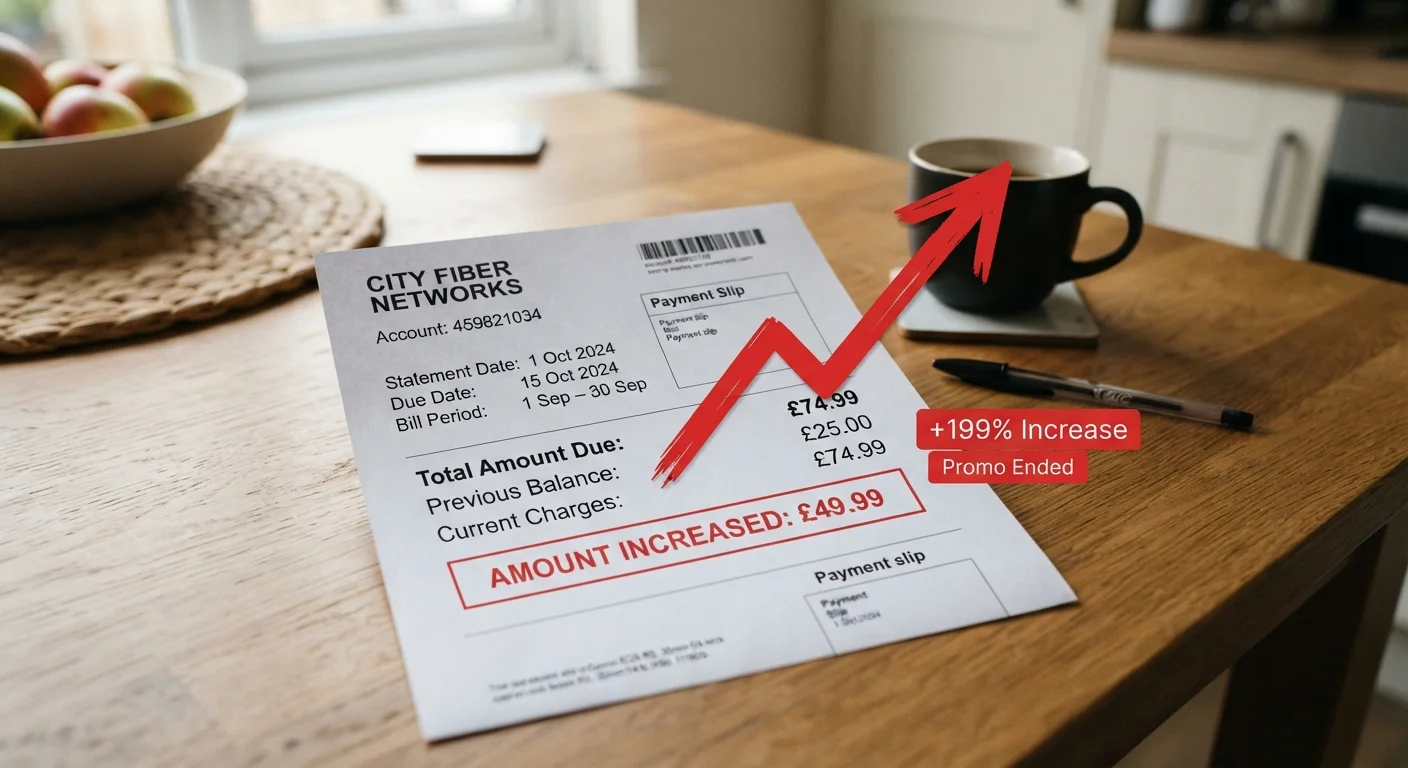
Photo credit: ArticlesHaven.net
In this article
Many plans start cheap and jump in price after 12 months. Understanding this cycle helps you plan and avoid billing surprises.
Key Takeaways
- Promotional internet rates are temporary and typically expire after 12 to 24 months.
- The post-promo "regular rate" can be $20-$40 or more per month higher than the intro price.
- The rate increase happens automatically - providers are not required to notify you prominently.
- Reading the service agreement before signing reveals the exact regular rate and timeline.
- Negotiating, switching providers, or moving to a month-to-month plan are the main options when the promo expires.
- Contract terms and early termination fees can limit your flexibility during the promotional window.
How Promotional Pricing Actually Works
Internet providers use promotional pricing as a customer acquisition tool. The advertised monthly rate - the number plastered on billboards and comparison sites - is almost always the promotional rate, not what you'll pay indefinitely. Providers set a defined promotional period, commonly 12 or 24 months, after which billing automatically rolls to the standard rate listed in your service agreement.
The key word is automatically. You don't receive a new contract to sign. You don't have to agree to the higher rate explicitly. Unless you take action - calling to negotiate, switching providers, or canceling - the increase simply appears on your next bill.
This pricing cycle is especially prevalent with bundled services. As explained in our overview of how telecom providers structure bundle pricing, promotional rates, introductory periods, and contract terms combine to shape what you actually pay - often in ways the headline number obscures.
12-24 months
Typical promotional period length
Most major internet providers structure introductory offers lasting 12 to 24 months, after which standard rates apply automatically.
$20-$40+
Common monthly price jump post-promo
Consumer advocacy reports and provider pricing disclosures frequently show post-promotional rate increases in this range, sometimes higher for bundled plans.
~60%
Consumers unaware of regular rate at sign-up
Surveys by consumer research groups have found that a majority of internet subscribers do not know their plan's non-promotional rate at the time of signing.
What the Fine Print Is Actually Telling You
Every service agreement includes the regular rate, but it's rarely highlighted. Look for language like "after promotional period," "standard rate applies," or "non-promotional pricing" in the terms. The regular rate is a firm number - not an estimate - and it's legally what you're agreeing to pay once the intro window closes.
Beyond the rate itself, watch for three other variables that shape your real cost:
- Equipment fees: Modem or router rental charges are separate from the service rate and may not be covered by the promo discount.
- Early termination fees (ETFs): If you're locked into a 24-month contract, leaving in month 14 could cost you a lump-sum penalty.
- Price-lock clauses (or the absence of them): Some plans explicitly state that the rate is locked for the promo period; others allow providers to adjust pricing with notice even during the term.
These are among the details people overlook when comparing internet plans - and they can meaningfully change which plan makes financial sense.
Read the Regular Rate, Not the Promo Rate
When evaluating any internet plan, locate the "standard" or "regular" rate in the service agreement - this is what you'll pay for the majority of your time as a customer if you stay past the promo window. Calculate your total cost over 24 months using both figures before comparing plans side by side. This single habit removes most billing surprises.
What Happens at Month 13 (or 25)
When the promotional period expires, the new monthly charge takes effect on the next billing cycle. The increase is not gradual - it's a single step up to the full regular rate. For a household paying $49.99/month during a promo, the bill might shift to $79.99 or more overnight.
This dynamic is well-documented. For a detailed look at the specific mechanisms behind these increases - including how providers structure the transition - see our explainer on what happens to your bundle price when the promotional period ends.
At this point, your practical options are:
- Call retention: Ask explicitly about current promotions or loyalty rates. Many providers have unadvertised offers for customers threatening to leave.
- Switch providers: If a competitor has a promotional offer in your area, this is the natural moment to make the move - though you'll restart the same cycle.
- Accept the rate or negotiate a contract extension: Sometimes a new promotional term is available if you recommit to another 12-month agreement.
Regulatory Context on Rate Disclosures
The Federal Communications Commission (FCC) has pursued broadband label requirements that mandate clearer disclosure of promotional and regular rates. However, the extent and enforcement of these rules can change over time. Always read the actual service agreement rather than relying solely on the advertised label, and verify current disclosure requirements with official sources if this matters for your decision.
Timing Your Provider Switch Strategically
Switching providers at the end of a promo period can mean re-entering a new promotional cycle - but it also resets installation logistics, equipment returns, and potential service gaps. Factor in any installation lead times or fees before treating a provider switch as a straightforward cost-saving move.
Planning Around the Rate Increase Before You Sign
The most effective consumer strategy is to price the regular rate - not the promotional rate - when comparing plans. If Plan A offers $40/month for 12 months then jumps to $75, and Plan B starts at $55/month with no promo, Plan B may cost less over two years even though its headline number looks worse.
It also helps to understand the distinction between introductory offers on standalone internet versus bundled packages. The what "introductory rate" really means on a bundle contract piece breaks down how this language works in practice, including how multiple promos across TV, phone, and internet can expire on different timelines.
If commitment feels uncomfortable, weigh the flexibility cost honestly. Month-to-month plans carry a higher base rate but let you exit without penalty - a meaningful advantage if your circumstances or the local provider landscape is likely to change.
Frequently Asked Questions

Author
Articles Haven Editorial Contributor
Articles Haven Editorial Team is the collective byline for our editorial team and contributor network. Articles published under this byline or an editorial pen name are researched, written, and reviewed according to our editorial standards for clarity, consistency, and independence before publication.
View all articles →