
How Internet Availability Actually Works — and Why Your Neighbor May Have Options You Don't
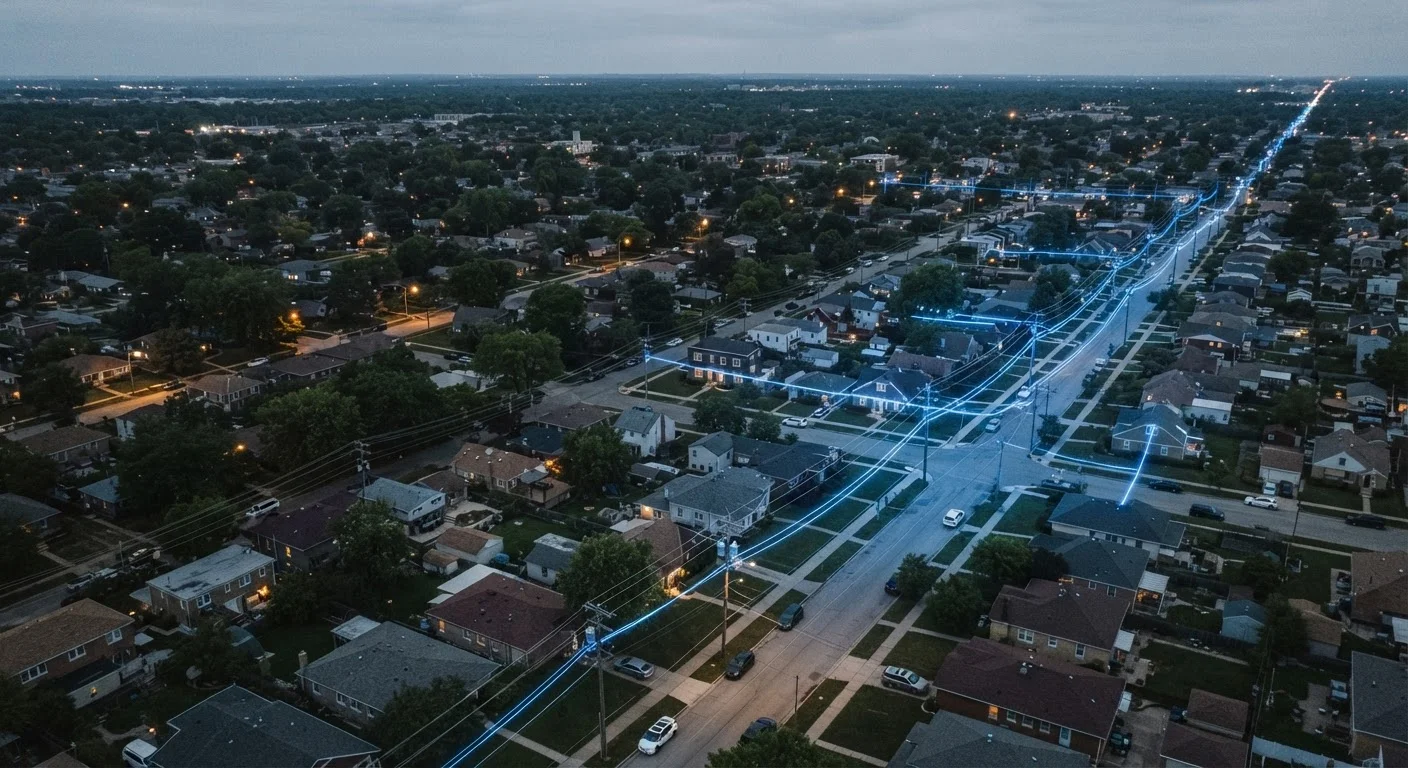
Photo credit: ArticlesHaven.net
In this article
Internet access varies street by street. Here's what determines which providers serve your address and how to look it up accurately.
Key Takeaways
- Your available internet options depend on physical infrastructure already in the ground or on nearby towers, not provider advertising reach.
- Two houses on the same street can have completely different ISP options due to where cables or fiber lines end.
- The most reliable way to check availability is to run an address-level lookup directly with each provider.
- FCC broadband maps provide a general overview but may not reflect actual service at your specific address.
- Renters and apartment dwellers may face additional restrictions beyond infrastructure - such as exclusive building agreements.
- Moving to a new address is one of the most common triggers for a change in which providers are available to you.
Why Availability Is About Infrastructure, Not Advertising
When a provider says it offers internet service "in your area," that phrase is doing a lot of vague work. What it actually means is that somewhere within a broad geographic region - maybe a metro area, maybe a county - the provider has infrastructure. Whether that infrastructure reaches your front door is a separate question entirely.
Every type of internet connection depends on some form of physical delivery system. Cable internet runs through coaxial lines originally built for cable TV. Fiber-optic service requires newly laid fiber cables. DSL travels through existing telephone lines. Fixed wireless sends signals from towers that need line-of-sight proximity. Each of these has a footprint with edges - and those edges don't follow tidy city boundaries.
Understanding each connection type's trade-offs is a useful first step, because the technology involved directly shapes where a provider can and cannot serve you.
~42M
Americans lacking access to reliable broadband
The FCC has estimated tens of millions of Americans lack access to fixed broadband at benchmark speeds, with rural and tribal areas most affected.
1 in 5
Rural Americans with limited or no broadband
Pew Research Center surveys have consistently found rural residents are significantly more likely to report no broadband options at home than their urban counterparts.
~200M
Census blocks reported as covered by FCC data
Researchers have found that FCC coverage data frequently overstates availability because any serviceable address in a block marks the entire block as covered.
How Coverage Edges Create Street-by-Street Gaps
Providers build out their networks in stages, and those build-outs are guided by business calculations - population density, construction costs, franchise agreements with local governments, and regulatory incentives. A fiber provider, for instance, might complete service to 80% of a neighborhood and then pause expansion because the remaining homes require digging through difficult terrain or negotiating new easements.
This is why two houses on the same block can have completely different options. One home sits within the serviceable zone; the next does not. From the street, nothing looks different. On a coverage map, the gap may not even appear.
Coverage Zones Have Real Edges
A provider's service boundary is a physical limit, not a policy choice. Even if a company wanted to serve your address immediately, it would need to extend its network infrastructure - which can take months or years depending on local permitting, construction costs, and business priorities. Understanding this distinction helps set realistic expectations when a provider says your address is "not yet serviceable."
Bundle Availability Follows the Same Rules
If you're interested in a bundled package combining internet with TV or phone service, the same infrastructure logic applies. Factors that shape bundle availability at your address closely mirror what determines standalone internet service options.
Apartment residents often face an additional layer: even when a building sits inside a provider's coverage zone, the building itself may have an exclusive deal with one ISP, or its internal wiring may only support a single provider's service. Renters navigating building restrictions face a different set of constraints than homeowners checking street-level maps.
The Limits of Broadband Maps
The FCC publishes a national broadband map that lets consumers see which providers report coverage at a given location. It's a useful starting point - but it has a well-documented flaw: data is collected at the census-block level. If any address in a census block can receive service from a provider, the entire block may be reported as covered.
That gap between "covered block" and "covered address" means broadband maps can significantly overstate availability in many areas. Consumer advocacy groups and researchers have documented cases where the FCC data showed coverage that providers could not actually deliver.
“Broadband availability data has long been the Achilles heel of federal broadband policy. If we don't know precisely where people lack service, we can't target resources effectively.”
— Blair Levin, Former FCC Chief of Staff and broadband policy researcher
The practical takeaway: use broadband maps to identify potential providers worth checking, then verify directly with each one using your full street address. That address-level confirmation is the only reliable signal.
How to Check Availability Accurately
The most reliable process is straightforward, if a little time-consuming. For each provider that might plausibly serve your area, go to that provider's own website and run an address-level availability check. Most major ISPs have this tool on their front page.
A few practical notes on this process:
- Use your full address including unit number if you're in an apartment. Results can differ by unit in the same building.
- Don't stop at the first result. Check multiple providers, including fixed wireless and satellite options, which may cover addresses that wired providers don't reach.
- Call to confirm if the stakes are high. If you're making a housing or relocation decision based partly on internet access, a direct call to a provider's service team is more reliable than a web tool alone.
If you're in the middle of a move, building that check into your planning process early can save headaches. Managing internet service during a relocation involves more steps than most people anticipate.
Check Availability Before You Sign a Lease
If reliable internet is essential for work or your household's daily routine, verify provider availability at the exact address before committing to a rental or purchase. Coverage can change significantly even between nearby properties. A quick address-level lookup with two or three likely providers takes minutes and can prevent months of frustration.
Once you know what's available at your address, the next step is matching those options to what your household actually needs. A practical framework for first-time subscribers can help you work through that decision without getting lost in provider jargon.
Frequently Asked Questions

Author
Articles Haven Editorial Contributor
Articles Haven Editorial Team is the collective byline for our editorial team and contributor network. Articles published under this byline or an editorial pen name are researched, written, and reviewed according to our editorial standards for clarity, consistency, and independence before publication.
View all articles →