
What 'Unlimited' Means — and Doesn't Mean — in a Telecom Bundle
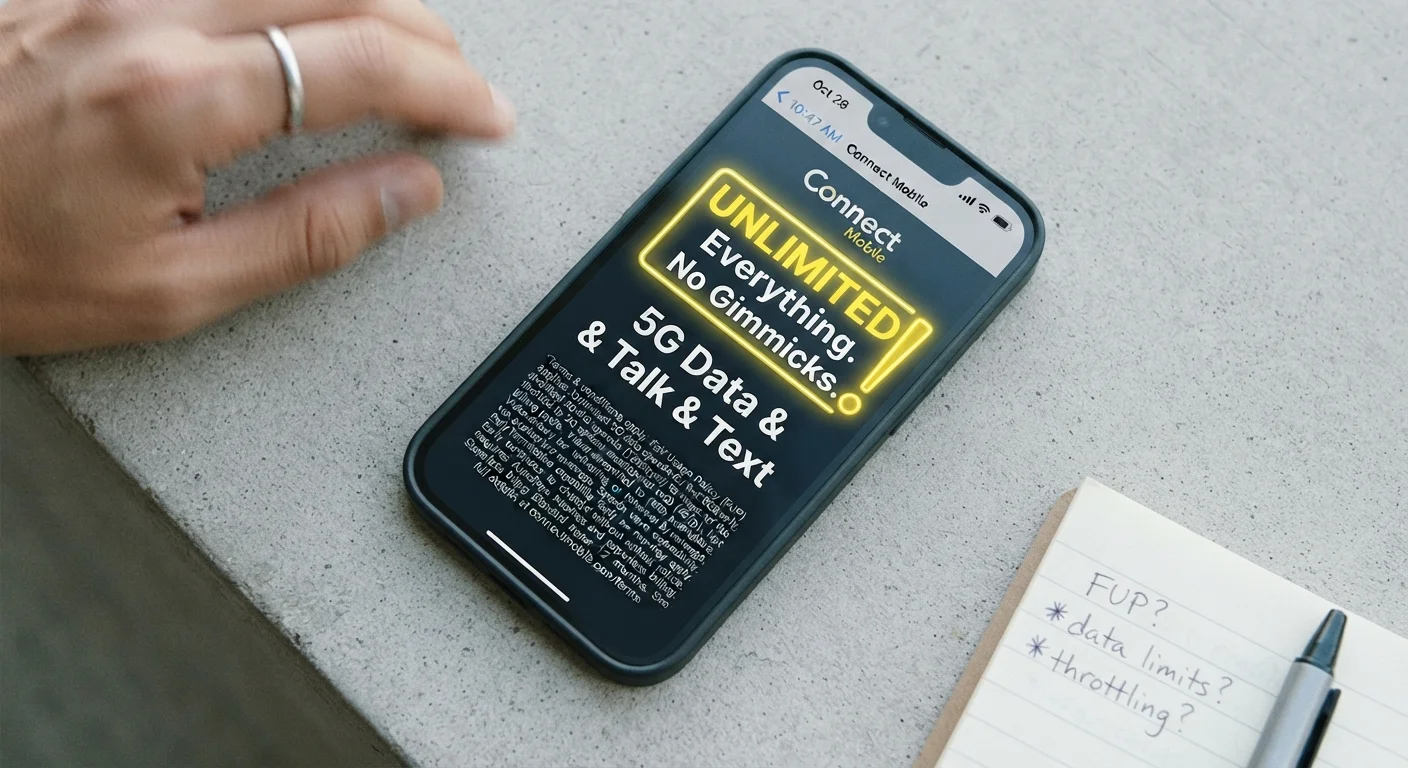
Photo credit: ArticlesHaven.net
In this article
Unlimited data and unlimited calling in bundles often come with fine-print limitations. Understand what the term actually covers in practice.
Key Takeaways
- Unlimited data plans frequently include speed throttling after a set usage threshold is reached.
- Unlimited calling often excludes certain call types, such as international or premium-rate numbers.
- Hotspot data within unlimited bundles is commonly capped or delivered at reduced speeds.
- Reading the service agreement, not just the marketing copy, reveals the actual plan boundaries.
- Bundled unlimited services may have different conditions than standalone unlimited plans.
Why 'Unlimited' Rarely Means What You Think
The word unlimited is one of the most used - and most misunderstood - terms in telecom marketing. It appears on bundle packages, mobile plans, and home internet offerings, creating the impression that a customer will never face any cap or restriction. In practice, the term is a marketing label, not a technical guarantee.
Carriers and internet service providers are permitted to define "unlimited" within their own service agreements. The Federal Communications Commission (FCC) has noted that deprioritization and throttling practices must be disclosed, but the definitions themselves are set by providers. Before you commit to any bundle, understanding what the fine print actually says is essential. Our overview of how telecom bundles work provides helpful grounding if you're starting from scratch.
Myth
Unlimited data means you can use as much data as you want at full speed, all the time.
Fact
Unlimited data plans typically include a deprioritization or throttling threshold after which speeds can be significantly reduced.
Most carriers define "unlimited" to mean you will not be charged overage fees or have service cut off when you exceed a data amount. However, above a certain usage level - often between 22 GB and 100 GB depending on the plan tier - the provider may legally slow your connection during periods of network congestion. This practice, called deprioritization, can result in noticeably slower speeds during peak hours. Some plans also apply a hard speed cap (throttling) to specific activities like video streaming regardless of total data consumed.
Myth
Unlimited calling in a bundle covers any call you make, including international calls.
Fact
Unlimited calling almost always applies to domestic US calls only; international calls are typically billed separately or require an add-on.
When a bundle advertises "unlimited calling," the default scope is calls made within the United States to US numbers. Calls to international destinations - including common destinations like Mexico, Canada, or the UK - are generally excluded unless the plan specifically lists them. Even where Canada and Mexico are included, calls to other countries usually are not. Premium-rate numbers and satellite phone calls are nearly always outside the unlimited calling scope. Always confirm the geographic coverage in the service agreement.
Myth
Unlimited hotspot data is included when your mobile plan says 'unlimited.'
Fact
Hotspot data is usually subject to its own separate cap within unlimited plans, often at a lower full-speed limit than your primary data.
Mobile hotspot functionality - using your phone to share its cellular connection with other devices - is treated as a distinct data category by most carriers. An unlimited mobile plan may include, for example, 15 GB or 50 GB of full-speed hotspot data, after which hotspot speeds drop to a much slower rate (often around 600 Kbps). This can make streaming video or working remotely over hotspot impractical once that threshold is crossed. Higher-tier unlimited plans often include more hotspot data as a distinguishing feature, at a correspondingly higher monthly cost.
Myth
If a bundle is advertised as unlimited, the price is stable for as long as you stay a customer.
Fact
Introductory or promotional unlimited pricing can increase after a set period; price locks, when they exist, are time-limited and contract-specific.
Promotional pricing for unlimited bundles is common and legal. A carrier or provider may offer a discounted rate for the first 12 or 24 months, after which the standard rate applies automatically unless you renegotiate or switch plans. Price guarantees do exist but are typically tied to specific multi-year contracts, and they usually cover the base plan rate rather than fees and surcharges, which can increase independently. Reviewing the pricing schedule - not just the first-month cost - before signing is the clearest way to avoid this surprise.
Myth
An unlimited bundle from a provider means all services in that bundle - internet, TV, and mobile - are truly unlimited.
Fact
Different services within a bundle may have separate usage policies; home internet and mobile data are governed by different terms.
A bundle that combines home internet, mobile service, and TV may describe the package as "unlimited," but the term typically applies to each service under its own conditions. Home internet unlimited plans may include a data cap (often around 1 TB per month) that triggers throttling or overage charges. Mobile data follows carrier-specific deprioritization rules. TV service may limit DVR storage or simultaneous streams regardless of the unlimited label. Treating the bundle as a single unlimited offering without reading each service's individual terms is a common and costly oversight.
Key Restrictions Hidden Inside Unlimited Bundles
Even when a bundle genuinely delivers unlimited data or calls within its core terms, several common restrictions can meaningfully affect daily use.
1.2 TB
Typical home internet data cap before throttling
Many major US home internet providers set a monthly data threshold around 1-1.2 TB before applying additional charges or speed reductions, according to publicly available provider policies.
~600 Kbps
Common hotspot speed after high-speed cap
Carrier service agreements frequently describe post-threshold mobile hotspot speeds around 600 Kbps, which is generally insufficient for HD video streaming.
22-100 GB
Deprioritization threshold range across carrier tiers
US carrier plan disclosures show deprioritization thresholds vary widely by plan tier, with lower-cost unlimited plans triggering congestion management at a lower usage level.
Data Deprioritization
When a carrier's network is congested, customers on unlimited plans may have their connection speeds reduced - sometimes dramatically - until congestion clears. This practice, called deprioritization, is legal and widely used. It is distinct from throttling, which applies a permanent speed cap after a data threshold. Both can appear in the same plan. For a deeper look at how this plays out on mobile, see what unlimited data fine print actually means.
Hotspot Allocation
Most mobile unlimited bundles include mobile hotspot capability, but the hotspot data is almost always subject to its own cap - typically at full speed up to a set gigabyte limit, then reduced to a slower speed afterward. This matters significantly for anyone planning to use their phone as a backup internet connection. How mobile hotspot tiers work varies considerably across wireless plans.
Don't Rely on Marketing Pages Alone
Carrier websites and bundle advertisements typically highlight the most favorable version of plan terms. The actual conditions governing speed, hotspot data, and calling scope are found in the service agreement or "additional terms" document linked from the plan page. Request a copy of the full service agreement before you commit - and review it against the specific features you plan to use most.
Video and Streaming Quality Caps
Some unlimited mobile plans restrict video streaming resolution - for example, limiting playback to standard definition even when the network could support HD. This is often a default setting on lower-tier unlimited tiers and may require an upgrade to remove.
What to Actually Check Before Signing
Knowing these limitations exist is only useful if you know where to look for them. Here are the specific items worth verifying in any unlimited telecom bundle before you sign.
- Deprioritization threshold: At what point (measured in gigabytes) does the provider reserve the right to slow your speeds during congestion?
- Hotspot data cap: How many gigabytes of full-speed hotspot data are included, and what speed applies afterward?
- International calling scope: Does "unlimited calling" include calls to Canada and Mexico, or only domestic US calls?
- Streaming quality policy: Is HD or 4K streaming available on your chosen tier, or is it locked to a lower resolution?
- Contract duration and price locks: Is the unlimited price guaranteed, or can it change after a promotional period?
Many consumers also overlook how bundled service terms can differ from standalone plan terms. The telecom bundle glossary defines the key contract terms that appear most frequently. For a broader look at bundle-specific misconceptions, see bundle myths that mislead shoppers and internet plan misconceptions for home internet context specifically.
Verify Every 'Unlimited' Claim in Writing
Before signing any telecom bundle contract, ask the provider to identify exactly which services are subject to data caps, deprioritization thresholds, speed restrictions, or calling limitations in writing. Verbal assurances from sales representatives are not legally binding. The service agreement is the controlling document - if a feature isn't described as unlimited there, it isn't unlimited in practice.

Author
Articles Haven Editorial Contributor
Articles Haven Editorial Team is the collective byline for our editorial team and contributor network. Articles published under this byline or an editorial pen name are researched, written, and reviewed according to our editorial standards for clarity, consistency, and independence before publication.
View all articles →