
Switching Bundle Providers Without Losing Service
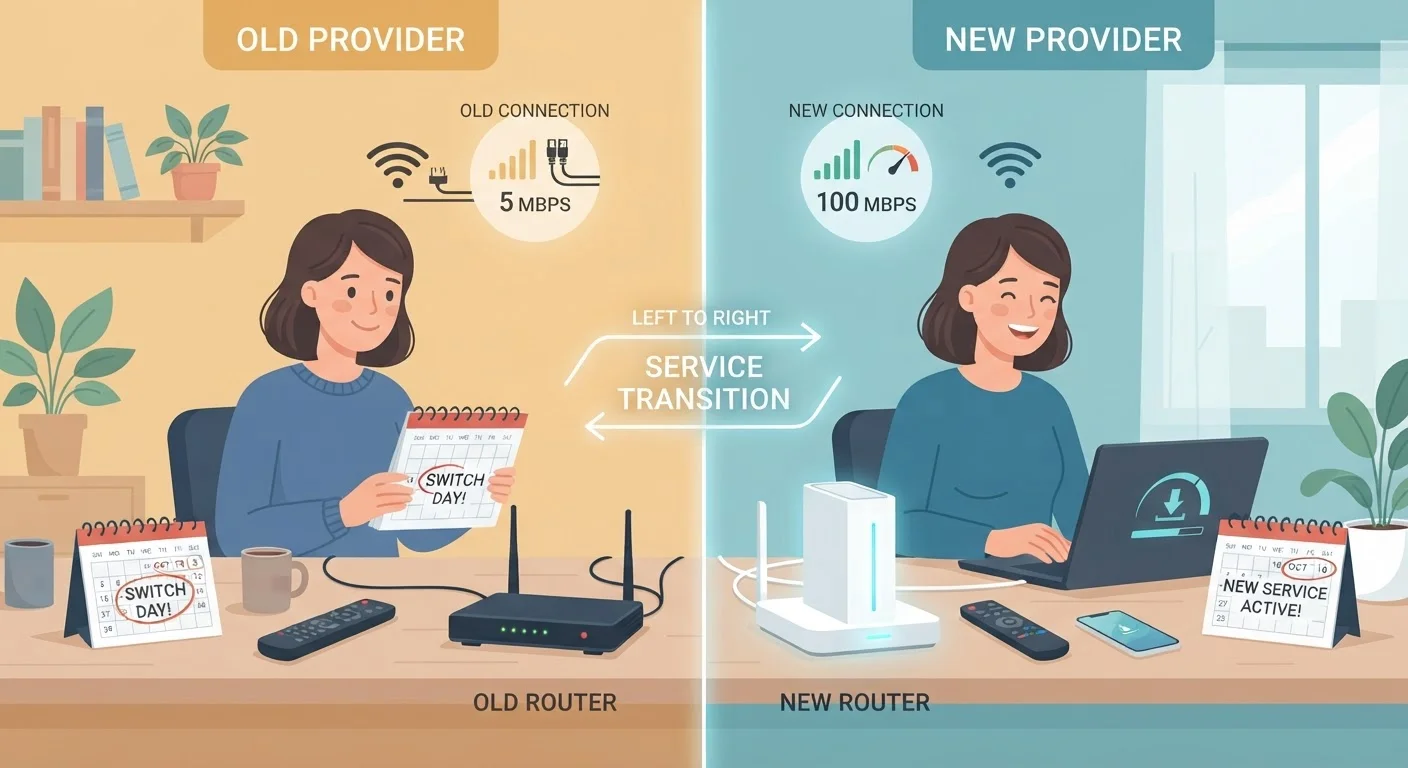
Photo credit: ArticlesHaven.net
In this article
Changing your internet and TV provider takes planning. This step-by-step walkthrough helps you time the transition to avoid gaps in service.
Key Takeaways
- Review your current contract for early termination fees before scheduling any switch.
- Overlap your old and new service by a few days to avoid a gap in coverage.
- Port your home phone number before canceling the old account, not after.
- Return old equipment on time to avoid being billed for unreturned hardware.
- Confirm your new installation date in writing before contacting your current provider to cancel.
Why Bundle Switches Require More Planning Than Single-Service Changes
Switching a single internet line is relatively straightforward. Switching a bundle - internet, TV, and home phone together - introduces more moving parts: separate equipment, a phone number that may need porting, and contract terms that cover multiple services under one agreement. A misstep with any one component can disrupt the others.
If you haven't already evaluated whether your current bundle still matches your household's needs, it's worth starting there. The checklist for assessing your current bundle can help you identify which services you actually use before you commit to a new package. And if you're weighing whether a full bundle even makes sense anymore, see the trade-offs between internet-only and full bundle plans.
What you will need
For households that only want to drop the TV portion and keep bundled internet, the process is somewhat different - cord-cutting while keeping bundled internet covers that path in detail.
Step-by-Step: How to Make the Switch
The steps below are designed to keep your household connected throughout the transition. Follow them in order - skipping ahead, particularly on cancellation timing, is where most service gaps occur.
Don't Cancel Before New Service Is Confirmed
One of the most common mistakes bundle-switchers make is calling to cancel their existing service before the new provider has confirmed an installation date. If the new provider reschedules or runs into an availability issue, you could be left without internet or TV for days. Always wait for written confirmation of your new service start date before initiating cancellation.
Audit your current bundle contract
Log in to your current provider's account portal or call customer service to pull up your contract details. Note your contract end date, the early termination fee if you cancel early, and a full list of rented equipment tied to your account. This information shapes every decision that follows.
Confirm new provider availability at your address
Before spending time comparing plans, verify which providers actually serve your specific address. Availability maps can be misleading at the neighborhood level. Enter your address directly on each provider's website or call to confirm - and ask explicitly whether the speeds advertised are available at your location, not just in your general area.
Compare bundle plans on total cost, not just the introductory rate
Promotional pricing typically lasts 12-24 months. Ask each provider for the standard rate that kicks in after the promo period ends, and factor in equipment rental fees, taxes, and any activation or installation charges. Build a side-by-side monthly cost picture for both the promotional and post-promotional periods before choosing.
Order new service and get written confirmation
Place your order with the new provider and request written confirmation - either by email or through your online account - that includes the installation date, the plan details, and the promotional pricing terms. Do not contact your current provider to cancel until this confirmation is in hand.
Initiate a phone number port if applicable
If your bundle includes a home phone line and you want to keep the number, ask your new provider to initiate a port request before your old service is canceled. Porting typically takes one to three business days. Your old line must remain active throughout the porting process - canceling it first will cause you to lose the number permanently.
Schedule your cancellation with the current provider
Once your new installation date is confirmed, contact your current provider to schedule cancellation. Set the cancellation date one to two days after your new service is scheduled to go live. Ask the representative to confirm the final bill amount, any ETF that applies, and where and how to return equipment.
Return equipment promptly and keep proof
Return all rented equipment - modems, routers, cable boxes, remotes - using the provider's approved method (drop-off location or prepaid shipping label). Keep the receipt or tracking number until the final bill confirms no unreturned-equipment charges. Missing or delayed returns are a leading source of unexpected post-cancellation charges.
Schedule a One- to Two-Day Overlap
Request your new service activation date one to two days before your old service ends. This short overlap gives you time to test the new connection speed and equipment before fully cutting ties. The cost of a day or two of dual billing is almost always less than the hassle of working without service.
For households also considering a mobile plan change at the same time, note that phone number porting for wireless service works differently than for home phone lines. See how wireless number porting works for a separate walkthrough. Similarly, if you're switching providers in the context of a home move, managing internet service during a relocation addresses a different but related set of timing challenges.
Common Pitfalls and How to Avoid Them
Most service disruptions during a bundle switch trace back to a handful of predictable mistakes:
- Canceling too early. Contacting your current provider before the new service is live is the single biggest cause of gaps. Stick to the sequence: confirm new service first, then cancel old service.
- Missing the equipment return window. Providers typically give 10-30 days to return hardware. Missing this window results in charges that can be difficult to dispute after the fact.
- Assuming promotional terms are locked in. Introductory rates are time-limited. Read the terms carefully so the post-promo rate doesn't come as a surprise.
- Not checking for contract overlap. If your current contract has months remaining, factor in the ETF when calculating whether switching now actually saves money.
Early Termination Fees Can Be Significant
Most bundle contracts include early termination fees (ETFs) that can range from $50 to several hundred dollars depending on how many months remain. Check your contract or call your provider to get the exact figure before you commit to switching. Some new providers offer bill credits to offset ETFs - but confirm the terms in writing, as these offers vary widely.
The step-by-step guide to switching internet providers covers the internet-only version of this process in more depth, and many of the same timing principles apply. Common carrier-switching mistakes are also documented in what people get wrong when switching phone carriers - worth a read if phone service is part of your bundle.
Current provider account login
Access your contract end date, equipment list, and early termination fee details.
New provider order confirmation
Verify your installation date, promised speeds, and promotional pricing terms in writing.
Shipping labels or return kit from old provider
Return rented equipment such as routers, modems, and cable boxes to avoid unreturned-equipment charges.
Account number and PIN for phone porting
Required by the new provider to transfer your existing home phone number.

Author
Articles Haven Editorial Contributor
Articles Haven Editorial Team is the collective byline for our editorial team and contributor network. Articles published under this byline or an editorial pen name are researched, written, and reviewed according to our editorial standards for clarity, consistency, and independence before publication.
View all articles →