
Landline Phones in Bundles: Still Worth Including?
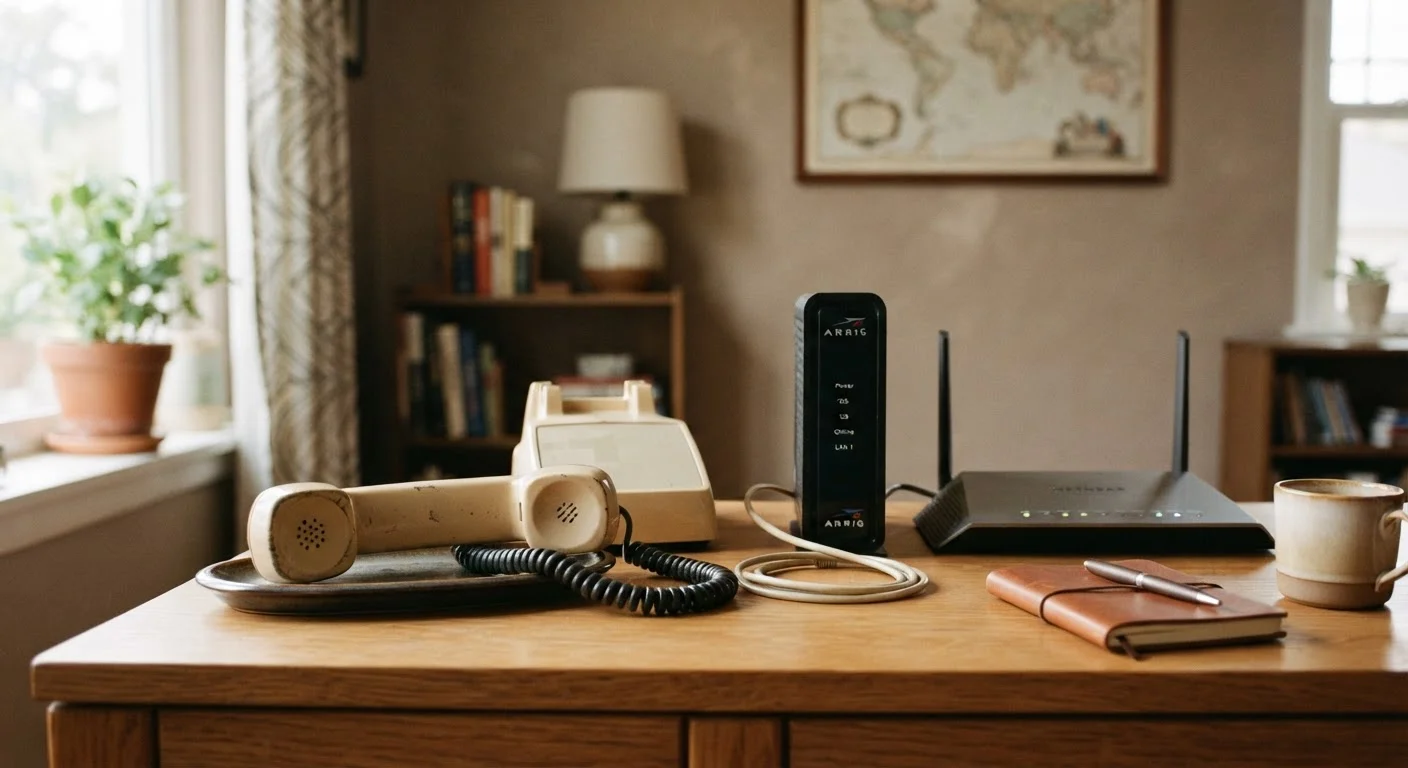
Photo credit: ArticlesHaven.net
In this article
Home phone service is still bundled by many providers. Weigh the practical reasons some households keep it versus cutting it entirely.
Key Takeaways
- Many providers still include landline service in triple-play bundles, often at little extra cost.
- Landlines can offer reliability advantages during power outages or cell network congestion.
- For households that rarely use a home phone, bundled landline service may add cost without real value.
- The decision hinges on household usage patterns, local cell coverage, and how much the add-on actually costs.
Reliable during cell network congestion
During emergencies or large local events, mobile networks can become overloaded and unreliable. A home VoIP or copper line often remains accessible when cell calls are dropping.
Consistent 911 call routing with address data
Landlines and VoIP lines registered to a home address automatically transmit location data to emergency dispatchers, which can matter when a caller can't speak clearly or is disoriented.
Better audio clarity for some users
Older adults or people with hearing difficulties often find corded handsets easier to use than smartphone speakers or earbuds, making a home phone a practical accessibility tool.
Often added to bundles at minimal extra cost
Many triple-play packages are priced close to double-play bundles, meaning the phone line costs very little incrementally - sometimes under $5 per month more.
Useful backup if smartphones are lost or charging
A corded phone doesn't depend on a battery charge, so it serves as a reliable backup communication point regardless of where household members left their devices.
VoIP lines fail when internet goes down
Unlike copper landlines, most bundled home phone services run over your internet connection and will go offline during an outage unless you have a battery backup unit - eliminating one of the classic landline reliability arguments.
Most households use it rarely or not at all
With the majority of US adults relying on smartphones as their primary communication device, a bundled home phone line frequently goes unused, making it a recurring cost with little return.
Adds to total monthly bill over time
Even a modest monthly add-on cost compounds over a two-year contract, meaning households that don't use the line could spend meaningfully more than they would on an internet-only or double-play plan.
Spam and robocalls are disproportionately common on landlines
Home phone numbers are frequently targeted by automated spam callers, and call-blocking tools on landlines are generally less sophisticated than those available on modern smartphones.
Removing it later can complicate bundle pricing
Providers sometimes restructure pricing when customers drop components mid-contract, and the remaining services may end up costing more than the original bundle price.
What Does Landline Inclusion Actually Mean in a Bundle?
When providers market a triple-play package - internet, TV, and phone - the "phone" component is almost always a Voice over Internet Protocol (VoIP) line rather than a traditional copper landline. VoIP routes calls through your internet connection rather than a dedicated phone network, which keeps provider costs low and allows them to include it as a bundle sweetener.
Understanding this distinction matters because VoIP lines behave differently from old-school copper service. They typically go down when your internet goes down, and most require a battery backup to function during a power outage. Before deciding whether to keep or drop this component, it helps to know what you're actually getting. See how telecom bundles work for a fuller breakdown of the underlying mechanics.
VoIP vs. Traditional Copper: A Key Distinction
Most bundled "home phone" lines today are VoIP services, not traditional copper landlines. Copper landlines have their own dedicated circuit and can function without home power or internet in many cases. VoIP lines, by contrast, depend on your internet connection and router. If backup reliability during outages is the reason you want a home phone, confirm with your provider whether the service includes a battery backup unit and how long it sustains the line.
Reasons Some Households Still Value a Home Phone Line
The case for keeping a bundled landline is real in certain situations, even if it feels outdated for the average household.
Reliable during cell network congestion
During emergencies or large local events, mobile networks can become overloaded and unreliable. A home VoIP or copper line often remains accessible when cell calls are dropping.
Consistent 911 call routing with address data
Landlines and VoIP lines registered to a home address automatically transmit location data to emergency dispatchers, which can matter when a caller can't speak clearly or is disoriented.
Better audio clarity for some users
Older adults or people with hearing difficulties often find corded handsets easier to use than smartphone speakers or earbuds, making a home phone a practical accessibility tool.
Often added to bundles at minimal extra cost
Many triple-play packages are priced close to double-play bundles, meaning the phone line costs very little incrementally - sometimes under $5 per month more.
Useful backup if smartphones are lost or charging
A corded phone doesn't depend on a battery charge, so it serves as a reliable backup communication point regardless of where household members left their devices.
Beyond the individual advantages listed above, there's a practical pricing argument: many providers price their double-play (internet + TV) and triple-play packages within a few dollars of each other. If the landline addition costs you less than roughly $5-$10 per month over the double-play rate, the convenience and backup value may justify it - even if you only pick it up occasionally. Check what shapes long-term bundle value to see how pricing structures can shift over a contract period.
Where a Bundled Landline Falls Short
For most mobile-first households, the downsides of keeping a bundled phone line are hard to ignore.
VoIP lines fail when internet goes down
Unlike copper landlines, most bundled home phone services run over your internet connection and will go offline during an outage unless you have a battery backup unit - eliminating one of the classic landline reliability arguments.
Most households use it rarely or not at all
With the majority of US adults relying on smartphones as their primary communication device, a bundled home phone line frequently goes unused, making it a recurring cost with little return.
Adds to total monthly bill over time
Even a modest monthly add-on cost compounds over a two-year contract, meaning households that don't use the line could spend meaningfully more than they would on an internet-only or double-play plan.
Spam and robocalls are disproportionately common on landlines
Home phone numbers are frequently targeted by automated spam callers, and call-blocking tools on landlines are generally less sophisticated than those available on modern smartphones.
Removing it later can complicate bundle pricing
Providers sometimes restructure pricing when customers drop components mid-contract, and the remaining services may end up costing more than the original bundle price.
~27%
US adults in landline-only or landline-plus-mobile households
Centers for Disease Control and Prevention National Health Interview Survey data has tracked a long-term decline in landline use, with wireless-only households now representing the clear majority.
~73%
US adults living in wireless-only households
CDC National Center for Health Statistics surveys consistently show wireless-only households have become the dominant arrangement across nearly all age groups under 65.
If your household's cell coverage at home is solid and everyone already uses smartphones for primary communication, the landline component often functions as dead weight in your bill. Explore the trade-offs between internet-only and full bundles if you're leaning toward trimming services.
How to Decide: Questions Worth Asking Before You Choose
Rather than defaulting to keeping or dropping the landline, run through a few concrete questions first:
- What is the actual price difference? Ask your provider what the bundle costs with and without the phone line. Sometimes the difference is nominal; other times removing it meaningfully lowers your bill.
- Does anyone in your household rely on a home number? Elderly relatives, caregivers, or people managing a home-based business may genuinely depend on a stable, familiar number.
- How is your cell coverage inside your home? If calls drop in your kitchen or bedroom, a corded home phone solves a real daily frustration.
- Are there alternatives? Some providers now pair home internet with a wireless plan instead of a traditional home phone. Internet-wireless bundles work differently from classic triple-play packages and may be a better fit.
For a broader look at when bundling any combination of services actually saves money, see when bundles save money and when they don't. And if you're exploring mobile and home phone options more broadly, comparing plan types side by side is a useful starting point before committing to any bundle.

Author
Articles Haven Editorial Contributor
Articles Haven Editorial Team is the collective byline for our editorial team and contributor network. Articles published under this byline or an editorial pen name are researched, written, and reviewed according to our editorial standards for clarity, consistency, and independence before publication.
View all articles →