
Your First Insurance Policy: A Plain-Language Starting Point
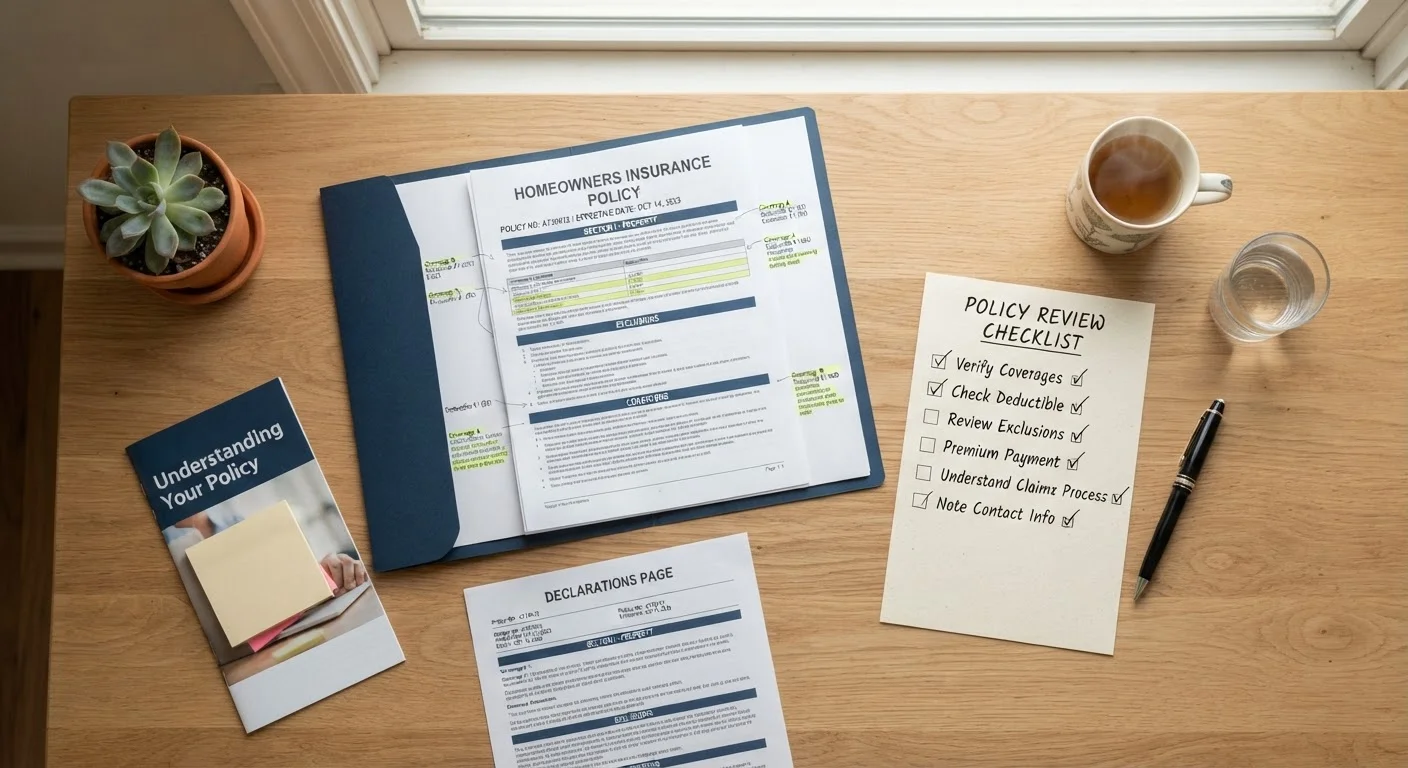
Photo credit: ArticlesHaven.net
In this article
Never bought insurance before? This guide walks through every core concept you need before comparing or signing anything.
Key Takeaways
- Insurance transfers financial risk from you to an insurer in exchange for regular premium payments.
- Premiums, deductibles, and coverage limits are the three levers that define what you pay and what you get.
- Most people need health, auto, and renters or homeowners insurance before anything else.
- Comparing policies means aligning coverage limits and exclusions - not just monthly cost.
- Reading the declarations page and exclusions section is the single most important step before signing.
What Insurance Actually Does
At its core, insurance is a financial arrangement where you pay a relatively small, predictable amount - your premium - so that a larger, unpredictable loss gets covered by someone else. You're trading uncertainty for stability.
Insurers pool premiums from many policyholders. When one person experiences a covered loss - a car accident, a house fire, a medical emergency - the insurer draws from that pool to pay the claim. No single person can predict whether they'll face a major loss, but across thousands of policyholders, insurers can calculate risk statistically and price policies accordingly. That process is called underwriting. For a deeper look at how that works, see how insurance underwriting affects your policy.
What insurance does not do is cover everything. Every policy has defined boundaries - what's covered, how much, under what conditions, and what's excluded entirely. Understanding those boundaries is what separates a confident buyer from someone caught off guard at claim time.
This article is for general informational purposes only and is not personalised insurance, financial, or legal advice. Coverage terms, exclusions, and availability vary by provider and state. Consult a licensed insurance agent or adviser for guidance specific to your situation.
The Core Terms You Need to Know
Insurance language is dense by design, but a handful of terms do most of the heavy lifting. Once you understand these, policy documents become dramatically easier to read.
Premium
The regular payment you make - usually monthly or annually - to keep your insurance policy active. Paying your premium keeps your coverage in force.
Deductible
The amount you pay out-of-pocket on a claim before your insurer starts contributing. A $1,000 deductible means you cover the first $1,000 of any covered loss.
Coverage limit
The maximum dollar amount your insurer will pay for a covered claim. If a loss exceeds your limit, you're responsible for the difference.
Exclusion
A specific situation, event, or type of damage that your policy will not cover. Exclusions are listed in the policy document and define where your coverage stops.
Claim
A formal request you submit to your insurer asking them to pay for a covered loss. Filing a claim starts the process of receiving your policy benefit.
Declarations page
A summary page at the start of your policy listing your name, covered items, limits, deductibles, and policy dates. It's the quickest snapshot of what you purchased.
Liability coverage
Protection that pays for harm or damage you accidentally cause to other people or their property. It covers their costs, not your own.
Endorsement
An optional addition or amendment to a standard policy that expands or modifies your coverage - for example, adding flood coverage to a homeowners policy.
Beyond vocabulary, it helps to understand how these terms interact. A low premium often means a high deductible - meaning you absorb more cost per claim. A high coverage limit protects more of your assets but typically raises your premium. Balancing these three elements is the central decision every insurance buyer makes.
For a fuller breakdown of what these documents contain, learn what an insurance policy is actually buying you.
Types of Insurance Most Consumers Encounter First
Not all insurance is equally urgent. Most first-time buyers are navigating one of a few common types:
- Health insurance - Covers medical expenses including doctor visits, hospital stays, and prescriptions. Often obtained through an employer, a government marketplace, or a government program like Medicaid or Medicare.
- Auto insurance - Required by law in nearly every U.S. state if you drive. Covers liability (damage you cause to others), and optionally your own vehicle. See auto insurance basics for a full breakdown of coverage types.
- Renters insurance - Covers your personal belongings inside a rented home and provides liability protection. Often inexpensive and frequently overlooked by first-time renters.
- Homeowners insurance - Required by most mortgage lenders. Covers the structure of your home, personal property, and liability. Standard policies typically exclude floods and earthquakes, which require separate coverage.
Explore how these fit into the broader landscape at Insurance Types.
Renters Insurance Is Often Overlooked
Renters insurance is one of the most affordable policies available to consumers and one of the most commonly skipped. It protects your personal belongings - electronics, clothing, furniture - and provides liability coverage if someone is injured in your home. If you're renting, it's worth getting a quote before assuming you don't need it.
How to Compare Policies Without Getting Overwhelmed
When comparing policies, most first-timers focus on the monthly premium. That's understandable, but it's only one data point. Two policies priced similarly can deliver very different value depending on their deductibles, limits, and exclusions.
A more useful comparison checklist:
- Coverage limit - What's the maximum the insurer will pay per incident or policy period?
- Deductible - What do you pay before coverage kicks in? Can you realistically afford that amount?
- Exclusions - What specific situations or damages are not covered?
- In-network vs. out-of-network (for health plans) - Which providers can you use without penalties?
- Claims process - How do you file? What documentation is required?
Side-by-side comparison works best when you hold coverage limits constant and compare deductibles and exclusions. Changing one variable at a time makes trade-offs visible. For a complete walkthrough of evaluating options from start to finish, see the full picture on choosing insurance.
Quotes Are Estimates, Not Guarantees
The premium you're quoted during shopping may change slightly after underwriting - the insurer's formal review of your application. Factors like your credit history, claims history, and location can influence the final rate. Always review the final offer before binding coverage. Terms, coverage, and pricing vary by provider and state.
Common First-Timer Mistakes to Avoid
Most regrets first-time insurance buyers express come down to a few predictable patterns:
- Choosing the lowest premium without checking the deductible. A $200/month plan with a $8,000 deductible may cost more when you actually need care than a $280/month plan with a $2,500 deductible.
- Skipping the exclusions section. Exclusions define the real edges of your coverage. A policy that seems comprehensive may explicitly exclude the exact event you're worried about.
- Not updating coverage after life changes. Marriage, a new home, a new car, or a new dependent can all create gaps in existing coverage if the policy isn't reviewed.
- Assuming the declarations page is the whole policy. The dec page summarizes your coverage, but the full policy document contains the conditions and exclusions that govern actual claims. Read the full policy before you sign - at minimum, the exclusions and conditions sections.
Gaps in Coverage Can Be Costly
Letting a policy lapse - even briefly - can have consequences beyond the obvious lack of protection. Some insurers treat a coverage gap as a risk factor that raises your future premium. If you're switching policies, coordinate your new start date to overlap with or immediately follow your existing policy's end date.
Coverage decisions involve trade-offs between cost and protection. There's no universally correct answer, but going in informed - with a clear sense of what you own, what you can afford to lose, and what your state requires - puts you in a position to make a choice you understand. See Coverage and Costs for more on how premiums, deductibles, and limits interact.
Frequently Asked Questions

Author
Articles Haven Editorial Contributor
Articles Haven Editorial Team is the collective byline for our editorial team and contributor network. Articles published under this byline or an editorial pen name are researched, written, and reviewed according to our editorial standards for clarity, consistency, and independence before publication.
View all articles →