
Zone Cleaning vs. Task Cleaning: Two Methods for Tackling the Whole House
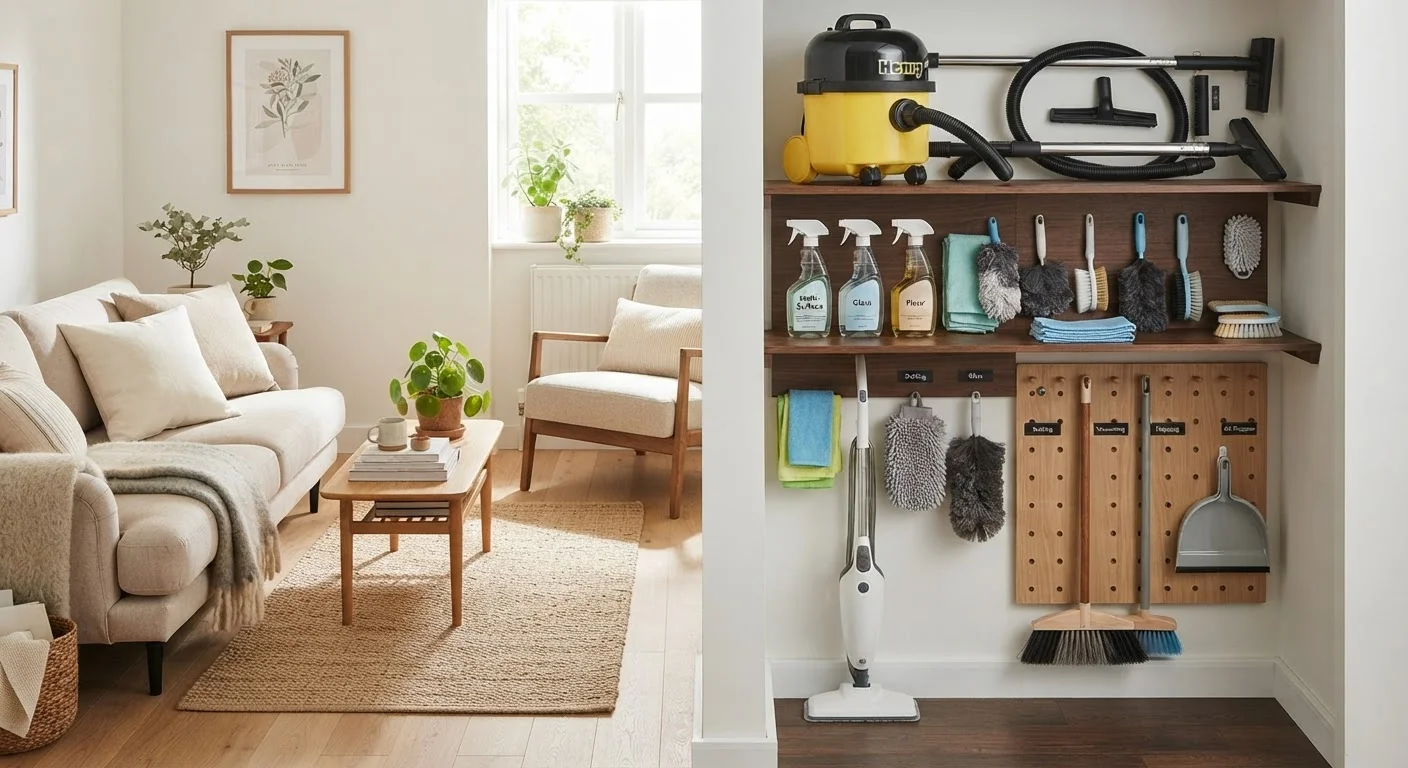
Photo credit: ArticlesHaven.net
In this article
Understand the difference between cleaning by room zone and cleaning by task type, and which approach suits different schedules.
Key Takeaways
- Zone cleaning means focusing on one room or area at a time until it's fully clean.
- Task cleaning means doing one type of task - like vacuuming - throughout the entire house before moving on.
- Zone cleaning suits people with short, unpredictable time windows; task cleaning suits those with larger blocks of time.
- Neither method is universally better - your schedule, household size, and cleaning frequency determine the fit.
- Many households use a hybrid of both approaches depending on the week.
What Each Method Actually Means
Zone cleaning means you pick one room or defined area - say, the kitchen - and complete every cleaning task in that space before moving on. Wipe counters, clean the sink, mop the floor, wipe down appliances. You don't leave until the zone is done.
Task cleaning works the opposite way. You pick one task - vacuuming, for example - and do it in every room of the house before switching to the next task. So you vacuum everywhere, then dust everywhere, then mop everywhere.
Both methods are designed to prevent the scattered, half-finished cleaning that leaves every room slightly dirty. The choice between them comes down to how your time is structured and how your brain prefers to work. For a deeper look at how different rooms accumulate grime in distinct ways, see this room-by-room breakdown.
How Zone Cleaning Works in Practice
In a typical zone cleaning setup, you divide your home into four to six zones - kitchen, bathrooms, living areas, bedrooms, and so on - and assign each zone to a specific day or time block. On kitchen day, everything in the kitchen gets cleaned, top to bottom. The rest of the house is left alone.
This works well for people who only have 30-45 minutes at a stretch. You get a fully clean room, which creates a noticeable sense of progress. The downside: if you skip a zone day, that area doesn't get touched until the next cycle.
Start With a Written Zone Map
Before committing to zone cleaning, write out which rooms or areas belong to each zone and which tasks are included. Vague zones lead to inconsistent results. A clear list - counters, sink, stovetop, floor, interior microwave - removes guesswork and keeps sessions on track.
Zone cleaning also pairs naturally with cleaning schedules that rotate tasks over weeks rather than days. For help structuring one, whole-home cleaning schedule frameworks offer useful starting templates.
How Task Cleaning Works in Practice
Task cleaning - sometimes called the assembly-line method - has you move through the house with one tool or one cleaning product at a time. You carry the vacuum through every room, then swap to a microfiber cloth and dust everything, then mop all hard floors.
The efficiency argument is real: you're not constantly switching between products, you're not re-wiping a surface because you forgot to dust before you mopped. Each pass reinforces the last. The catch is that task cleaning generally requires a longer uninterrupted block of time, and if you stop partway through, the house can feel more chaotic than when you started.
| Zone Cleaning | Task Cleaning | |
|---|---|---|
| Time requirement per session | 30-60 minutes per zone | 2+ hours for full house |
| Best cleaning frequency | Daily or several times per week | Once or twice per week |
| Sense of progress | High - one clean room visible immediately | Low until all tasks complete |
| Tool/product switching | Frequent within each zone | Minimal - one tool per pass |
| Handles interruptions well | Yes - natural stopping points | No - partial completion feels messy |
| Works for large homes | Manageable with more zones | Efficient with longer sessions |
This method also tends to work well for households where cleaning happens less frequently - a thorough once-weekly or biweekly session benefits from the systematic coverage task cleaning provides. You can compare how professional cleaners approach this same tradeoff in this DIY vs. professional cleaning breakdown.
Which Method Fits Your Situation
A few practical questions help clarify the fit:
- How much uninterrupted time can you realistically carve out? Under an hour? Zone cleaning. Two or more hours? Task cleaning becomes viable.
- How often do you clean? Daily or near-daily light cleaning favors zone approaches. Less-frequent deep sessions suit task-based work.
- Do you live alone or with others? Shared households create more cross-room mess. Task cleaning's whole-home sweep can be more satisfying in those environments.
- Does visible progress matter to you? Zone cleaning delivers a fully clean room you can see and use. Task cleaning delivers an evenly cleaned house only at the end of the session.
It's also worth noting that many people combine both. They zone-clean during the week and task-clean on weekends. There's no rule requiring strict adherence to one system. For more perspective on what actually drives cleanliness outcomes, frequency isn't always the key factor - technique matters too.
Don't Switch Methods Mid-Cycle Without a Plan
Jumping between zone and task cleaning without intention often results in a house that's partially cleaned in two different ways - some rooms half-done by zone, some tasks done globally but others skipped. If you want to switch methods, finish your current cycle first, then start fresh with the new approach.

Author
Articles Haven Editorial Contributor
Articles Haven Editorial Team is the collective byline for our editorial team and contributor network. Articles published under this byline or an editorial pen name are researched, written, and reviewed according to our editorial standards for clarity, consistency, and independence before publication.
View all articles →