
Anxiety vs. Stress: Similar Feelings, Different Causes
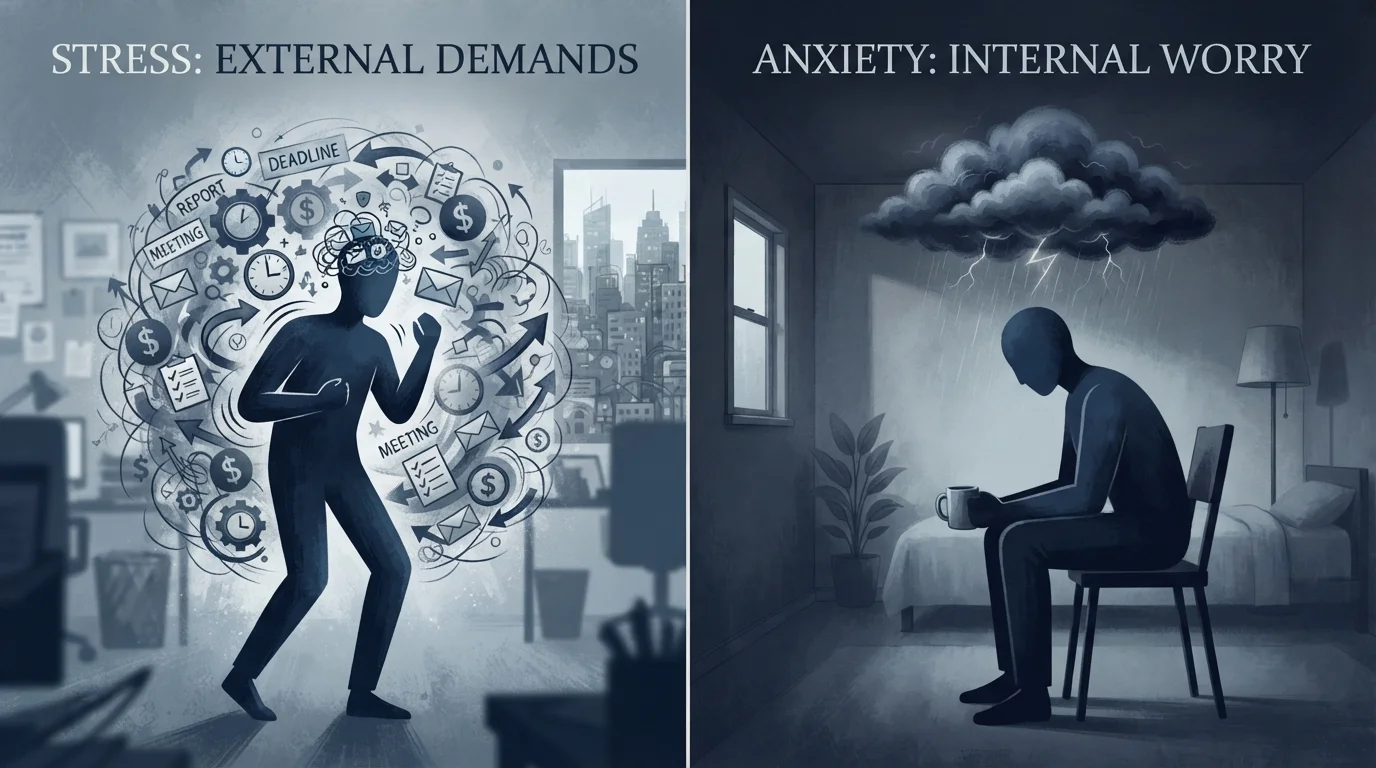
Photo credit: ArticlesHaven.net
In this article
Stress and anxiety share symptoms but have distinct origins and implications. Understanding the difference can help you respond more effectively.
Key Takeaways
- Stress is typically tied to a specific external cause; anxiety can persist even without one.
- Both share physical symptoms like tension and disrupted sleep, making them easy to confuse.
- Anxiety disorders are clinical conditions that often benefit from professional evaluation and support.
- Stress usually resolves when the triggering situation changes; anxiety may not.
- This article provides general information only - consult a qualified professional for personal guidance.
Why the Distinction Matters
Stress and anxiety are two of the most commonly conflated experiences in everyday conversation - and understandably so. Both can produce racing thoughts, physical tension, irritability, and disrupted sleep. But conflating them can lead to mismatched coping strategies, and in some cases, to leaving a genuine clinical condition unaddressed.
The practical difference comes down to origin and duration. Stress is generally a response to something external and identifiable - a looming deadline, a difficult conversation, an unexpected bill. Anxiety, by contrast, often persists beyond the triggering event or arises without a clear cause at all. Understanding which one you're dealing with shapes what kind of response actually helps.
For a closer look at how the body responds to pressure at a physiological level, see what happens in your body when stress builds.
A Note on This Content
The information here is general and educational in nature. Stress and anxiety exist on a spectrum, and individual experiences vary widely. Only a qualified mental health professional can assess, diagnose, or recommend treatment for anxiety or related conditions. If you're unsure what you're experiencing, speaking with your primary care provider or a licensed therapist is a reasonable first step.
How Stress and Anxiety Compare
At first glance, the symptom overlap is striking. Both can cause muscle tension, headaches, difficulty concentrating, and a sense of being overwhelmed. But the distinguishing features become clearer when you look at cause, timeline, and what provides relief.
| Criterion | Stress | Anxiety |
|---|---|---|
| Primary cause | External, identifiable stressor | Internal; may lack clear trigger |
| Duration | Typically resolves with situation | Can persist beyond trigger |
| Physical symptoms | Tension, headaches, fatigue | Similar, plus restlessness, chest tightness |
| Emotional tone | Overwhelm, frustration | Dread, apprehension, unease |
| Relief factors | Situation resolving or improving | May not ease with circumstance change |
| Clinical classification | Normal response, not a disorder | Can be a diagnosable anxiety disorder |
| Common management approaches | Rest, time management, social support | Therapy, professional evaluation, coping skills |
One useful mental check: ask yourself whether you could point to a specific, concrete source of the feeling. If yes - and the feeling fades when that source changes - stress is the more likely explanation. If the worry feels vague, persistent, or out of proportion to the actual situation, that pattern aligns more closely with anxiety.
It's also worth noting that prolonged, unmanaged stress can contribute to the development of anxiety over time. The two are related, but they are not the same thing. Understanding the difference between acute and chronic stress adds another useful layer to this picture.
~33%
US adults experiencing anxiety disorders
The National Institute of Mental Health estimates anxiety disorders affect roughly one-third of U.S. adults at some point in their lives, making them among the most common mental health conditions.
77%
Adults reporting physical stress symptoms
According to American Psychological Association survey data, a large majority of U.S. adults report experiencing physical symptoms they associate with stress, such as headaches or fatigue.
40%+
Anxiety cases that go untreated
Mental health advocacy organizations have noted that a substantial proportion of people with anxiety disorders do not receive treatment, often due to stigma or difficulty identifying the condition.
When to Seek Professional Guidance
General stress management strategies - structured rest, physical activity, time management, social support - are widely recognized as useful for everyday stress. Anxiety disorders, however, are clinical conditions that generally respond best to professional evaluation and, in many cases, structured treatment such as cognitive behavioral therapy (CBT) or other approaches determined by a licensed clinician.
Some signals that suggest it may be worth speaking with a mental health professional include: worry that feels difficult to control most days, physical symptoms without a medical explanation, avoidance of situations because of fear, or a pattern that's affecting work, relationships, or daily routines. Recognizing when stress has crossed into something more covers these markers in more detail.
Perfectionism is one pattern worth examining - it can quietly fuel anxiety in ways that aren't always obvious. How perfectionism fuels anxiety explores that connection. For those whose stress has a financial dimension, the relationship between financial stress and mental health offers relevant context.
This article is for general informational purposes only and is not a substitute for professional medical or mental health advice. If you have concerns about your mental health, please consult a qualified healthcare professional.

Author
Articles Haven Editorial Contributor
Articles Haven Editorial Team is the collective byline for our editorial team and contributor network. Articles published under this byline or an editorial pen name are researched, written, and reviewed according to our editorial standards for clarity, consistency, and independence before publication.
View all articles →