
The Science of Habit Stacking: Linking New Routines to Ones You Already Have
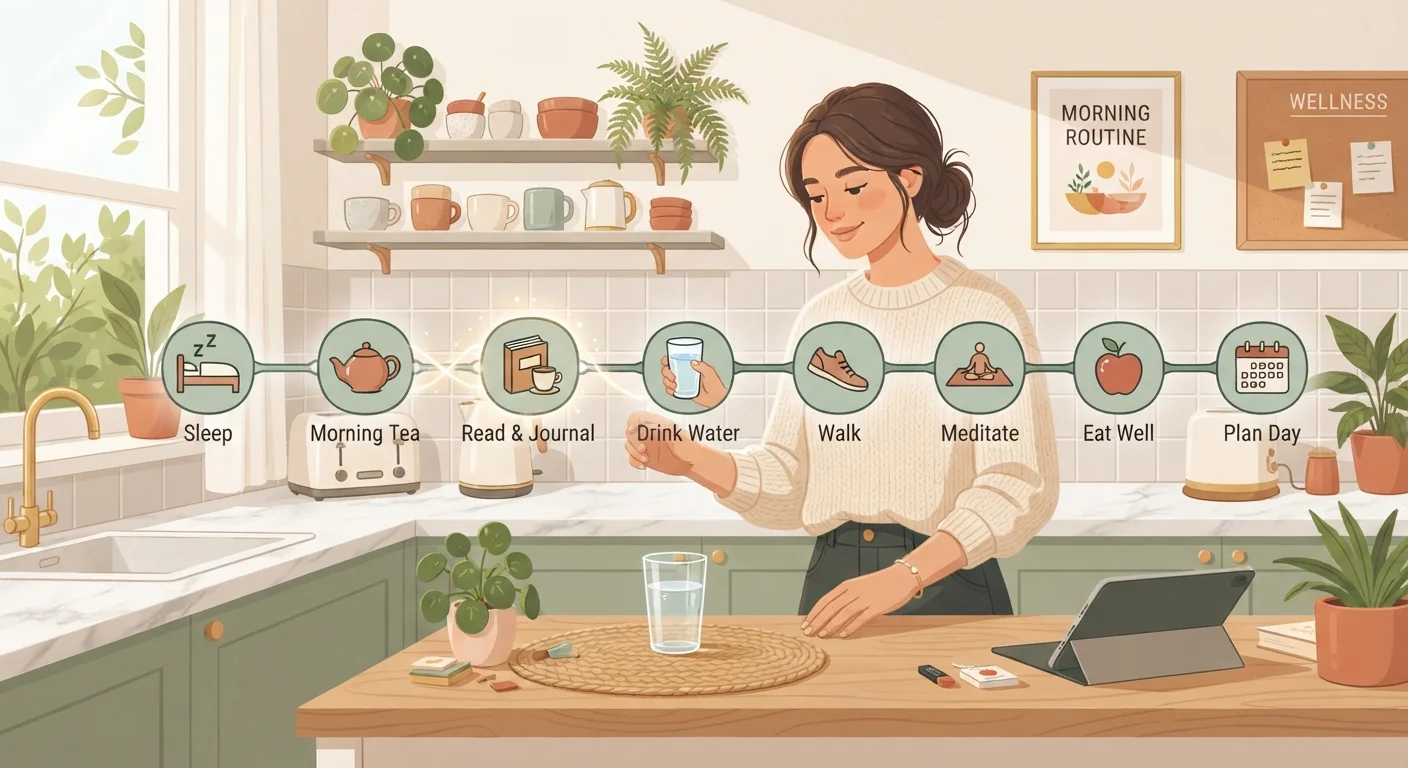
Photo credit: ArticlesHaven.net
In this article
Learn how pairing a new habit with an existing one can dramatically improve your odds of making it stick.
Key Takeaways
- Habit stacking pairs a new behavior with an existing routine to reduce the mental effort required to start.
- The existing habit acts as a reliable cue, removing the need to rely on willpower or reminders.
- Choosing a logically connected anchor habit dramatically improves how well the new behavior sticks.
- Starting with a very small new habit lowers the barrier to consistency and builds momentum faster.
- Tracking your stacks in writing helps you troubleshoot and refine them over time.
Why Habit Stacking Works
Building a new habit from scratch is genuinely hard. You have to remember to do it, motivate yourself to start, and repeat it often enough for it to become automatic. Most attempts stall at step one: remembering. Habit stacking sidesteps this problem by borrowing the cue from a habit that already runs reliably on autopilot.
The concept is grounded in how the brain encodes behavior. When you repeat an action in a consistent context, neural pathways strengthen, and the sequence eventually runs with minimal conscious effort. To understand the full neurological picture, see why your brain makes habits so hard to break.
The stacking formula is straightforward: After/Before , I will . Your morning coffee, your commute, brushing your teeth - these are all reliable anchors that can carry a new behavior forward without requiring a separate reminder system.
Start with your most reliable habit
The strongest anchor is the one you'd do regardless of mood, schedule, or motivation. Morning routines tied to biological needs - like drinking water after waking - tend to outperform ones that depend on external prompts or tools. Audit your actual behavior over a few days before choosing your anchor.
This approach fits neatly within the broader habit loop of cue, routine, and reward. The existing habit supplies the cue; the new behavior becomes the routine; the sense of completion provides a small built-in reward.
How to Build Your First Habit Stack
The steps below walk you through designing a habit stack that has a realistic chance of lasting. The process takes under 20 minutes the first time and gets faster as you practice it.
What you will need
Map your existing daily anchors
Write down five to eight things you do every single day without fail - not aspirational habits, but actual current behaviors. Examples: brew coffee, start the car, wash your face, sit at your desk, put on shoes. These are your potential anchors. Be specific about timing and location for each one.
Choose one small new habit to introduce
Pick a single new behavior you want to build. Keep it small enough to complete in two minutes or less at first - one set of stretches, writing one sentence in a journal, drinking one glass of water, taking three slow breaths. Complexity is the enemy of consistency at this stage.
Match new habit to the most logical anchor
Look at your anchor list and ask: which one shares a physical setting, emotional state, or logical sequence with my new habit? A breathing exercise fits naturally after sitting at your desk. A posture check fits naturally after standing up from a chair. The closer the contextual match, the stronger the association your brain will form.
Write your stack formula explicitly
Put the pairing into writing using the standard format: After I [anchor habit], I will [new habit]. For example: After I pour my morning coffee, I will write one sentence in my journal. Written intentions are measurably more likely to be followed through on than mental ones, according to research on implementation intentions.
Track consistency for at least three weeks
Mark each day you complete the stack with a simple checkmark. Don't focus on streaks - focus on frequency. Missing one day is fine; missing several in a row is a signal to review whether the anchor or the new habit needs adjusting. Three weeks of mostly-consistent practice is typically enough to begin feeling the sequence as natural.
Don't stack onto an unstable foundation
If the anchor habit itself is inconsistent - something you do only when you're feeling motivated - the new behavior will inherit that inconsistency. Verify that your chosen anchor has been stable for at least a month before building onto it. An unreliable anchor is one of the most common reasons otherwise well-designed stacks collapse early.
Once you have a stack working consistently, consider how small compounding changes add up - incremental habits often outperform dramatic overhauls over weeks and months. The same logic applies when building a complete daily habit system across multiple wellness areas.
Troubleshooting Common Stacking Failures
Even a well-designed stack can break down. Here are the most common reasons - and how to address them without starting over.
- The anchor habit is too irregular. If your anchor only happens three or four days a week, the new behavior will also be inconsistent. Switch to a daily anchor, even a simple one like making your bed or pouring your first glass of water.
- The new habit is too ambitious. Trying to meditate for 20 minutes after brushing your teeth will feel burdensome quickly. Scale back until the new habit takes less than two minutes to complete initially.
- The logical connection is weak. Stacking a workout onto checking your email works less reliably than stacking it onto changing out of work clothes. Context and physical setting matter.
- No tracking in place. A simple tally on paper or a habit-tracking app makes patterns visible. If you miss two or three days in a row, that's useful information - not failure.
For those working on mental health routines specifically, the same stacking principles apply. See how to build a daily mental wellness routine that actually sticks for a focused application of these ideas.
This is general wellness information, not medical advice
Habit stacking is a behavioral strategy supported by general psychological research, but individual results will vary. If you're working to change behaviors related to a health condition - including mental health, chronic illness, or recovery - consult a qualified healthcare professional before making changes to your routine. They can help you design an approach suited to your specific situation.

Author
Articles Haven Editorial Contributor
Articles Haven Editorial Team is the collective byline for our editorial team and contributor network. Articles published under this byline or an editorial pen name are researched, written, and reviewed according to our editorial standards for clarity, consistency, and independence before publication.
View all articles →