
Dental and Vision Coverage: Why Most Health Plans Leave These Out
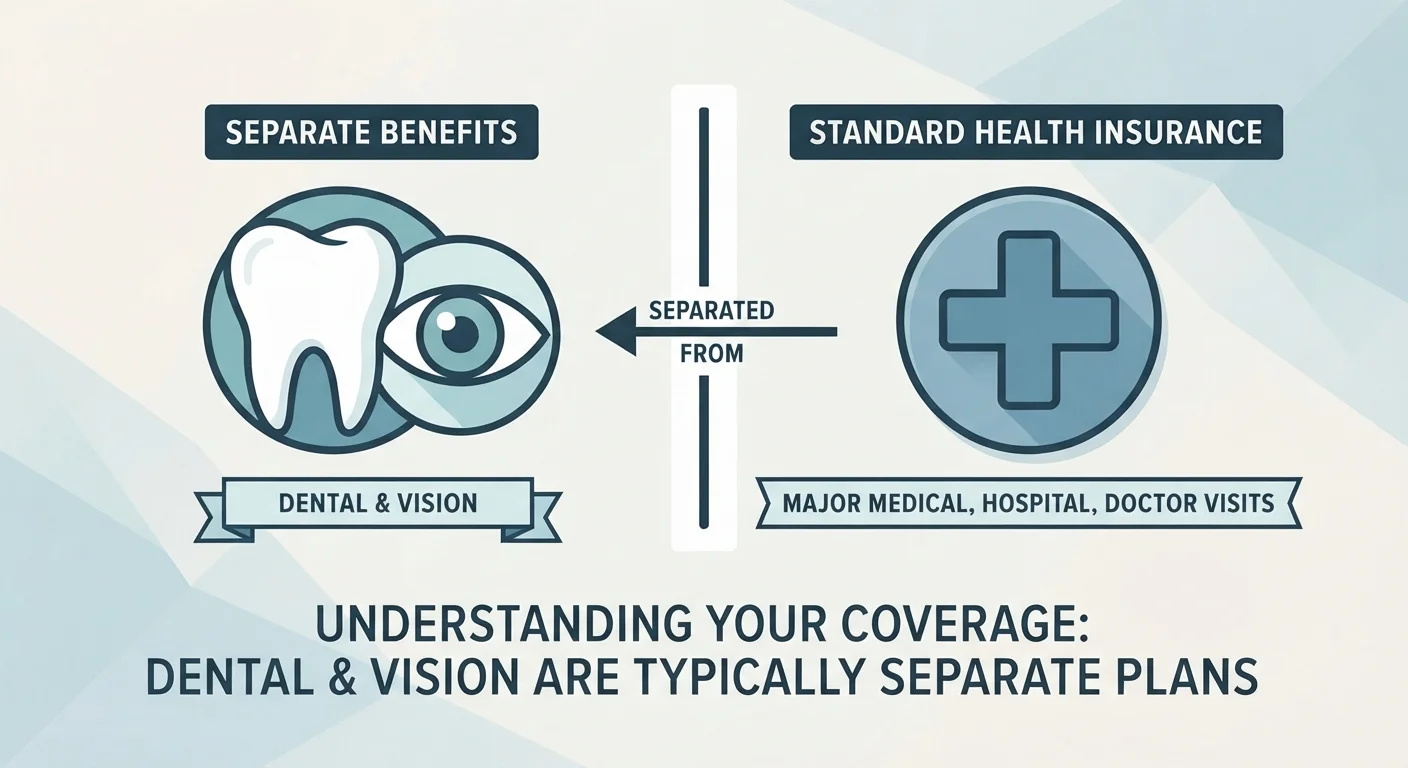
Photo credit: ArticlesHaven.net
In this article
Most major medical plans don't include dental or vision. Learn why these benefits are separate and what standalone options typically exist.
Key Takeaways
- Most major medical health plans do not include dental or vision coverage for adults.
- Dental and vision are classified separately under federal insurance law, making standalone plans the norm.
- Standalone dental plans typically come in two structures: DHMO and DPPO, each with different network rules.
- Vision plans are generally lower cost but also cover a narrower set of services.
- Employer benefits packages and government programs like Medicaid may include dental and vision for some enrollees.
- Understanding what your current plan excludes is the first step toward closing coverage gaps.
The Gap Most People Don't Notice Until They Need It
Many people assume that holding a health insurance card means they're covered for most medical needs - teeth and eyes included. That assumption often goes unchallenged until a dentist visit produces a bill the plan won't touch. Understanding why this gap exists helps you make more deliberate choices about your coverage.
The separation isn't arbitrary. Dental and vision benefits developed largely through employer benefit packages in the mid-20th century, independent from the major medical insurance market. When federal law began setting minimum standards for health plans, dental and vision for adults were left out of the core requirements. The result: most health insurers have no legal obligation to include them, and most don't. See common coverage assumptions that surprise consumers for a broader look at where these misunderstandings tend to pile up.
ACA Rules Treat Children Differently
The Affordable Care Act requires that marketplace plans cover pediatric dental and vision as essential health benefits. This protection applies to children but not to adults. As a result, families with children may have some dental and vision coverage built into their health plan for dependents, while the adults on the same policy do not. Always confirm this distinction when reviewing a family plan.
How Standalone Dental Plans Are Structured
Standalone dental plans generally fall into two structures. A DPPO (Dental Preferred Provider Organization) lets you visit any dentist but costs less when you stay in-network. A DHMO (Dental Health Maintenance Organization) requires you to select a primary dentist from a specific network and typically charges lower premiums in exchange for less flexibility.
Both plan types usually organize covered services into tiers: preventive care (cleanings, X-rays) is often covered at the highest rate or at no cost; basic services (fillings, extractions) at a moderate rate; and major services (crowns, root canals, orthodontia) at a lower rate with waiting periods that can run six to twelve months. Annual maximums - the most a plan will pay in a given year - are a critical figure to check, since they often range from $1,000 to $2,000, which can be exhausted by a single complex procedure.
Comparing standalone dental plan tiers breaks down what these coverage levels actually mean in practice.
77M+
Americans without dental coverage
The American Dental Association has noted that tens of millions of US adults lack any form of dental insurance, making it one of the most common coverage gaps in the country.
$1,000-$2,000
Typical annual dental plan maximum
Most standalone dental plans cap total annual benefits between $1,000 and $2,000, a figure that can be reached quickly when major restorative work is needed.
~12 months
Common waiting period for major dental services
Many dental plans impose a waiting period of six to twelve months before covering major procedures such as crowns or root canals.
Vision Plans: Simpler, but Still Separate
Vision insurance is generally more straightforward than dental coverage. Most standalone vision plans cover an annual eye exam and provide an allowance toward frames or contact lenses. The exam coverage is fairly consistent; where plans diverge is in the dollar allowance for eyewear and whether certain lens enhancements (anti-reflective coating, progressive lenses) are included or carry an additional cost.
Premiums for standalone vision plans tend to be modest - often well under $20 per month for individuals - but the benefit ceiling is also relatively low. For people who need prescription correction, a vision plan can reduce out-of-pocket spending meaningfully over time. For those without correction needs, the annual premium may exceed what they'd spend paying out of pocket for an exam alone.
Check Your Exam Frequency Before Enrolling
Most standalone vision plans cover one comprehensive eye exam per plan year. If you see a specialist for a medical eye condition (such as glaucoma monitoring), that visit may fall under your health plan instead, depending on how it is billed. Confirm with both your eye care provider and your insurer how a visit will be coded before your appointment to avoid unexpected costs.
Where Dental and Vision Coverage Does Appear
While most individual major medical plans exclude dental and vision for adults, coverage can be found in several specific contexts:
- Employer benefits packages: Many mid-size and large employers offer dental and vision as separate voluntary elections during open enrollment, often at group rates.
- Medicare Advantage (Part C): Some private Medicare Advantage plans bundle dental and vision benefits, though the scope varies widely by plan.
- Medicaid: Dental coverage for adults under Medicaid depends heavily on the state. Children enrolled in Medicaid or CHIP generally receive more comprehensive dental and vision protections.
- ACA marketplace: Standalone dental plans can be purchased alongside a marketplace health plan, though they are priced and enrolled separately.
If you're evaluating what your current plan leaves out, understanding policy exclusions is a useful place to start. And if dental or vision coverage is one of several gaps you're trying to address, supplemental health insurance options may be worth exploring as a broader solution.
Frequently Asked Questions

Author
Articles Haven Editorial Contributor
Articles Haven Editorial Team is the collective byline for our editorial team and contributor network. Articles published under this byline or an editorial pen name are researched, written, and reviewed according to our editorial standards for clarity, consistency, and independence before publication.
View all articles →