
Understanding Your Car's Warning Lights: A Quick-Reference Guide
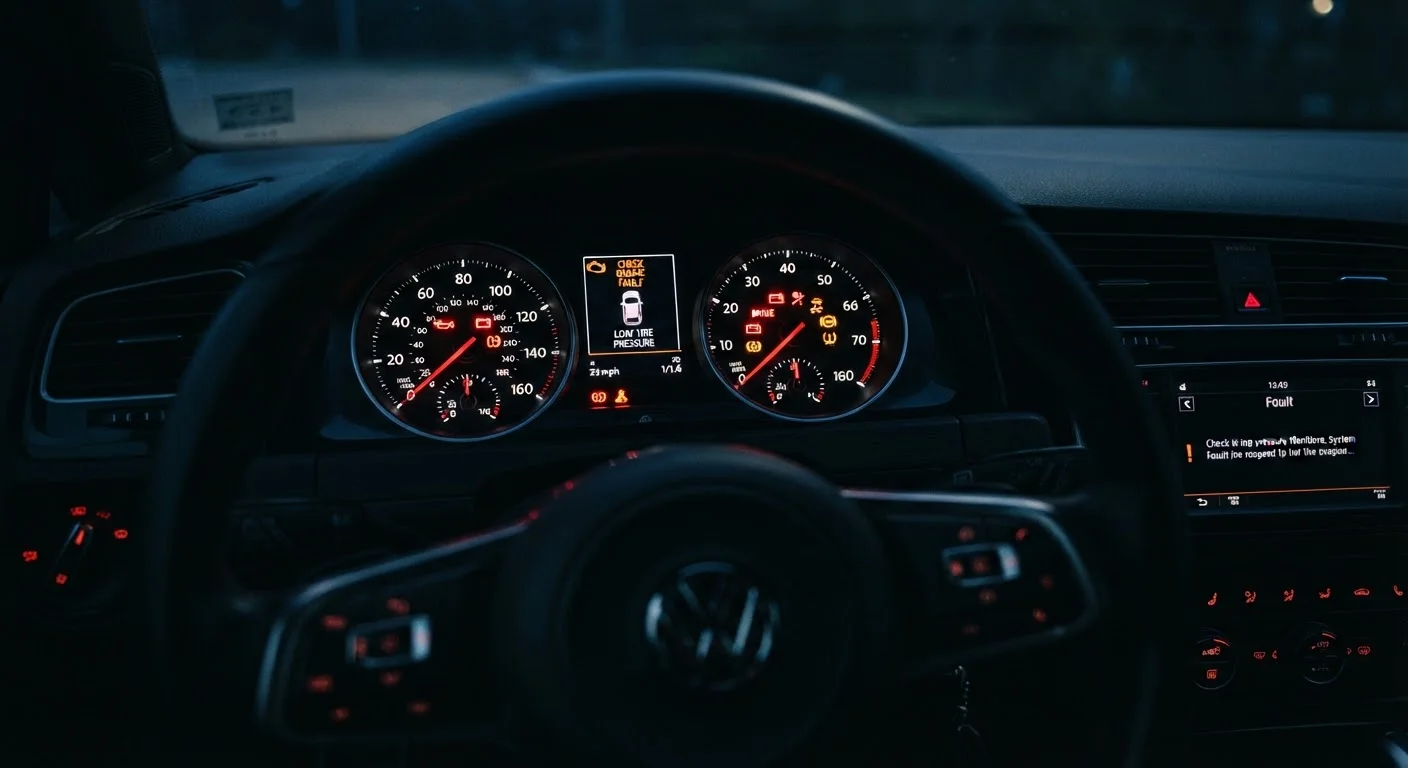
Photo credit: ArticlesHaven.net
In this article
A dashboard reference covering the most common warning lights, what they indicate, and how urgently each one warrants attention.
How Dashboard Warning Lights Work
Modern vehicles use an OBD system that continuously monitors dozens of sensors throughout the engine, transmission, brakes, and emissions systems. When a sensor detects a reading outside normal parameters, it triggers a warning light on your instrument cluster. Some lights are informational; others signal conditions that require you to pull over immediately.
Warning lights generally fall into three urgency tiers: red (stop driving or act immediately), amber/yellow (service needed soon, but not an emergency), and green or blue (system active, no action required). Understanding this color coding alone can save you from both unnecessary panic and dangerous inaction.
If you're a new owner, the guide for new car owners covers other foundational ownership basics worth pairing with this reference.
| Warning light color tiers | Red, Amber, Green/Blue (SAE International / common automotive standard) |
| OBD-II standard adopted in US | 1996 (all passenger vehicles) (EPA mandate) |
| Most common check engine cause | Loose or faulty gas cap (Commonly cited by automotive diagnostics sources) |
| Flashing check engine light | Indicates active misfire - reduce speed, seek service promptly (General OBD diagnostic guidance) |
| TPMS required on US vehicles | All new passenger vehicles since 2008 (NHTSA Federal Motor Vehicle Safety Standard 138) |
| OBD-II scanner cost range | Roughly $20-$100 for basic models |
Common Warning Lights and What They Mean
Below are the warning lights drivers encounter most frequently, organized by urgency.
MIL (Check Engine Light)
The Malfunction Indicator Lamp signals a fault detected by the vehicle's OBD system. It can indicate anything from a loose gas cap to a serious engine or emissions problem.
TPMS
Tire Pressure Monitoring System. A federal safety requirement on US vehicles since 2008 that alerts drivers when tire pressure drops significantly below the recommended level.
OBD-II
On-Board Diagnostics, second generation. The standardized vehicle self-diagnostic system required on all US passenger cars sold after 1996. It stores fault codes that mechanics and scanners can read.
Fault Code (DTC)
A Diagnostic Trouble Code stored by the OBD system when a sensor reports an out-of-range value. Codes follow a standardized format (e.g., P0420) that identifies the system and type of fault.
Coolant Temperature Sensor
A sensor that monitors engine coolant temperature. When it detects overheating, it triggers the engine temperature warning light on the dashboard.
Red - Stop or Act Immediately
- Oil Pressure Warning: Low or no oil pressure. Pull over safely and shut off the engine. Driving further risks severe engine damage.
- Engine Temperature: Engine is overheating. Stop driving, let the engine cool, and check coolant levels only after the engine is cold.
- Battery / Charging System: The charging system has failed. Your car is running on battery power alone and will stop soon. Minimize electrical load and head to a mechanic.
- Brake Warning: Could mean the parking brake is engaged, brake fluid is low, or there's a hydraulic failure. Confirm the parking brake is off; if the light stays on, treat it as urgent.
Amber/Yellow - Service Needed
- Check Engine (MIL): The Malfunction Indicator Lamp covers a wide range of issues from a loose gas cap to a failing catalytic converter. A steady light means service soon; a flashing light means pull over and avoid high RPMs.
- Tire Pressure (TPMS): One or more tires is significantly under- or over-inflated. Check pressures at your next stop.
- Traction Control / Stability Control: A flashing light means the system is actively working. A solid light usually means the system is off or has a fault.
- Transmission Temperature: Transmission fluid is running too hot. Ease off and allow it to cool; continued driving can cause expensive damage.
For a broader picture of how maintenance milestones relate to these alerts, see the routine car maintenance schedule.
Don't Ignore an Intermittent Light
A warning light that appears briefly and then disappears may still have stored a fault code in your vehicle's OBD system. Intermittent faults can be harder - and more expensive - to diagnose if they worsen over time. Consider having the codes read even if the light is no longer showing.
What to Do When a Light Comes On
Your first step is always to assess color and context. A red light on a highway demands more immediate action than an amber light during a short city commute. Here's a practical sequence:
- Note which light it is and its color. Cross-reference your owner's manual - it remains the most accurate source for your specific vehicle.
- Check for accompanying symptoms - unusual sounds, smells, or handling changes signal a more serious condition.
- For amber lights, schedule a mechanic visit within the next few days. Avoid long trips until diagnosed.
- For red lights, pull over safely as soon as possible. Do not continue driving without understanding the cause.
- Use an OBD-II scanner (inexpensive and widely available) to read stored fault codes before visiting a shop. This helps you have an informed conversation with your mechanic.
Keep in mind that unresolved warning lights can affect your vehicle's emissions test results and, depending on your policy, a documented mechanical issue could be relevant during an insurance claim. Reviewing your auto insurance declarations page can clarify what your coverage does and doesn't include for mechanical failures.
~25%
Vehicles on US roads with a check engine light on
Frequently cited in automotive survey data from vehicle inspection and diagnostics industry sources.
1996
Year OBD-II became mandatory in the US
Required by EPA regulation for all passenger vehicles sold in the United States from model year 1996 onward.
$80-$150
Typical diagnostic fee at a repair shop
General market range; actual costs vary by region, shop type, and vehicle make.

Author
Articles Haven Editorial Contributor
Articles Haven Editorial Team is the collective byline for our editorial team and contributor network. Articles published under this byline or an editorial pen name are researched, written, and reviewed according to our editorial standards for clarity, consistency, and independence before publication.
View all articles →