
How to Read a Mechanic's Estimate Without Getting Confused
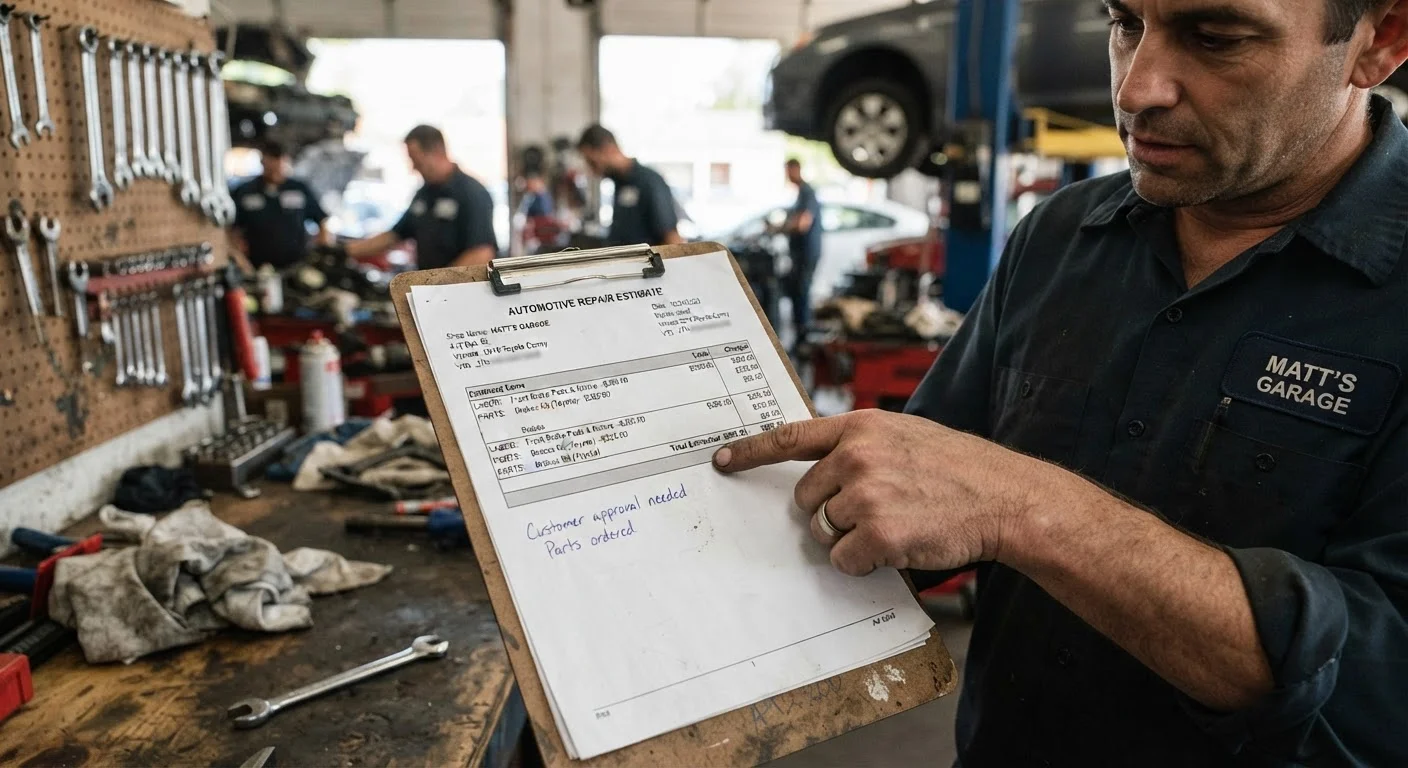
Photo credit: ArticlesHaven.net
In this article
Labor hours, OEM vs. aftermarket parts, and diagnostic fees explained—so you can ask informed questions before approving work.
Key Takeaways
- A mechanic's estimate has three main cost categories: parts, labor, and fees-each works differently.
- Labor hours are based on flat-rate guides, not necessarily the actual time spent on your car.
- OEM parts are made to manufacturer specs; aftermarket parts vary widely in quality and price.
- A diagnostic fee is a legitimate charge covering the time needed to identify the problem.
- Always get the estimate in writing and ask whether the diagnostic fee applies toward the repair.
- Comparing estimates from two shops is reasonable and widely accepted in the industry.
Why Estimates Are Confusing-and How to Change That
A mechanic's repair estimate packs a lot of information into a small space: part numbers, labor codes, shop fees, and sometimes a list of additional recommended services. For most car owners, the result looks like a jumble of numbers that leads to one of two responses-rubber-stamping the whole thing or pushing back on everything out of distrust. Neither serves you well.
The good news is that estimates follow a predictable structure. Once you know what each section represents and why those numbers appear, you can read any estimate clearly and ask specific, informed questions. This isn't about becoming a mechanic-it's about understanding enough to make a sound decision. If you're also weighing how repair costs factor into long-term vehicle value, our article on evaluating total cost of ownership provides useful broader context.
What you will need
Tools You'll Use During This Review
Written Repair Estimate
The official document from the shop-this is what you'll be reviewing line by line.
Flat-Rate Labor Guide Reference (e.g., Chilton, ALLDATA)
Industry databases that set standard labor hours per repair type; useful to cross-check what you're being billed.
Smartphone or Computer
Look up part numbers, OEM vs. aftermarket options, and typical price ranges for your vehicle's year, make, and model.
With the estimate in hand and a few reference tools available, you're ready to work through it step by step.
Step-by-Step: Reading the Estimate
Identify the Three Cost Sections
Most estimates are divided into parts, labor, and fees. Scan the document and mentally group every line item into one of these three buckets. If you can't tell which category a charge belongs to, circle it and ask before signing. Understanding the structure makes the rest of the review much faster.
Decode the Labor Charges
Labor is billed in hours multiplied by the shop's hourly rate. That rate typically ranges from roughly $75 to $175 depending on the type of shop and your region. The number of hours isn't how long the technician actually worked-it's drawn from a flat-rate labor guide, an industry-standard reference that assigns a fixed hour value to each repair procedure. A job listed as 1.5 hours may take a skilled tech 45 minutes, or it may take two hours on an older vehicle with corroded bolts. The flat-rate number is what you're billed regardless.
Understand the Parts: OEM vs. Aftermarket vs. Remanufactured
OEM (Original Equipment Manufacturer) parts are made to the same spec as what came on your vehicle from the factory. They typically cost more. Aftermarket parts are made by third-party manufacturers-quality ranges from excellent to poor depending on the brand. Remanufactured parts are used components that have been rebuilt to a functional standard; they're common for alternators, starters, and brake calipers.
Ask which type is being used for each part on your estimate. For safety-critical components-brakes, steering, suspension-the quality difference matters more than price savings.
Review Diagnostic and Shop Fees
A diagnostic fee covers the technician's time to identify the problem-it's a legitimate charge, not a trick. Shops typically charge between $50 and $150 for a diagnostic. Separately, you may see a shop supply fee (for fluids, rags, and small consumables used during the repair) and sometimes a hazardous waste disposal fee for oil or coolant. These are generally standard. What's worth questioning is any fee that lacks a clear description.
[tip_callout]Flag Recommended vs. Required Work
Many estimates include a second section for work the technician noticed but didn't diagnose as your primary concern. These items may be genuinely time-sensitive or they may be routine maintenance that can wait. Ask the technician to distinguish between repairs needed for safe operation and services recommended by mileage interval. Approving everything at once isn't always necessary-and understanding the difference keeps you in control of the decision.
For help knowing which maintenance you can handle yourself versus what should stay in a professional's hands, see our guide to DIY car maintenance vs. professional service.
Get a Second Estimate If the Total Surprises You
For any repair over a few hundred dollars, getting a second written estimate from another shop is entirely reasonable-most experienced technicians expect it. Bring the original estimate so the second shop is quoting on the same scope of work. The goal isn't to find the lowest price at any cost; it's to confirm that the scope, parts type, and labor hours are consistent across quotes. Wide discrepancies are worth probing before you commit.
[important_callout]Common Questions After You've Reviewed the Estimate
Can I supply my own parts? Some shops allow it; others won't because they can't warranty labor on parts they didn't source. Ask upfront.
What if the repair uncovers more problems? Shops are typically required to contact you before exceeding the authorized estimate. Confirm this policy before work begins, and ask how they handle scope changes.
Is this estimate similar to what I'd see for a used car inspection? Pre-purchase inspections use a similar format. Our guide to pre-purchase inspections explains what mechanics look for and how to interpret those findings.
Watch for Bundled or Vague Line Items
Entries listed simply as 'shop supplies' or 'miscellaneous' can add 5-10% to your total with no clear explanation. It's reasonable to ask exactly what those charges cover. Some shops also bundle recommended services into a repair quote-be clear on which items are necessary for safety or function versus which are optional maintenance.
This article provides general consumer education about automotive repair estimates and is not a substitute for advice from a licensed mechanic. Costs, regulations, and shop practices vary by location and vehicle type.

Author
Articles Haven Editorial Contributor
Articles Haven Editorial Team is the collective byline for our editorial team and contributor network. Articles published under this byline or an editorial pen name are researched, written, and reviewed according to our editorial standards for clarity, consistency, and independence before publication.
View all articles →