
How to Evaluate a Hotel's Location Before You Book
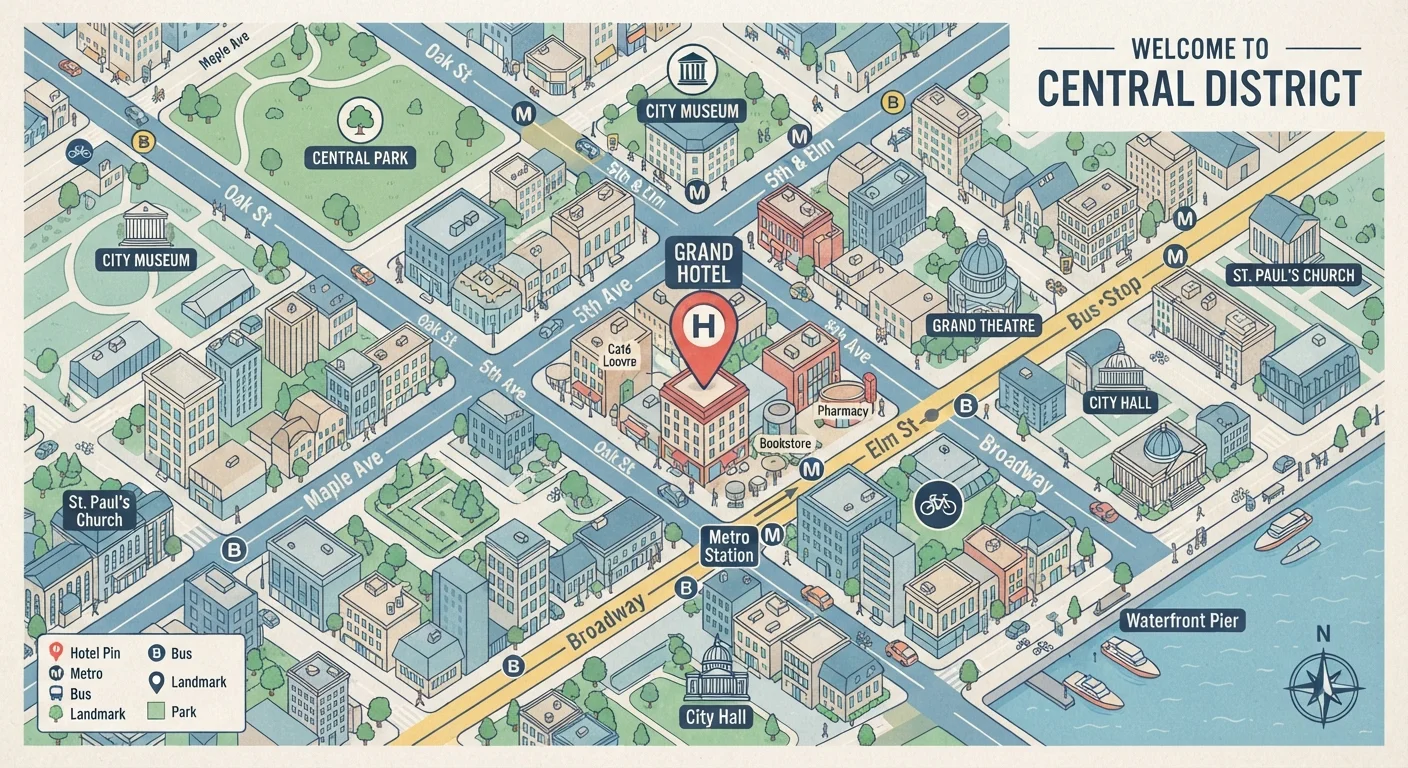
Photo credit: ArticlesHaven.net
In this article
Beyond star ratings and room photos, location affects transport access, noise, safety, and convenience. Here's how to assess it.
Key Takeaways
- A hotel's map pin rarely tells the full story - surrounding streets and access routes matter more.
- Transit proximity, walkability, and noise levels all affect daily comfort during your stay.
- Safety perception varies by block; street-level tools give more granular insight than star ratings.
- Cross-referencing multiple sources (satellite view, reviews, transit maps) catches gaps no single tool reveals.
Why Location Deserves Its Own Evaluation Step
Room quality, amenities, and price-per-night get most of the attention during hotel research - but location shapes nearly every hour of a trip. A property that adds a 45-minute round-trip to each day's plans effectively costs time and money that doesn't appear anywhere in the nightly rate. Noise from a nearby venue can undermine sleep regardless of mattress quality. And a hotel that's inconvenient to public transit can transform a modest city into an expensive cab-dependent experience.
The good news: evaluating location thoroughly takes 15-40 minutes and requires nothing more than free tools most travelers already use. The steps below walk through a repeatable process for any destination.
What you will need
Satellite and Street-Level Mapping Tool
Lets you visually inspect the hotel's immediate surroundings, nearby streets, and building context before committing.
City Transit Map or App
Shows bus, metro, or train stops near the property so you can gauge public transport access.
Walkability or Neighborhood Score Tool
Provides a quantified measure of how many errands, restaurants, and services are reachable on foot.
Travel Review Platform
Surfaces guest comments specifically about noise, neighborhood feel, and transport convenience.
Step-by-Step: Assessing a Hotel's Location
Work through these steps for each property on your shortlist. The process is cumulative - each step adds a layer of context that the previous one can't provide alone.
Drop the pin and zoom out
Open a mapping tool and search the hotel by name. Before zooming in, zoom out to see the macro picture: How far is the property from the city center, airport, or your primary destinations? A hotel that looks central on a booking thumbnail can sit on the wrong side of a river, rail yard, or highway interchange. Measure approximate distances to your two or three key points of interest to get a realistic commute picture.
Switch to satellite view and inspect the block
Zoom to the hotel's immediate block in satellite view. Look for large parking structures, motorways, rail lines, loading docks, bars with outdoor seating, or event venues - any of these can generate sustained noise. Industrial or commercial buildings directly adjacent to a hotel often signal early-morning delivery traffic. Note which side of the building faces the street and whether quieter courtyard-facing rooms are likely.
Walk the virtual streets
Drop into street-level view and walk the block in every direction. Pay attention to the condition of storefronts, lighting, street signage, and the overall density of foot traffic shown. A hotel entrance that faces a quiet pedestrian lane reads very differently from one that fronts a six-lane arterial road. Check whether the path from the nearest transit stop to the hotel entrance is straightforward and well-lit.
Check public transit access specifically
Open the city's official transit map or a transit-routing app and identify the nearest metro station, bus stops, or commuter rail halt. Count the transfer steps required to reach the airport or main attractions. For trips where you plan to rely on public transit, a hotel two blocks from a direct metro line can outperform a more visually appealing property that requires two bus changes. Also confirm service hours - late-night service gaps affect event attendance and airport departure flexibility.
Read location-specific guest reviews
On any review platform, filter or search for the word "noise," "street," "transit," or "walk" within recent guest comments. Reviews that mention specific streets, intersections, or nearby venues give far more actionable intelligence than numeric scores alone. Pay particular attention to reviews from travelers with a trip purpose similar to yours - a business traveler's location priorities differ from a leisure visitor's. For a broader framework on interpreting scores, see how star ratings and guest scores compare.
Weigh location against your actual itinerary
Map your planned activities for each day of the trip, then overlay the hotel's position. A location that works well for morning museum visits may add thirty minutes each evening for a dinner reservation district. Identify your highest-frequency destinations and weight the hotel's proximity to those above all others. If a late-night airport departure is involved, also factor in transport options from the hotel to the airport before finalizing.
Location Trade-offs Are Normal
No hotel sits perfectly central to every destination on your itinerary. The goal is to minimize total daily transit time, not achieve zero commute. Identify your two or three non-negotiable access points and optimize for those rather than chasing a perfect map position that may not exist at your budget.
"Central" Is a Marketing Term, Not a Measurement
Booking listings routinely describe properties as "centrally located" without a defined reference point. Always verify centrality yourself using a map and your actual itinerary. A hotel described as central to a large metro area can still sit a 40-minute transit ride from the neighborhood where you plan to spend most of your time.
Common Location Pitfalls Worth Watching For
Even thorough research can miss a few traps that experienced travelers encounter repeatedly:
- Airport-adjacent hotels billed as city hotels: Some properties market themselves as serving a major city while sitting in an outer suburb served primarily by shuttle. If you're deciding between airport proximity and city access, comparing airport vs. city-center hotels lays out the trade-offs in detail.
- Addresses that share a zip code but not a neighborhood: Two hotels can have the same postal code while sitting in very different parts of a city. Always verify on a map, not just by address comparison.
- Hotels on the "right street" but the wrong end of it: A long boulevard can transition from vibrant to industrial within ten blocks. Confirm which segment your hotel occupies.
- Seasonal environment shifts: A beachfront hotel that's pleasantly walkable in summer may face closed businesses, limited transit, and isolated streets in the off-season.
Safety Assessment Requires Its Own Research
Map tools and booking platforms alone are insufficient for evaluating neighborhood safety. Read recent traveler accounts, check government travel advisories for the destination, and consult resources specifically focused on ground-level safety context. For a structured framework, see evaluating a destination's safety. Conditions can change; verify close to your travel date.
For travelers also weighing a vacation rental as an alternative, location evaluation follows similar principles - but lease terms and cancellation policies add further complexity. See questions to ask before booking a vacation rental for that comparison.

Author
Articles Haven Editorial Contributor
Articles Haven Editorial Team is the collective byline for our editorial team and contributor network. Articles published under this byline or an editorial pen name are researched, written, and reviewed according to our editorial standards for clarity, consistency, and independence before publication.
View all articles →