
How Hotel Check-In and Check-Out Times Work—and What Flexibility Exists
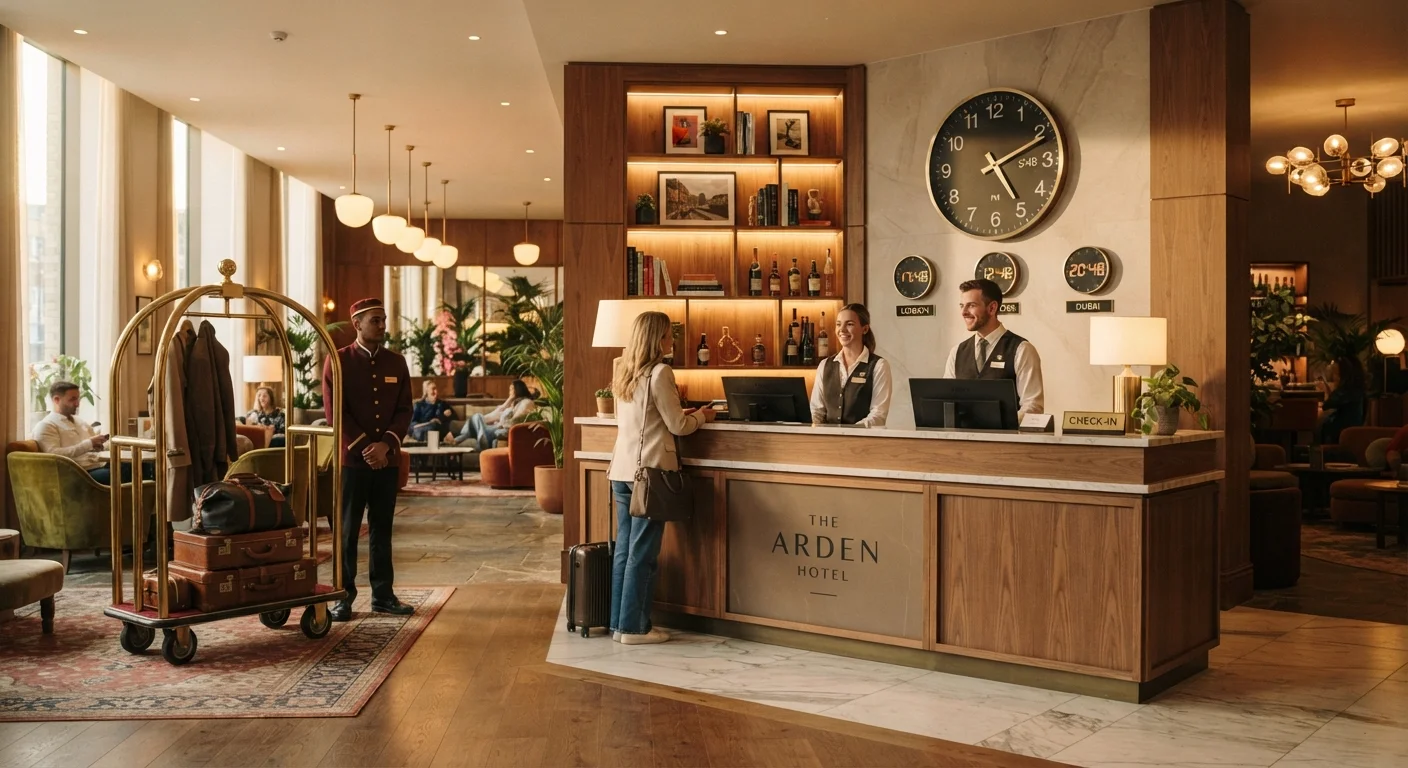
Photo credit: ArticlesHaven.net
In this article
Understand standard hotel time policies, when early check-in or late checkout is realistic, and how to request it.
Key Takeaways
- Standard US hotel check-in is 3-4 PM; check-out is typically 11 AM-noon.
- Early check-in and late checkout are often possible but depend on occupancy and room availability.
- Loyalty program status, direct booking, and polite timing of requests all improve your odds.
- Fees for guaranteed early or late access vary widely and should be confirmed at booking.
- Luggage storage is a near-universal fallback when timing flexibility isn't possible.
Why Check-In and Check-Out Windows Exist
Hotel time policies aren't arbitrary. They're built around one operational reality: the same room that one guest vacates in the morning must be inspected and cleaned before the next guest walks in. Give housekeeping too little time, and service quality suffers. The standard window - roughly four to five hours between a noon checkout and a 3 PM check-in - is what most properties need to turn a room reliably.
That window shrinks at high-occupancy properties and during peak travel periods. It widens at smaller boutique hotels or resorts with longer average stays. Knowing this helps you calibrate your expectations before you arrive.
Policies Differ by Property Type
Resort hotels, especially all-inclusive properties, often have stricter time enforcement because their entire staffing model is scheduled around it. Smaller boutique hotels or motels sometimes offer more informal flexibility. It always pays to ask directly rather than assume based on chain affiliation.
What Early Check-In and Late Checkout Actually Mean
Early check-in means accessing your room before the official check-in time. Late checkout means staying past the official checkout deadline. Neither is a right - both are accommodations a hotel can extend when logistics allow.
For early arrivals, the main variable is whether a room in your category was vacated and cleaned before you show up. If the hotel ran at full capacity the night before, there may simply be no clean room available until the standard check-in hour. For late checkout, the constraint is the next incoming guest - if your room is pre-assigned to an arrival that afternoon, the hotel has a hard deadline.
3:00 PM
Typical US hotel check-in time
The 3 PM check-in standard is widely adopted across major US hotel brands, though boutique and independent properties may vary.
11 AM-12 PM
Standard checkout window at most US hotels
Checkout policies across most US full-service hotels fall in this range, giving housekeeping a 3-4 hour turnaround before the next check-in window.
~4 hours
Typical housekeeping turnaround window
The gap between standard checkout and check-in times reflects the operational time needed for cleaning, inspection, and room preparation.
If your travel schedule puts you at a hotel outside standard hours, consider how the itinerary fits together. The guide on splitting a trip across multiple hotels touches on how multi-stop itineraries can create timing pressure worth planning around.
How to Improve Your Chances of Flexibility
A few practical approaches tend to move the needle:
- Contact the property directly - call or email the front desk the day before or the morning of arrival. A polite, specific request ("I land at 7 AM - is there any chance a room might be ready earlier?") is more effective than a note left through a booking platform.
- Join the hotel's loyalty program - even entry-level status often comes with complimentary late checkout as a listed benefit. Verify the tier's terms before counting on it.
- Book directly - third-party platforms don't always relay special requests, and hotels generally prioritize guests who booked through their own channels.
- Ask at check-in, not before - if you couldn't arrange late checkout in advance, asking again at the desk on the day of departure (especially if the hotel isn't fully booked) sometimes works.
Time Your Request Strategically
Avoid asking for early check-in or late checkout during the busiest part of the front desk's day - typically 7-9 AM and 3-5 PM. A call or message the evening before or early morning, before the rush, often gets more attention and a more considered response from staff.
When Flexibility Comes With a Fee
Some hotels offer guaranteed early check-in or late checkout for a flat fee or a partial-day room charge. This is worth considering if your schedule is tight - it removes the uncertainty. Fees vary widely, from a nominal hourly rate to a half-day room charge, so confirm the amount before agreeing.
One underused option: if you arrive the night before an early-morning event, booking the prior night's room guarantees access immediately. It costs more, but it removes all timing friction. The inverse applies if you have a very late evening departure - booking an extra night may be cheaper and less stressful than paying day-use fees or hunting for a lounge to wait in.
For travelers thinking through this kind of trade-off before committing to a hotel, evaluating itinerary flexibility before you book offers a useful framework. And if you want to understand what happens when plans change entirely, reading a hotel's cancellation policy breaks down the clauses that matter most.
The Luggage Storage Fallback
When timing flexibility isn't possible, luggage storage almost always is. Virtually every full-service hotel will hold your bags securely - before check-in or after checkout - at no charge or a small fee. This lets you explore, work, or grab a meal without dragging bags around.
Some hotels also offer day-use amenities (pool access, gym, lounge) to guests who've checked out but haven't departed. It's worth asking the front desk what's available rather than assuming the relationship ends at checkout.
Planning your hotel timing well is one part of building a trip that fits together without friction - the same logic that applies to booking flights with enough lead time to match your hotel windows without stress.
“The easiest way to solve a travel timing problem is to surface it before you arrive - most hotels would rather know about an unusual arrival time in advance than deal with a frustrated guest at the front desk.”
— Travel industry operations consultant, Hospitality operations advisor with experience across independent and branded hotel properties
Frequently Asked Questions

Author
Articles Haven Editorial Contributor
Articles Haven Editorial Team is the collective byline for our editorial team and contributor network. Articles published under this byline or an editorial pen name are researched, written, and reviewed according to our editorial standards for clarity, consistency, and independence before publication.
View all articles →