
DSLR vs. Mirrorless Cameras: Where Each Format Still Has the Edge
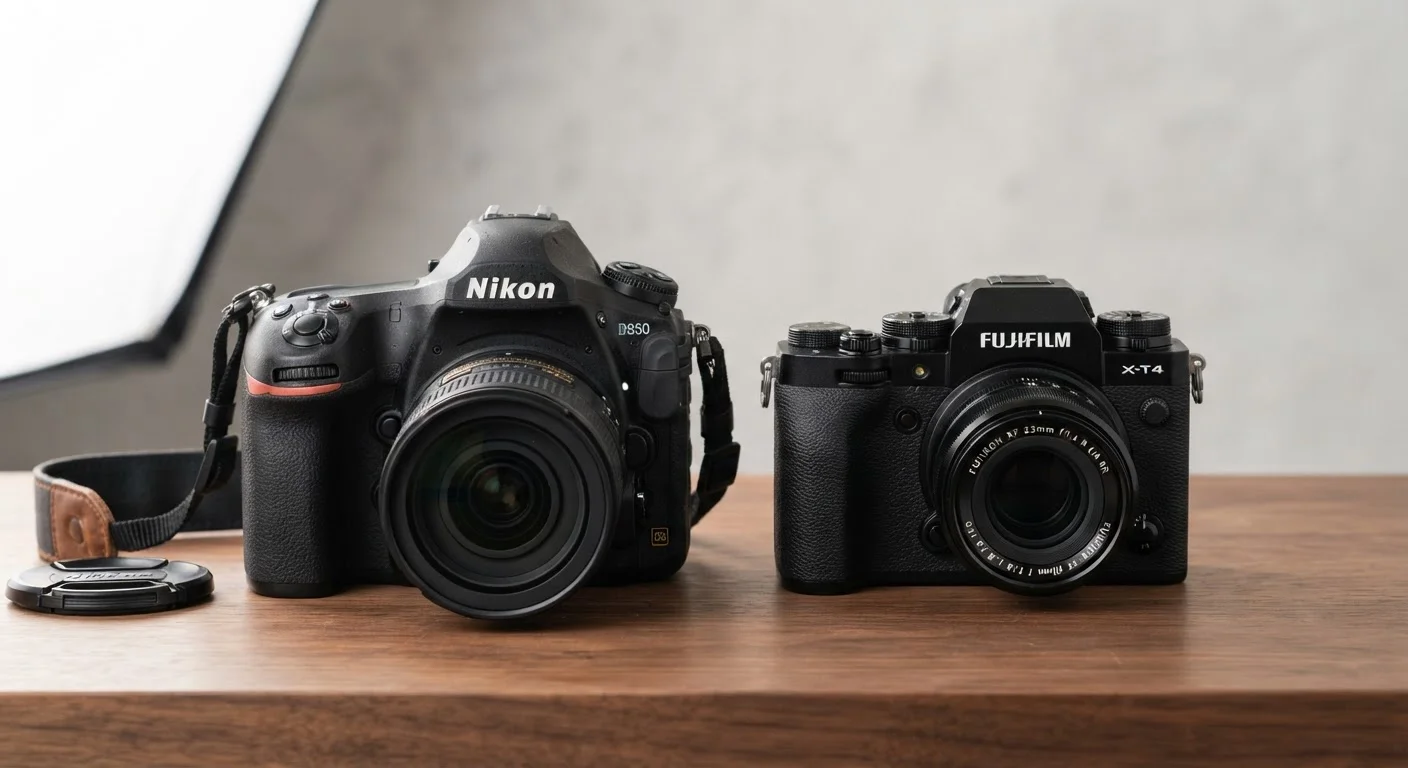
Photo credit: ArticlesHaven.net
In this article
Mirrorless cameras are newer, but DSLRs aren't obsolete. Compare both on autofocus, battery life, lens availability, and price.
Key Takeaways
- DSLRs still offer superior battery life, often exceeding 800 shots per charge versus 300-400 for many mirrorless models.
- Mirrorless cameras generally feature faster, more advanced autofocus systems with wider subject-detection capabilities.
- DSLRs carry decades of compatible lenses; mirrorless systems are catching up but adapters add cost and bulk.
- Mirrorless bodies tend to be more compact but can rival DSLR size once larger lenses are mounted.
- Entry-level DSLRs are often more affordable new; mirrorless options dominate the enthusiast and professional tiers.
- Neither format is obsolete - the right choice depends on your shooting style, budget, and priorities.
How Each Format Works
The core difference between DSLRs and mirrorless cameras comes down to one component: the mirror. A DSLR (Digital Single-Lens Reflex) uses a physical mirror inside the body to bounce light up through an optical viewfinder. When you press the shutter, that mirror flips up, exposing the sensor. It's a mechanical system with decades of refinement behind it.
Mirrorless cameras eliminate that mirror entirely. Light travels straight to the sensor, which feeds a live preview to an electronic viewfinder (EVF) or the rear screen. This design simplifies the internal mechanics and allows for slimmer bodies, but it also changes how autofocus, battery consumption, and real-time exposure preview all function.
Neither approach is inherently better - they're different engineering trade-offs, and understanding those trade-offs is what should drive your decision.
Autofocus and Speed: Mirrorless Takes the Lead
For most shooting scenarios today, mirrorless cameras hold a clear autofocus advantage. Because the sensor is always active, mirrorless systems can apply phase-detection points across the entire frame - not just a central cluster as in many DSLRs. This enables features like real-time eye tracking, face detection, and subject recognition for animals or vehicles.
DSLRs use a separate, dedicated phase-detection autofocus module accessed through the mirror - which is fast and reliable for still subjects and predictable motion. However, in Live View mode (where DSLRs use the sensor directly), AF performance typically drops significantly. If you shoot a lot in Live View or rely on video AF, a DSLR will feel limiting by comparison.
| Criterion | DSLR Cameras | Mirrorless Cameras |
|---|---|---|
| Viewfinder type | Optical (OVF) | Electronic (EVF) or screen |
| Battery life (typical) | 700-1,000+ shots | 300-450 shots |
| Autofocus coverage | Central zone (dedicated module) | Full-frame, on-sensor detection |
| Subject tracking | Limited on most models | Eye, face, and animal detection |
| Body size | Larger, deeper grip | Compact to medium |
| Video capability | Limited AF in video mode | Strong 4K with continuous AF |
| Lens ecosystem | Vast, mature, affordable used market | Growing; native options cost more |
| Entry-level pricing | Generally lower | Slightly higher at entry level |
For everyday portrait, street, or landscape photography, a modern DSLR's AF is perfectly adequate. For demanding work - action, wildlife, or hybrid photo-video - mirrorless systems have a measurable edge.
Battery Life, Size, and Handling
The optical viewfinder in a DSLR is a passive system - it uses no power. That's a big reason why DSLRs typically rate for 700-1,000 shots per charge, while many mirrorless cameras fall in the 300-400 shot range. Mirrorless cameras are always powering the sensor to generate a live feed, which drains batteries faster. Carrying spare batteries becomes more of a necessity with mirrorless.
2x+
DSLR battery advantage over mirrorless
Industry-standard CIPA ratings consistently show DSLRs delivering roughly twice the shots per charge compared to mirrorless equivalents across major manufacturers.
~30%
Mirrorless share of interchangeable-lens camera shipments
According to CIPA (Camera & Imaging Products Association) shipment data, mirrorless cameras have grown to represent a substantial and increasing portion of global ILC sales over recent years.
On size, mirrorless bodies are often smaller and lighter - but this advantage narrows once you attach larger lenses. A mirrorless camera paired with a full-frame telephoto lens is no more pocketable than a comparable DSLR setup. Where mirrorless genuinely shines is for compact travel kits using smaller prime lenses.
Handling is partly personal preference. DSLRs typically have deeper grips and more physical controls refined over decades. Mirrorless bodies have caught up substantially, but some photographers still find the DSLR form factor more intuitive - especially those with larger hands.
Lenses, Price, and Long-Term Ecosystem
DSLRs have a significant head start in lens availability. Decades of production mean a vast selection of native and third-party lenses, many of them affordable on the used market. If you're building a lens collection from scratch on a budget, DSLR glass is often the more economical path.
Mirrorless systems from major manufacturers have expanded their native lens lineups considerably, and lens quality at the higher end is excellent. The gap is closing, but entry-level mirrorless lens options still tend to cost more than equivalent DSLR options. Using older DSLR lenses on mirrorless bodies via adapter is possible, but adapters add expense and can limit some autofocus features.
Adapting DSLR Lenses to Mirrorless Bodies
Most major camera manufacturers offer official mount adapters that allow their DSLR lenses to work on mirrorless bodies. Autofocus compatibility varies - some lenses work fully, others lose tracking or speed performance. Third-party adapters exist but introduce more uncertainty. If you plan to adapt glass frequently, verify compatibility for each lens before purchasing.
On body pricing, entry-level DSLRs often undercut comparable mirrorless models at the new-retail level. Mid-range and professional mirrorless bodies, however, come packed with features that justify higher price points for serious users. The used market for DSLRs is particularly rich - a realistic option for shoppers who want capable gear without new-retail pricing.

Author
Articles Haven Editorial Contributor
Articles Haven Editorial Team is the collective byline for our editorial team and contributor network. Articles published under this byline or an editorial pen name are researched, written, and reviewed according to our editorial standards for clarity, consistency, and independence before publication.
View all articles →