
Understanding Auto-Pay Discounts on Phone Plans
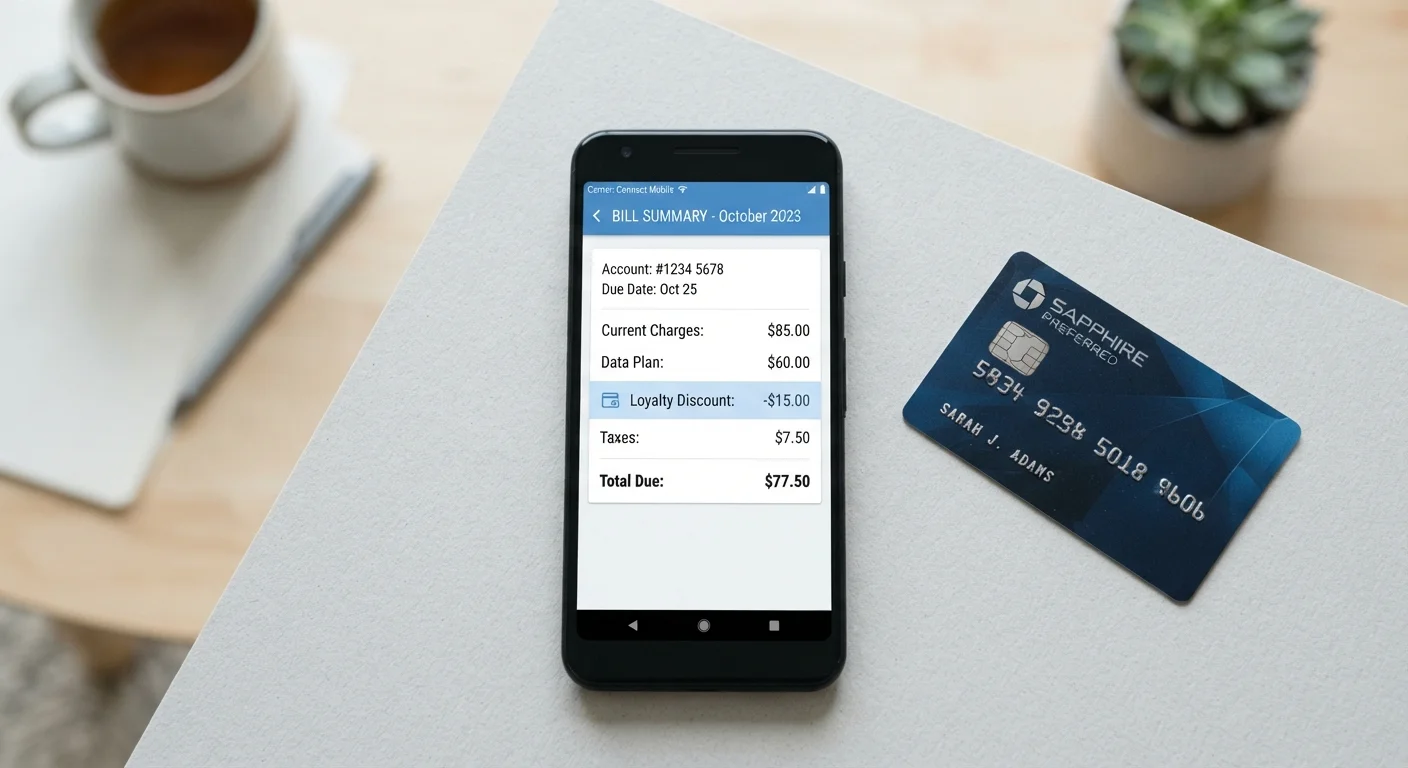
Photo credit: ArticlesHaven.net
In this article
Many carriers offer a monthly discount for enrolling in auto-pay. Here's how those discounts work and what conditions usually apply.
Key Takeaways
- Auto-pay discounts typically range from $5 to $10 per line per month, depending on the carrier and plan.
- The discount is often conditional on using a specific payment method, such as a debit card or bank account.
- Missing a payment or canceling auto-pay usually results in losing the discount until it's reinstated.
- Auto-pay savings stack well with multi-line discounts but won't offset every fee on your bill.
- Reading the fine print on payment method requirements helps you avoid unexpected full-price charges.
Why Carriers Offer Auto-Pay Discounts
Auto-pay discounts exist because they benefit carriers as much as customers. When payments arrive automatically each month, carriers face fewer billing errors, lower collections costs, and more predictable cash flow. Passing a portion of those operational savings back to customers in the form of a monthly discount is a straightforward incentive to lock in reliable payment behavior.
From the consumer's perspective, it's one of the more straightforward discounts available - no trade-in required, no promotional period to track. You set it and the savings apply each month, provided you meet the conditions. That said, understanding those conditions is exactly where many customers get tripped up.
$5-$10
Typical auto-pay discount per line, per month
Most major US carriers advertise a per-line monthly credit in this range when auto-pay is active and conditions are met.
$120/yr
Annual savings on a single line at $10/month discount
On a multi-line family plan, the same per-line savings multiplied across four lines could reach $480 annually.
~70%
US adults who use some form of automatic bill payment
According to consumer payment research, automatic billing is a widely adopted practice across utility and telecom accounts in the US.
How the Discount Is Typically Structured
Most carriers apply the auto-pay discount as a per-line credit on your monthly bill. On a single-line plan, you might see a $5 or $10 reduction from the advertised rate. On family or multi-line accounts, that credit applies to each qualifying line, which makes the total savings more significant. For guidance on how multi-line billing works more broadly, see how shared lines and multi-line discounts work.
The advertised plan price you see on a carrier's website often already assumes auto-pay enrollment. If you read the fine print, you'll notice a note that the shown price requires auto-pay and paperless billing. Pay manually, and you'll typically be charged the higher base rate instead.
Check the Advertised Price Footnotes
When comparing wireless plan prices online, look for the asterisk or footnote near the monthly rate. Carriers routinely show the auto-pay price as the headline figure. Knowing the non-auto-pay rate tells you exactly how much the discount is worth - and lets you compare plans on equal footing.
Payment Method Requirements and Common Conditions
The most important condition to check is which payment methods qualify. Some carriers apply the full discount only when a debit card or bank account (ACH transfer) is linked - not a credit card. This matters if you prefer to pay with a rewards credit card to earn points. In that scenario, you might earn card rewards but lose part or all of the auto-pay discount, so it's worth doing the math.
Other common conditions include:
- Paperless billing enrollment - many carriers bundle the auto-pay discount with a requirement to receive digital-only bills.
- Account standing - the discount may not apply if your account has a past-due balance.
- Specific plan tiers - some entry-level or promotional plans exclude the auto-pay discount or offer a smaller credit.
To get a full picture of what you actually pay each month - including how discounts interact with taxes and fees - it helps to calculate your true monthly cost across the plans you're comparing.
Auto-Pay and Paperless Billing Are Often Linked
Many carriers bundle the auto-pay discount with a paperless billing requirement. If you prefer paper statements, enrolling in auto-pay alone may not unlock the full discount. Check whether you need to opt into both before assuming the credit will apply.
What Happens When Auto-Pay Fails or Is Canceled
If a scheduled payment doesn't go through - due to an expired card, insufficient funds, or a bank issue - most carriers will charge you the full plan rate for that cycle and may assess a late fee. The auto-pay discount is suspended until a successful payment is made. Depending on the carrier, you may need to manually re-enroll in auto-pay after a failed payment to restore the discount going forward.
Canceling auto-pay intentionally has the same effect: the discount stops immediately on the next billing cycle. If you're switching bank accounts or cards, it's worth updating your payment information before the billing date rather than canceling and re-adding to avoid a gap.
Auto-pay discounts are just one piece of the overall pricing puzzle. For a broader look at how carriers structure their deals and what terms to watch for, see how carrier promotions work and the conditions that often come attached.
Frequently Asked Questions

Author
Articles Haven Editorial Contributor
Articles Haven Editorial Team is the collective byline for our editorial team and contributor network. Articles published under this byline or an editorial pen name are researched, written, and reviewed according to our editorial standards for clarity, consistency, and independence before publication.
View all articles →