
The Real Cost of 'Free' Phone Offers from Wireless Carriers
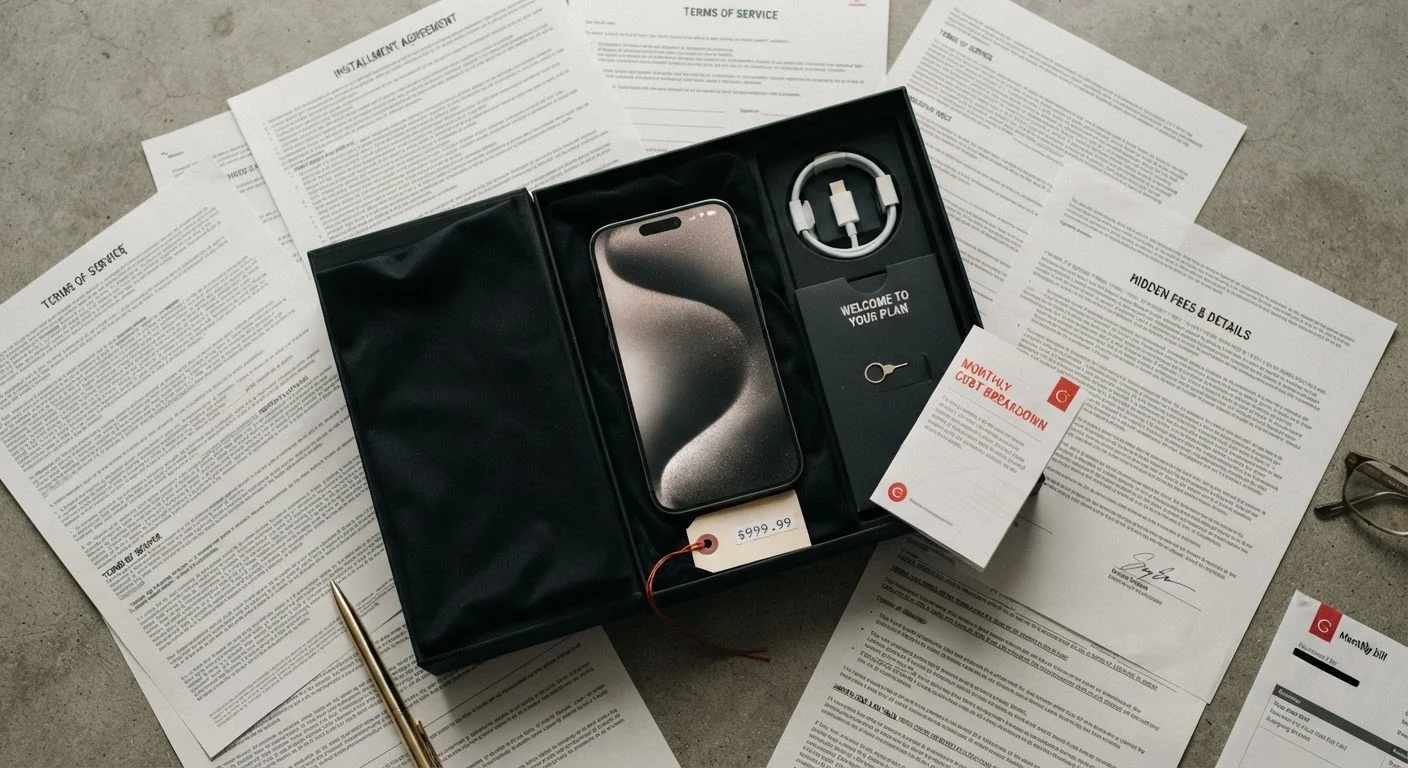
Photo credit: ArticlesHaven.net
In this article
Free phone promotions often come with long plan commitments or trade-in requirements. Here's how to calculate what you're actually agreeing to.
Key Takeaways
- Most 'free' phone promotions require a multi-year plan commitment, often 24 to 36 months.
- Trade-in requirements can dramatically restrict which phones qualify and how much credit you receive.
- The total cost of the plan over the commitment period often far exceeds the phone's retail value.
- Missing a single condition - like switching plans early - can eliminate the promotional credit entirely.
- Comparing total 24- or 36-month costs across carriers gives a clearer picture than monthly price tags.
Why 'Free' Rarely Means No Cost
Carrier promotions that advertise a free phone are among the most common offers in wireless retail - and among the most misunderstood. The phone itself may genuinely carry no upfront charge, but that cost is almost always redistributed across your monthly bill in the form of credits contingent on staying with a specific plan for a set period.
Understanding how this works isn't about distrust - it's about comparison. Just as 'free shipping' can quietly inflate your order total, 'free' phone deals embed their costs in structures that aren't immediately visible at sign-up.
Credits Are Not Instant Discounts
Most carriers apply 'free' phone value as monthly bill credits spread across 24-36 months - not as an upfront reduction. If you cancel, downgrade your plan, or miss a payment, those future credits typically stop. You may still owe the remaining device balance in full.
The section below covers the most common mistakes consumers make when evaluating these offers - and what to check before you commit.
The Mistakes That Cost Consumers the Most
Each of the following errors tends to surface after sign-up, when changing course becomes expensive. Recognizing them before you agree to an offer puts you in a stronger position to evaluate what you're actually getting.
Treating the word 'free' as the full story without reading the attached conditions.
Why it happens: Promotional language is designed to lead with the headline benefit. Consumers reasonably assume 'free' means no cost involved.
Overestimating the trade-in value your current phone will receive.
Why it happens: Promotional materials often advertise maximum trade-in values tied to flagship devices in perfect condition. Most phones don't qualify at that level.
Signing a 36-month device commitment without accounting for how long you typically keep a phone.
Why it happens: Three years feels abstract at sign-up. Upgrading or leaving partway through can trigger a lump-sum balance owed on the device.
Not checking whether the required plan tier costs significantly more than your current plan.
Why it happens: The plan requirement is often listed in smaller print. Shoppers focused on the phone price may not immediately calculate the added monthly plan cost.
Assuming the promotional credit applies to any new line, regardless of account status or porting requirements.
Why it happens: Offers often require switching from a specific carrier, adding a new line rather than upgrading, or porting in an existing number - conditions that aren't always obvious upfront.
24-36 mo.
Typical promotional commitment length
Most major US carrier 'free' phone promotions require customers to maintain a qualifying plan for 24 to 36 months to receive the full credit value.
$800+
Retail price of common flagship devices
Many promotional offers are tied to flagship smartphones that retail above $800, making the gap between headline offer and true cost particularly significant.
~$22/mo.
Monthly credit value on an $800 phone over 36 months
Spread over a 36-month term, an $800 device credit translates to roughly $22 per month - only realized if all promotional conditions are maintained.
How to Calculate What You're Actually Agreeing To
The most reliable way to evaluate a 'free' phone offer is to build a side-by-side cost comparison over the full commitment term. Here's a straightforward approach:
- Find the phone's retail price. This is the baseline value being offered. If the phone retails for $800 and the carrier credits $800 over 36 months, that's roughly $22/month in credits - but only if every condition is met for all 36 months.
- Add the required plan's monthly cost, multiplied by the commitment length. If the qualifying plan costs $20/month more than a comparable plan elsewhere, that's $720 added to the phone's true cost over 36 months.
- Subtract the confirmed trade-in value - not the advertised maximum, but the value locked in for your specific device and condition.
- Compare the resulting total against what you'd pay buying the phone outright (or through a neutral installment plan) and choosing a plan independently.
For a deeper look at this math, see how to calculate your actual monthly cost across different phone plans. And if you're weighing whether a long-term contract makes sense for your situation at all, the trade-offs between phone plan contracts and month-to-month options are worth reviewing before deciding.
Early Exit Can Trigger a Lump-Sum Balance
If you cancel service, switch carriers, or downgrade to a non-qualifying plan before the promotional period ends, most carriers will stop applying monthly credits immediately. Any remaining device balance may become due in full. Review the early termination or device payment terms carefully before signing - especially if your circumstances are likely to change within the commitment window. For more on how these terms are structured, see how carrier promotions work and the conditions that often come attached.
Before you finalize anything, run through this checklist of what to verify before committing to a new phone plan - it covers coverage, fees, and compatibility details that promotional materials routinely omit.

Author
Articles Haven Editorial Contributor
Articles Haven Editorial Team is the collective byline for our editorial team and contributor network. Articles published under this byline or an editorial pen name are researched, written, and reviewed according to our editorial standards for clarity, consistency, and independence before publication.
View all articles →