
Term Life vs. Whole Life Insurance: What Sets Them Apart
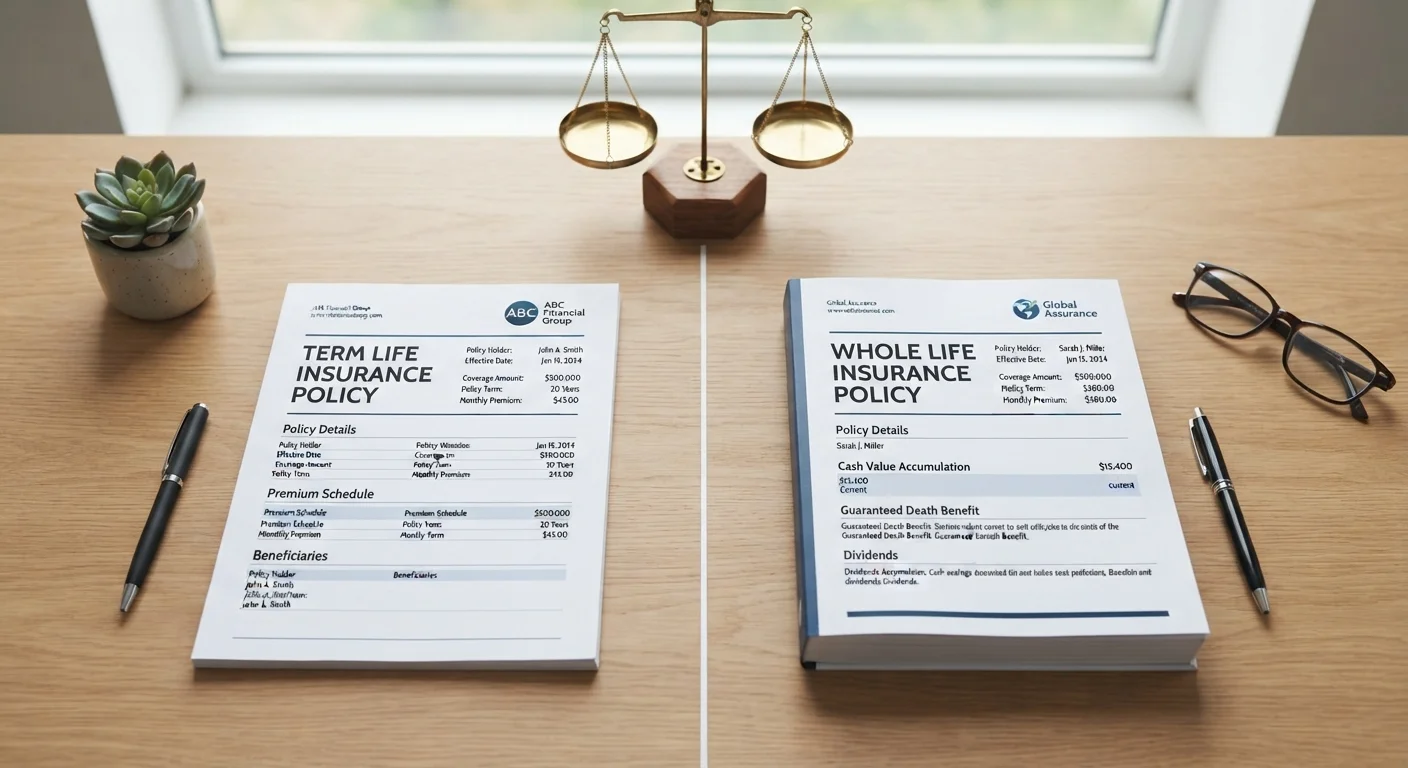
Photo credit: ArticlesHaven.net
In this article
Term and whole life insurance work very differently. Understand the trade-offs between coverage length, cost, and cash value.
Key Takeaways
- Term life covers a set period (typically 10-30 years); whole life covers you for your entire life.
- Term premiums are generally much lower than whole life premiums for the same death benefit.
- Whole life builds cash value over time; term life does not include any savings component.
- Neither policy type is universally better - the right fit depends on your goals, timeline, and budget.
- Consulting a licensed insurance professional is strongly recommended before purchasing any life insurance policy.
How Each Policy Actually Works
Term life insurance is straightforward: you pay premiums for a defined period - commonly 10, 20, or 30 years - and if you die within that term, your beneficiaries receive the death benefit. If the term expires and you're still living, coverage simply ends with no payout and no residual value. Choosing the right term length is an important early decision, since it directly affects how well the policy aligns with your financial obligations.
Whole life insurance works differently on two fronts. First, it's permanent - coverage doesn't lapse after a set number of years. Second, a portion of each premium goes into a cash value account that grows at a rate set by the insurer. Over years and decades, that cash value becomes a financial asset you can borrow against or, if you surrender the policy, receive directly. The trade-off is cost: whole life premiums are substantially higher for the same face value compared to term.
| Criterion | Term Life | Whole Life |
|---|---|---|
| Coverage duration | Fixed term (10-30 years) | Lifetime (permanent) |
| Premium cost | Lower for same death benefit | Significantly higher |
| Cash value | None | Grows tax-deferred over time |
| Death benefit certainty | Only if death occurs within term | Guaranteed while policy is active |
| Complexity | Simple, straightforward | More complex structure |
| Payout if term ends / surrender | No payout; coverage ends | Cash surrender value available |
The Cost Gap - and Why It Exists
Premium differences between term and whole life are significant. A healthy 35-year-old might pay a small monthly amount for a $500,000 20-year term policy, while an equivalent whole life policy could cost several times more per month. The gap exists because whole life guarantees a payout at some point (rather than only if death occurs during a window) and funds the cash value component simultaneously.
This doesn't make whole life a bad value - it means you're paying for different things. With term, you're buying pure protection. With whole life, part of each premium is essentially going into a long-term, insurer-managed savings vehicle. Understanding that distinction helps frame the cost comparison honestly. For more on how these costs play out across a lifetime, see how coverage and costs differ over a lifetime.
5-15×
Higher typical whole life premiums vs. term
Industry education sources generally estimate whole life premiums can run five to fifteen times more than comparable term policies, depending on age and health.
~60%
Share of life insurance policies that are term
LIMRA data has consistently shown term policies make up a large majority of individual life insurance coverage purchased in the United States.
Cash Value: Benefit or Complexity?
The cash value in a whole life policy grows on a tax-deferred basis and can typically be accessed through policy loans or partial surrenders. However, unpaid loans reduce the death benefit your beneficiaries receive, and surrendering the policy entirely means giving up coverage. It's a feature with real utility - but also real conditions attached.
Term policies carry none of this complexity. What you see is what you get: a death benefit for a defined window, nothing more. For some consumers, that simplicity is a feature in itself. Those weighing permanent options beyond whole life should also consider how universal life compares to whole life, since universal life offers a different structure for permanent coverage.
Policy Loans Aren't Free Money
Borrowing against a whole life policy's cash value does not require repayment, but any outstanding loan balance - plus interest - is deducted from the death benefit paid to beneficiaries. In some cases, if a loan grows large enough relative to the cash value, the policy can lapse. Always factor loan implications into any decision to borrow from a life insurance policy.
Which Fits Your Situation?
There's no single correct answer. A young family managing a mortgage and childcare costs may find term's affordability and simplicity a natural fit. Someone with a longer-term estate planning objective, or who has already maximized other savings vehicles, may find whole life's permanence and cash value useful tools.
It's also worth knowing that these aren't always either-or decisions. Some consumers hold both types simultaneously, layering term coverage during high-need years over a permanent base policy. Whatever direction you're leaning, understanding how to evaluate a policy before you buy is time well spent. For a broader look at what separates term from all permanent life products, this structural comparison goes deeper.
This article is for general informational purposes only and does not constitute insurance, financial, or legal advice. Coverage terms, costs, and eligibility vary by provider and individual circumstances. Always read policy documents carefully and consult a licensed insurance professional before making any coverage decisions.

Author
Articles Haven Editorial Contributor
Articles Haven Editorial Team is the collective byline for our editorial team and contributor network. Articles published under this byline or an editorial pen name are researched, written, and reviewed according to our editorial standards for clarity, consistency, and independence before publication.
View all articles →