
Comparing Insurance Quotes: What the Numbers Do and Don't Tell You
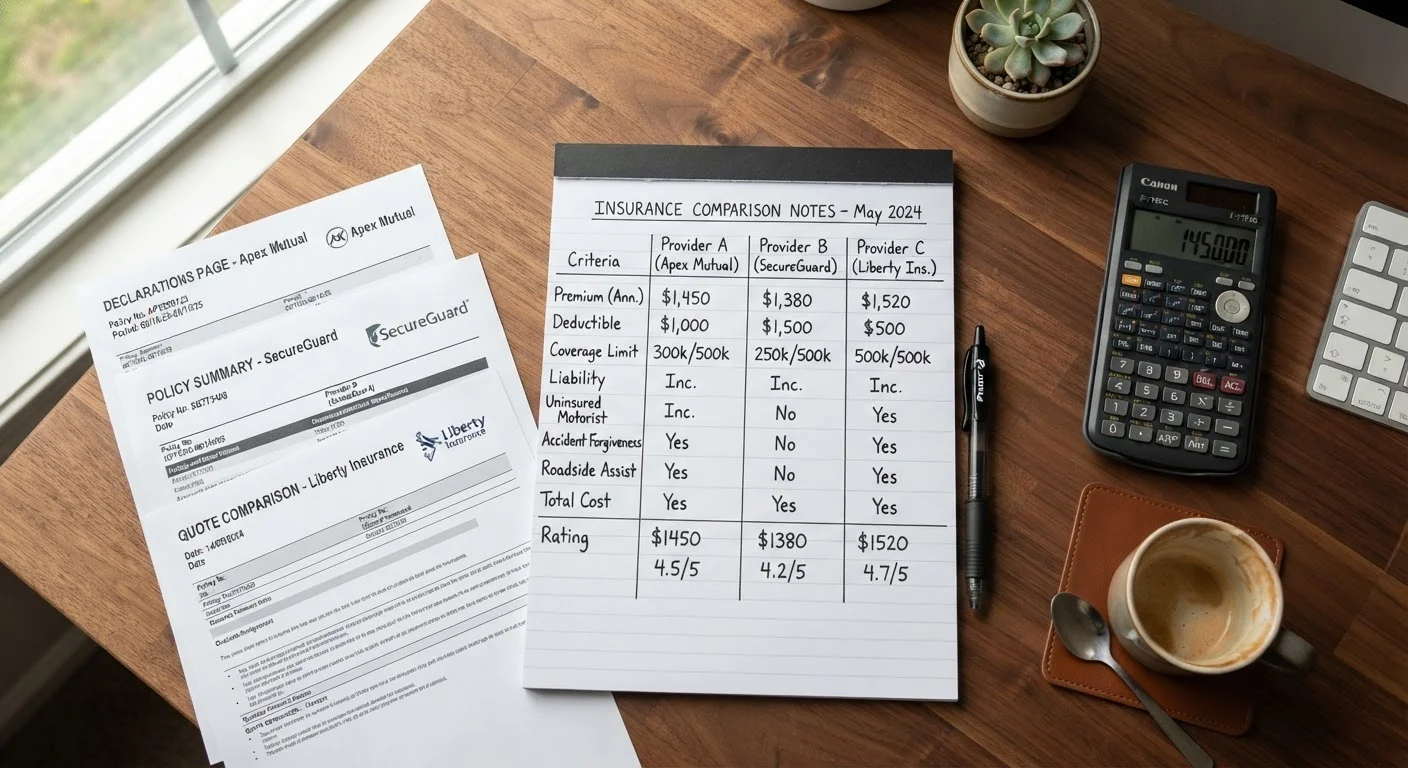
Photo credit: ArticlesHaven.net
In this article
A quote comparison is only useful if you're comparing equivalent coverage. Here's how to align quotes before drawing any conclusions.
Key Takeaways
- A lower premium does not automatically mean a better deal if deductibles or exclusions differ.
- Quotes must reflect identical coverage limits and deductibles before any price comparison is meaningful.
- Exclusions, sub-limits, and add-ons often explain significant price gaps between competing quotes.
- Insurer claims handling reputation matters as much as the quoted premium.
- Always request an itemized coverage summary, not just the headline price.
Why Quote Comparisons Often Mislead
Insurance quotes are not standardized documents. Two quotes for "auto insurance" or "homeowners insurance" can represent substantially different products - different limits, different exclusions, different deductibles - while displaying similar or identical premiums. The headline number is designed to get your attention; the coverage terms are where the real differences live.
This isn't necessarily deceptive. Insurers offer a range of configurations, and online quote tools often default to minimum coverage levels to surface a competitive price. But that creates a genuine comparison problem for consumers who take the numbers at face value. Understanding what a quote does and doesn't tell you is the starting point for any meaningful evaluation.
The core principle is straightforward: you can only compare prices meaningfully when the underlying coverage is equivalent. Everything in this guide is built around that idea.
What you will need
What You'll Need Before You Start
Effective quote comparison requires more than a list of premium figures. Gather the following before working through the steps below.
State Insurance Department Website
Verify insurer licensing, check consumer complaint ratios, and confirm that coverage types are valid in your state.
Coverage Comparison Spreadsheet
Align each quote's limits, deductibles, exclusions, and add-ons in one place before comparing premiums.
Policy Summary or Declarations Page
The official document that lists your actual coverage terms - more reliable than the quote sheet alone.
Licensed Insurance Agent or Broker
Provides personalized guidance on coverage gaps and can clarify technical language in policy documents.
Don't Compare Premiums Before Aligning Coverage
Jumping straight to price without first confirming that each quote carries the same deductibles, limits, and riders is one of the most common mistakes consumers make. A policy that appears $200 cheaper per year may carry a deductible twice as high, leaving you significantly worse off after a claim. Standardize first, then compare price.
How to Compare Quotes Step by Step
Work through each step below in order. Skipping ahead to price before completing the earlier steps is where most comparison errors happen. For a broader framework on structured comparison across any purchase category, the approach used in standardizing product comparisons applies equally well to insurance.
Gather the Full Coverage Summaries, Not Just the Price Sheets
Request a coverage summary or declarations page from each insurer - not just the premium quote. A quote sheet often omits critical details like sub-limits on specific categories (jewelry, electronics, or water damage, for example) or optional riders that were quietly excluded to keep the price low. You need the full picture before any comparison is useful.
Align Deductibles Across Every Quote
Deductibles are one of the most common sources of misleading price comparisons. A policy with a $2,500 deductible will almost always quote lower than one with a $500 deductible - but that difference shifts significant out-of-pocket risk onto you after a claim. Set all quotes to the same deductible amount before comparing premiums. This single step often collapses apparent price differences.
Match Coverage Limits Line by Line
Check that liability limits, dwelling coverage, personal property limits, and any other relevant coverage types are set to equivalent amounts across every quote. A homeowners policy quoting $200,000 in dwelling coverage is not comparable to one quoting $350,000 - even if both are covering the same house. Similarly, auto liability limits of 25/50 and 100/300 are fundamentally different products at different risk levels.
Identify Exclusions and Sub-Limits in Each Policy
Exclusions are the events or circumstances your policy will not cover. Sub-limits cap reimbursement for specific item categories even within a covered loss. These are where policies diverge most quietly. Common examples include flood and earthquake exclusions in homeowners policies, or rental reimbursement caps in auto policies. Read the exclusions section of each quote's summary carefully and note any that differ between quotes.
Check What Add-Ons Are Included vs. Priced Separately
Some insurers bundle roadside assistance, rental coverage, or identity theft protection into the base premium. Others price these as optional riders. A quote that appears more expensive may actually include add-ons that would cost extra elsewhere. Separate bundled features from the core coverage and reprice accordingly to see the true comparison. For more on evaluating what a policy's price actually buys, see why two policies at the same premium can offer very different value.
Research Each Insurer's Claims Handling Record
Your state insurance department publishes complaint ratios - the number of complaints filed against an insurer relative to its market share. A low premium means little if claims are routinely delayed, disputed, or underpaid. Check the insurer's complaint index and look at independent ratings from organizations like AM Best for financial stability. This step often reorders what initially looked like a straightforward price ranking. See questions worth asking before committing to any policy for a broader due-diligence checklist.
Create a Simple Comparison Spreadsheet
Build a single-page table with each insurer's name across the top and coverage components down the left side - limits, deductible, key exclusions, add-ons, and premium. This forces an apples-to-apples view and makes gaps visible at a glance. It also gives you a useful reference when speaking with an agent or broker.
What the Numbers Still Can't Tell You
Even a perfectly aligned quote comparison leaves some important factors unquantified. How quickly does the insurer respond after a loss? How clear is the claims process? Are there cancellation penalties or rate increases after a first claim? These aren't reflected in any premium figure.
Coverage needs also vary by individual. The limits and riders appropriate for one household are often wrong for another - a point developed further in why your neighbor's policy isn't a useful benchmark for yours. Once you've aligned and compared your quotes, use the steps as a foundation for deeper questions about the policies you're most seriously considering.
Quotes Are Estimates, Not Guarantees
A quote reflects the information you provided at the time of application. Your final premium can change after an insurer verifies your details, runs a claims history check, or reviews a credit-based insurance score where permitted by your state. Never assume the quoted figure is what you'll pay at binding. Read the actual policy documents before committing - terms, exclusions, and conditions are what govern your coverage.
This article is for general informational purposes only and does not constitute personalized insurance, financial, or legal advice. Coverage terms, exclusions, and premiums vary by insurer and by state. Always read the full policy documents and consult a licensed insurance agent or adviser before making any coverage decision.

Author
Articles Haven Editorial Contributor
Articles Haven Editorial Team is the collective byline for our editorial team and contributor network. Articles published under this byline or an editorial pen name are researched, written, and reviewed according to our editorial standards for clarity, consistency, and independence before publication.
View all articles →