
How Household Routines Affect Children's Sense of Stability
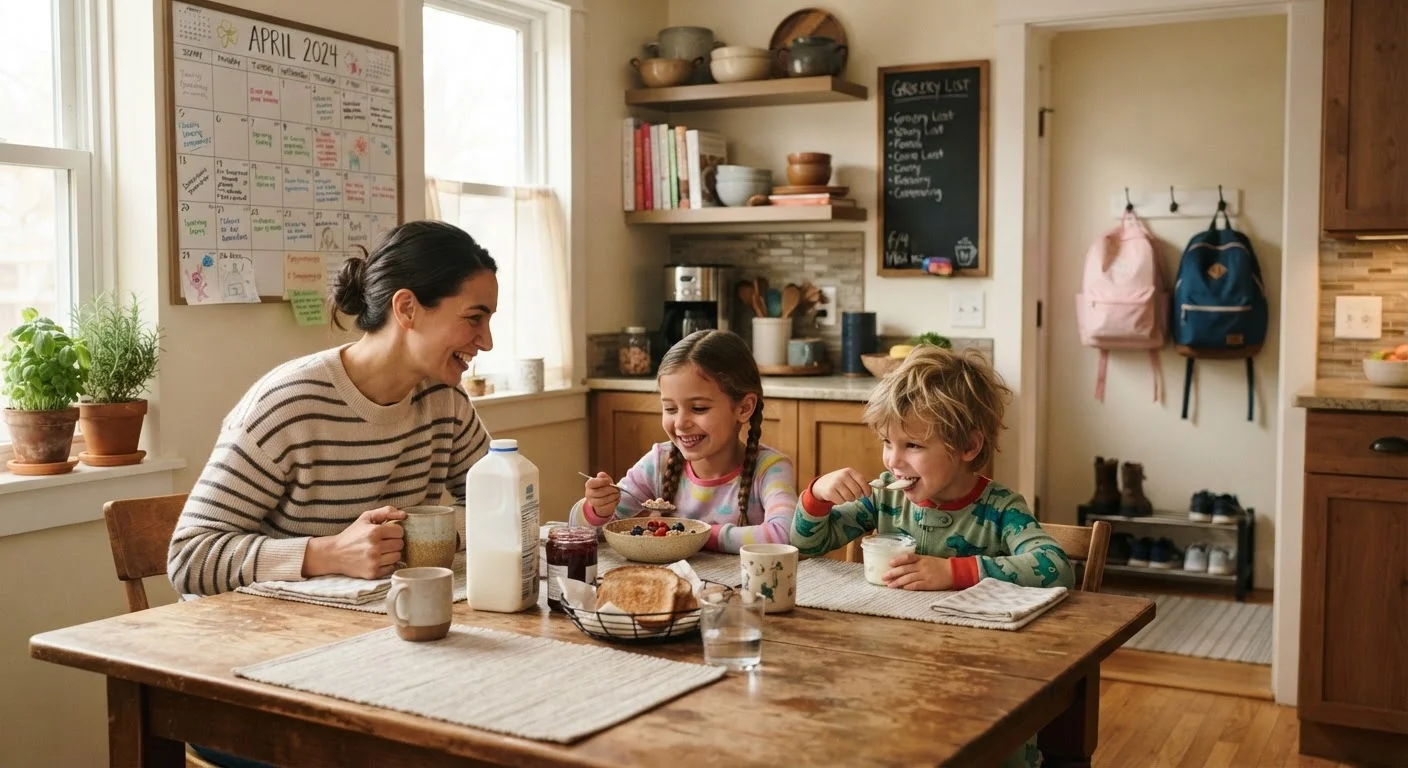
Photo credit: ArticlesHaven.net
In this article
Consistent household routines do more than keep homes tidy. Learn what research indicates about their role in children's well-being.
Key Takeaways
- Predictable household routines reduce anxiety in children by lowering daily uncertainty.
- Bedtime and mealtime routines are among the most studied and show consistent associations with better sleep and emotional regulation.
- Children as young as 12 months can perceive and respond to routine disruption.
- Routines don't need to be rigid - flexibility within a predictable structure still provides benefit.
- Parents' own stress levels influence how consistently routines are maintained at home.
Why Predictability Matters to a Developing Brain
Children experience the world differently than adults. Because they have limited ability to predict future events or understand abstract time, they rely heavily on environmental cues to gauge whether things are okay. A household where meals happen at roughly the same time, bedtime follows a consistent sequence, and mornings have a recognizable rhythm communicates safety - not through words, but through pattern.
Developmental psychologists describe this as "environmental scaffolding" - the idea that external structure supports internal regulation while a child's own regulatory systems are still developing. When that scaffolding is reliably present, children can direct more cognitive energy toward learning, socializing, and play. When it's absent or erratic, more energy goes toward vigilance and stress management.
Routine vs. Rigidity: An Important Distinction
Research consistently distinguishes between helpful routine and counterproductive rigidity. A predictable general pattern - even with some flexibility in timing - delivers most of the psychological benefit. Households that become highly distressed when routines are disrupted may be operating in a different zone than what research supports as beneficial. If concerns arise about a child's behavioral or emotional responses, consulting a pediatric professional is always appropriate.
This doesn't mean every household needs a military schedule. Research consistently distinguishes between routine - a predictable general pattern - and rigidity, which can generate its own stress. The goal is reasonable consistency, not perfection.
What Research Indicates About Specific Routines
Bedtime routines are among the most studied. Multiple observational studies have found associations between consistent pre-sleep rituals and improved sleep duration and quality in children - which in turn connects to better emotional regulation and school performance. The sequence matters as much as the activity: bath, story, lights out creates an internal signal for the nervous system to wind down.
Mealtime routines show a similar pattern. Regular family meals have been associated with lower rates of disordered eating behaviors in adolescents and stronger family communication. Again, it's the predictability, not necessarily the food itself, doing some of the psychological work.
~40%
Children affected by irregular bedtime routines
A large UK cohort study (the Millennium Cohort Study) found that children with irregular bedtimes were more likely to show behavioral difficulties compared to those with consistent routines.
5+
Family meals per week linked to better adolescent outcomes
Research published in pediatric journals has consistently associated frequent family mealtimes with lower rates of disordered eating and stronger family connectedness in adolescents.
Morning routines receive less research attention but are practically significant. A structured morning reduces the decision fatigue and conflict that can set a negative emotional tone for the entire day - for parents and children alike. For a deeper look at how the timing of daily routines affects adult wellness, see morning vs. evening routine research.
The Role of Parents' Stress in Sustaining Routines
Household routines don't exist in isolation - they're maintained by adults who are managing their own pressures. Research on family functioning consistently finds that parental stress is one of the strongest predictors of routine inconsistency. A caregiver stretched thin by financial strain, work demands, or mental health challenges will naturally find it harder to maintain predictable household patterns.
“Routines give children the experience of a world that is responsive and predictable - and that experience is foundational to healthy emotional development.”
— Ross Thompson, Professor of Psychology, University of California, Davis, and developmental researcher specializing in early social-emotional development
This is worth naming honestly: the advice to "maintain consistent routines" can feel like one more demand on already-overwhelmed parents. The more realistic framing is to identify the two or three routines that matter most to your household - a consistent bedtime, a regular dinner hour - and protect those first, rather than trying to structure every hour of the day.
If persistent household disorganization feels unmanageable, that can sometimes signal something beyond logistical challenge. When household disorder signals something more than clutter explores when and how to seek additional support.
For a broader view of household coordination, including tools and approaches that make consistency easier to maintain, the complete guide to running a household smoothly offers practical strategies across cleaning, scheduling, and family coordination.
Start with one anchor routine, not a full schedule
If household routines feel hard to sustain, choose a single high-impact anchor - usually bedtime - and focus on making that one consistent before layering in others. Even one reliable daily ritual provides children with meaningful predictability. For ideas on embedding children into household tasks as part of that structure, see age-appropriate chore frameworks.
Frequently Asked Questions

Author
Articles Haven Editorial Contributor
Articles Haven Editorial Team is the collective byline for our editorial team and contributor network. Articles published under this byline or an editorial pen name are researched, written, and reviewed according to our editorial standards for clarity, consistency, and independence before publication.
View all articles →