
Nutrition and Mental Wellness: What the Gut-Brain Connection Actually Suggests
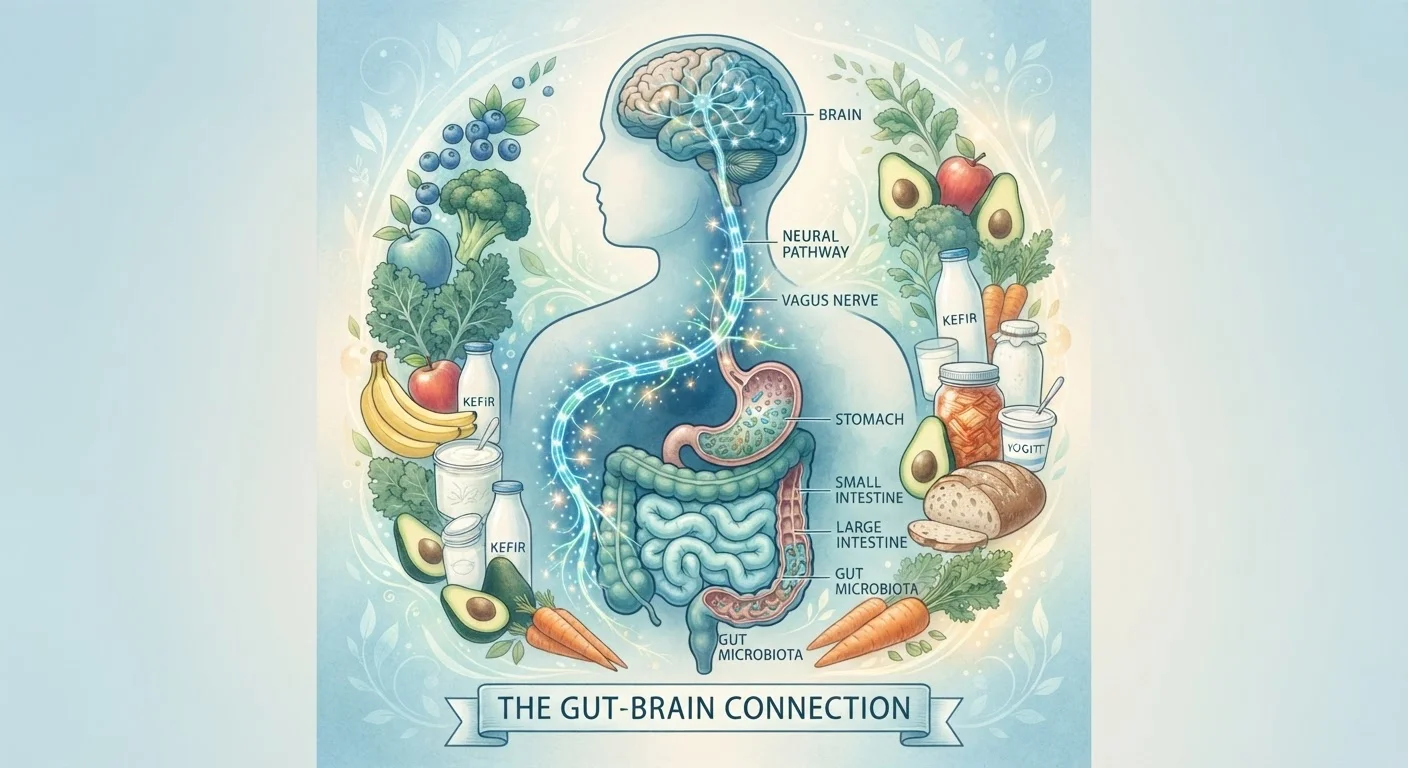
Photo credit: ArticlesHaven.net
In this article
Emerging research links diet and gut health to mood and cognition. Here's an honest overview of what's supported, what's preliminary, and what remains unclear.
Key Takeaways
- The gut and brain communicate constantly through nerves, hormones, and immune signals.
- Diet can influence the diversity and activity of gut microbiota, which may affect mood-related pathways.
- Diets rich in whole foods, fiber, and fermented foods are associated with better mental health outcomes in some studies.
- Most research in this area is observational - causation has not been firmly established.
- This content is general education, not medical or dietary advice; consult a qualified professional for personal guidance.
What the Gut-Brain Axis Actually Is
The phrase "gut-brain connection" gets used loosely - sometimes in ways that outrun the science. At its core, it describes a real, well-documented communication network linking the gastrointestinal system to the central nervous system. This isn't metaphorical. The gut has its own extensive nervous system, often called the enteric nervous system, and it exchanges signals with the brain through the vagus nerve, the immune system, and circulating hormones.
What makes the topic especially active in research right now is the microbiome - the enormous community of bacteria, fungi, and other microorganisms living in the digestive tract. These organisms are metabolically active: they break down food, produce short-chain fatty acids, interact with immune cells, and influence neurotransmitter pathways. The question researchers are working to answer is how much all of that activity genuinely shapes how we think and feel.
This Is Still an Emerging Field
Nutritional psychiatry - the study of how diet affects mental health - is a legitimate and growing scientific discipline, but it is not yet at the stage where specific dietary interventions are recommended as standalone treatments for mental health conditions. Many findings come from animal models or small human studies. Interpreting headlines about gut health and mood requires caution about overreach.
What the Research Broadly Suggests - and Where It Falls Short
A growing body of epidemiological work associates dietary patterns with mental health outcomes. The most consistent finding is that diets centered on vegetables, whole grains, legumes, fish, and fermented foods tend to correlate with lower self-reported rates of depression and anxiety compared with diets heavy in ultra-processed foods and added sugar. Notable examples include research on Mediterranean-style and traditional Japanese dietary patterns.
However, most of this research is observational. That means it identifies associations, not causes. People who eat more whole foods may also sleep better, exercise more, or have stronger social ties - all factors that independently affect mental well-being. Controlled intervention trials are more informative, and while some show positive effects of dietary improvements on mood scores, the sample sizes are often small and the durations short.
~90-95%
Of body's serotonin produced in the gut
While most of the body's serotonin is synthesized in the gut, its direct role in brain-based mood regulation via the gut-brain axis remains an active area of research.
~38 trillion
Estimated microbial cells in the human gut
According to estimates published in Cell (2016), the gut microbiome rivals the number of human cells in the body, reflecting its biological significance.
~17%
Reduction in depression scores in SMILES trial
The 2017 SMILES randomized controlled trial found a statistically significant reduction in depression scores for participants following a Mediterranean-style diet over 12 weeks, compared to a social support control group.
The honest summary: the direction of the evidence is encouraging, but the mechanisms are not fully mapped, and no dietary prescription has been validated as a mental health treatment. This is an area to watch, not one to overclaim.
Dietary Patterns That Appear in the Research
Rather than focusing on individual superfoods, researchers tend to look at overall dietary patterns. A few themes emerge consistently across studies:
- Fiber intake: Dietary fiber feeds beneficial gut bacteria, encouraging the production of short-chain fatty acids that may support the gut lining and interact with brain signaling. Most Americans fall well short of recommended fiber intake.
- Fermented foods: Foods like yogurt, kefir, sauerkraut, miso, and kimchi contain live cultures that can temporarily add to gut microbial diversity. A 2021 Stanford study found that a high-fermented-food diet increased microbiome diversity and reduced markers of immune activation - though mental health outcomes weren't its primary focus.
- Omega-3 fatty acids: Found in fatty fish, flaxseed, and walnuts, omega-3s have some evidence behind them in mood-related research, though results across trials are mixed.
- Limiting ultra-processed foods: High consumption of processed foods, refined sugar, and artificial additives has been associated in several studies with worse mental health scores, though again causality is hard to establish.
If you're thinking about how to bring more of these patterns into your grocery habits, the practical starting point for nutrition-minded shopping offers accessible, low-overwhelm suggestions.
Start With Dietary Patterns, Not Single Foods
No single food will transform your mental wellness. The research consistently points to overall dietary patterns - varied, minimally processed, fiber-rich - as more meaningful than any individual ingredient. If you're looking for a manageable starting point, gradually adding more vegetables, legumes, and fermented foods is a lower-stakes place to begin than a wholesale diet overhaul.
The Emotional Side of Eating
Nutrition and mental wellness don't just intersect through biology. What and how we eat is often shaped by emotional states, stress, and social context - and those relationships run in both directions. Stress can alter gut microbiome composition; gut discomfort can affect mood and concentration; anxiety can drive food choices that further affect the gut.
Understanding your own patterns around food and emotion is a valuable piece of this picture. For readers interested in that dimension, the comparison of mindful and intuitive eating approaches explores two frameworks for thinking about the food-emotion relationship. Additionally, mindful eating research and evidence provides a grounded look at what the practice involves and what evidence exists for its benefits.
Mental wellness is also not reducible to diet alone. Social connection, physical activity, sleep, and access to care all play significant roles. The effects of loneliness on mental and physical health and evidence on green spaces and well-being are worth exploring as part of a broader picture.
“The relationship between diet and mental health is real but complex. We're not yet at the point of prescribing specific diets for specific mental health disorders, but the signal in the data is strong enough that diet should be part of the conversation.”
— Felice Jacka, Professor and nutritional psychiatry researcher, Deakin University
This article is for general informational and educational purposes only and is not medical or dietary advice. Always consult a qualified healthcare professional before making significant changes to your diet or for any concerns about your mental health.
Frequently Asked Questions

Author
Articles Haven Editorial Contributor
Articles Haven Editorial Team is the collective byline for our editorial team and contributor network. Articles published under this byline or an editorial pen name are researched, written, and reviewed according to our editorial standards for clarity, consistency, and independence before publication.
View all articles →