
Stretching vs. Strength Training: Different Goals, Different Roles
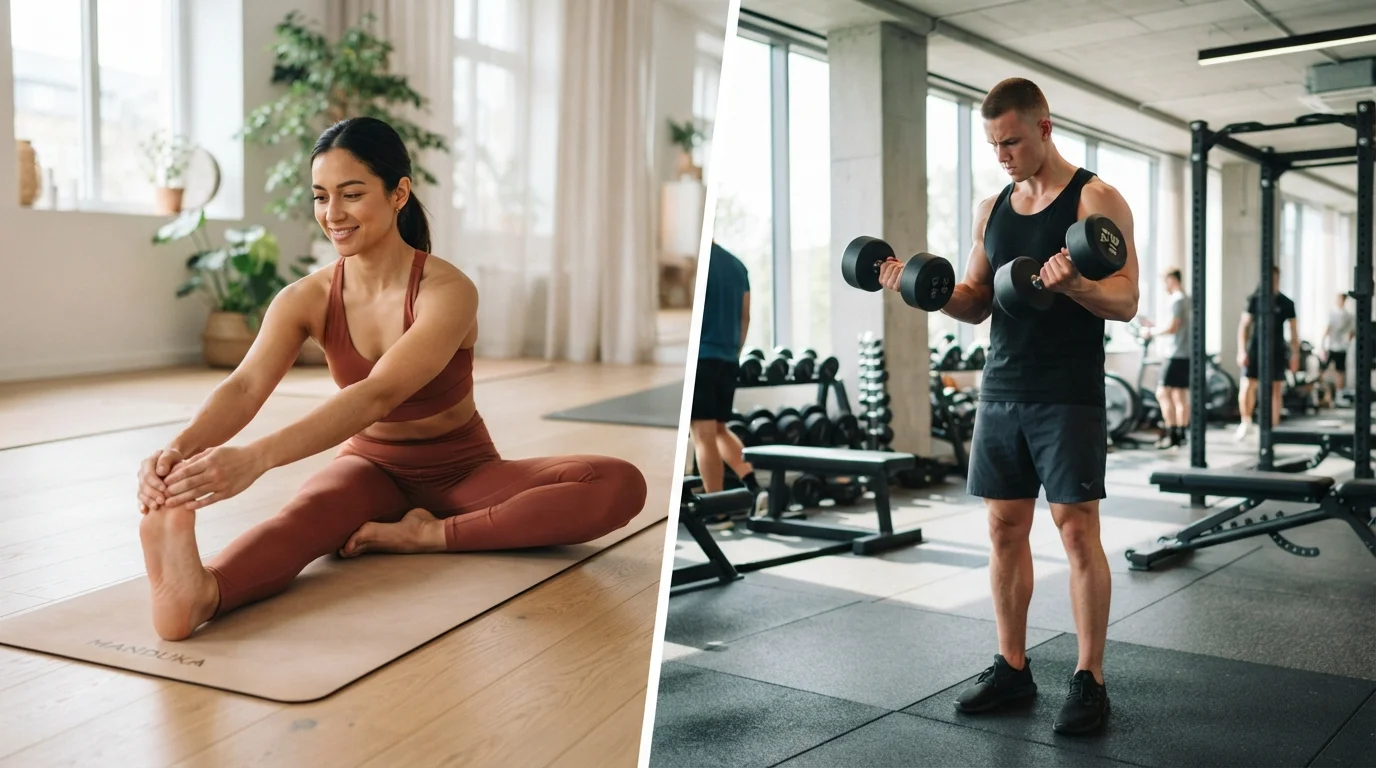
Photo credit: ArticlesHaven.net
In this article
How flexibility work and resistance training differ in purpose and what combining them can offer.
Key Takeaways
- Stretching improves flexibility and range of motion; strength training builds muscle and supports metabolic health.
- Neither approach replaces the other - they target different physical adaptations.
- Combining both in a weekly routine addresses more health dimensions than either alone.
- Consult a qualified professional before starting any new exercise program, especially with existing injuries or conditions.
What Each Discipline Actually Does
Stretching and strength training are often mentioned in the same breath, but they produce very different physiological changes. Understanding what each actually does to your body is the starting point for making informed decisions about your routine.
Stretching - whether static (holding a position), dynamic (moving through a range), or proprioceptive neuromuscular facilitation (PNF) - works primarily by increasing the length and pliability of muscles and connective tissues. Over time, consistent flexibility work can expand a joint's usable range of motion and may reduce the sensation of stiffness. It also plays a role in managing muscular tension that builds up from prolonged sitting or repetitive movement patterns.
Strength training, also called resistance training, applies load to muscles - through bodyweight, free weights, machines, or resistance bands - triggering adaptations that increase muscle fiber size, improve neuromuscular coordination, and strengthen tendons and bones. Research consistently links regular resistance training to benefits including improved metabolic function, better insulin sensitivity, and reduced age-related muscle loss (sarcopenia). For a deeper look at how training frequency and effort interact, see this breakdown of consistency vs. intensity in fitness.
Comparing the Two Approaches Side by Side
Neither stretching nor strength training is universally superior - their value depends entirely on what outcome you're working toward. The table below outlines how each approach performs across common health and fitness criteria.
| Stretching | Strength Training | |
|---|---|---|
| Primary goal | Improve flexibility and range of motion | Build muscle strength and endurance |
| Key physical adaptation | Increased muscle and connective tissue length | Muscle hypertrophy and neuromuscular efficiency |
| Bone density impact | Minimal direct effect | Well-supported positive effect |
| Metabolic benefit | Modest, indirect | Significant; raises resting metabolic rate |
| Injury risk management | Reduces stiffness; may prevent some strains | Strengthens tendons and stabiliser muscles |
| Equipment needed | None to minimal | Moderate (bodyweight to free weights/machines) |
| Time commitment per session | 10-30 minutes typical | 30-60 minutes typical |
2x/week
Recommended resistance training frequency
The U.S. Department of Health and Human Services Physical Activity Guidelines recommend muscle-strengthening activity at least two days per week for adults.
~3-8%
Muscle mass lost per decade after 30
Research estimates adults may lose between 3 and 8 percent of muscle mass per decade starting around age 30, a rate that accelerates after 60 - a process resistance training can help slow.
When Combining Both Makes Sense
For most adults, the question isn't which to choose - it's how to sequence and balance them. Strength training without adequate flexibility work can lead to tight, shortened muscles and reduced range of motion over time. Stretching without any resistance work leaves gaps in muscular support that can contribute to joint instability and injury risk.
Smart Sequencing Within a Session
Dynamic stretching is generally better suited before strength work, while static stretching fits well after a session when muscles are warm. Holding static stretches before lifting has been associated in some studies with temporary reductions in force output. Saving deeper holds for the cool-down tends to feel more productive and may be more effective for flexibility gains over time.
A practical approach many fitness professionals suggest: perform dynamic stretching (leg swings, arm circles, hip openers) before a strength session to prepare joints and muscles, and static stretching afterward when muscles are warm and more receptive to lengthening. This sequencing is generally considered more effective than performing static stretches cold before lifting.
It's also worth noting that structured exercise of any kind is only part of the picture. Everyday incidental movement - walking, taking stairs, standing periodically - contributes meaningfully to overall activity levels alongside planned workouts.
This article is for general informational and educational purposes only and does not constitute medical or exercise advice. Always consult a qualified healthcare or fitness professional before beginning a new exercise program, particularly if you have an existing injury, chronic condition, or have been inactive for an extended period.

Author
Articles Haven Editorial Contributor
Articles Haven Editorial Team is the collective byline for our editorial team and contributor network. Articles published under this byline or an editorial pen name are researched, written, and reviewed according to our editorial standards for clarity, consistency, and independence before publication.
View all articles →