
Screen Time Before Bed: What the Research Says About Sleep Disruption
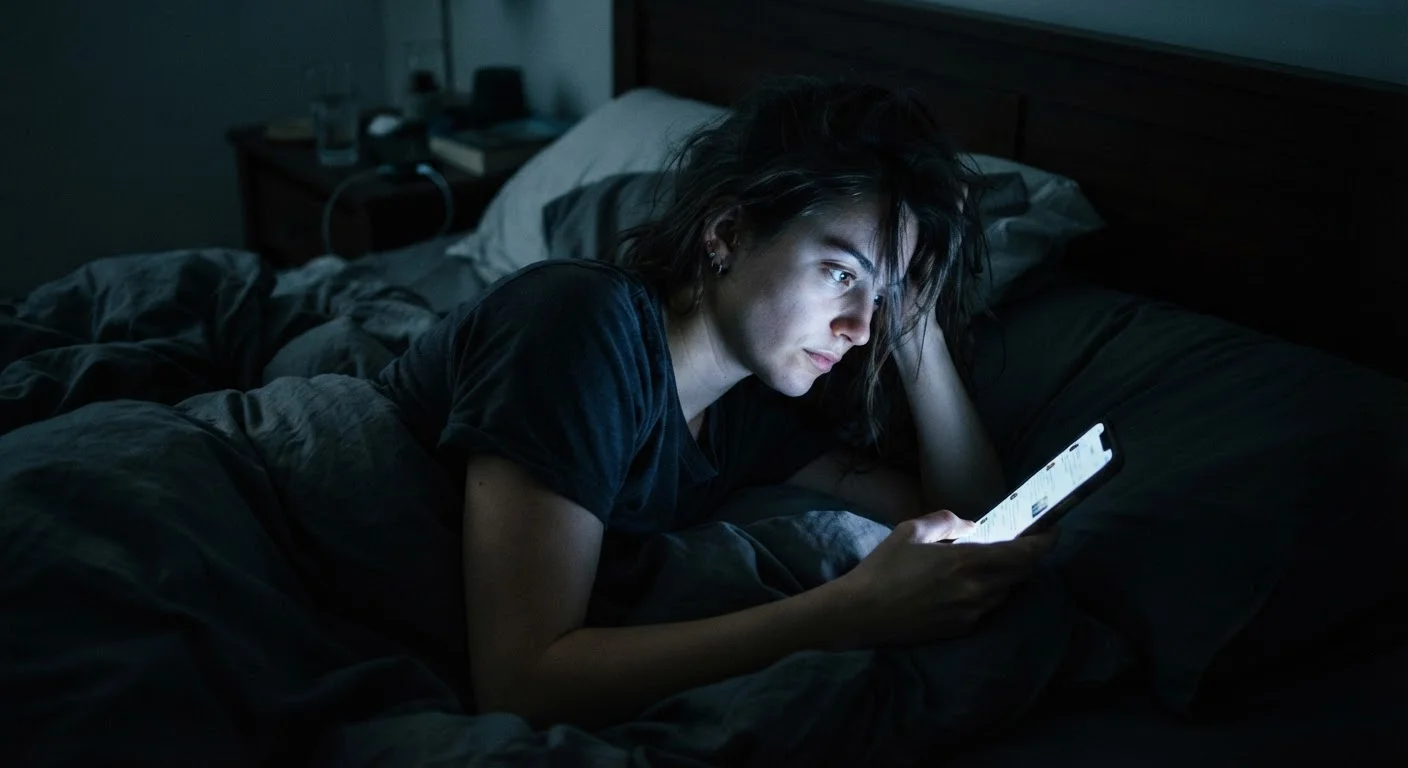
Photo credit: ArticlesHaven.net
An honest look at how evening screen use may affect sleep quality and what changes are worth considering.
Key Takeaways
- Blue light from screens can delay melatonin production, but it is not the only factor affecting sleep.
- Mental stimulation and emotional engagement from content may matter as much as the light itself.
- Night mode and blue-light glasses help, but they do not eliminate all screen-related sleep disruption.
- Individual sensitivity to evening screen use varies considerably from person to person.
- Small, consistent wind-down habits tend to have a larger impact than any single technology fix.
Why Evening Screen Use Has Become a Sleep Concern
Most American adults spend some portion of their evening staring at a phone, tablet, laptop, or television. According to polling by the American Academy of Sleep Medicine, a substantial majority of adults use a screen within an hour of bedtime. That habit has drawn genuine scientific scrutiny - and also generated a fair amount of exaggeration in both directions.
The core concern is biological. Light, particularly short-wavelength blue light emitted by LED-backlit screens, signals to the brain that it is still daytime. This can suppress the release of melatonin, the hormone that helps regulate the timing of sleep. Delay melatonin production consistently and the knock-on effects can include difficulty falling asleep, lighter sleep, and feeling less rested in the morning.
But the story is not as simple as "screens are bad, avoid them." The relationship between evening technology use and sleep quality involves multiple overlapping factors - the type of content you're watching, how long you spend, how close the screen is to your face, and your own individual biology. Understanding those distinctions is what actually helps you make useful changes. For a broader look at how evening habits stack up against morning ones, see how morning and evening routines compare.
Myth
Blue light from screens is the primary reason phones and tablets disrupt sleep.
Fact
Blue light is one contributing factor, but mental stimulation and emotional engagement from content are likely equally or more disruptive for many people.
The blue light narrative has been widely repeated, but researchers have noted that the effect size - how much melatonin suppression actually occurs from a typical phone screen held at arm's length - is often modest in real-world conditions. A 2021 study published in Sleep Medicine Reviews found that psychological arousal from engaging content may be a stronger predictor of delayed sleep onset than light wavelength alone. In other words, a gripping thriller or an argument-filled comment section keeps your brain alert regardless of what color the pixels are.
Myth
Night mode (or "warm" screen settings) solves the sleep disruption problem.
Fact
Night mode reduces blue light output but does not address content-driven mental arousal, which research suggests is a significant driver of sleep delay.
Switching your phone to night mode in the evening is a reasonable low-effort step, but treating it as a complete solution overstates its benefit. Studies testing blue-light-filtering settings have produced mixed results on sleep outcomes. One oft-cited study from the University of Manchester actually found that warmer screen colors may, counterintuitively, signal wakefulness in some contexts due to how the circadian system responds to color contrast rather than wavelength alone. The takeaway: night mode may help at the margins, but it does not make late-night scrolling equivalent to a screen-free wind-down.
Myth
Blue-light-blocking glasses eliminate the sleep impact of evening screen use.
Fact
Evidence for blue-light-blocking glasses improving sleep outcomes is limited and inconsistent across studies.
Blue-light-blocking glasses have become a popular consumer product, but clinical trials have not consistently demonstrated that they improve sleep latency, sleep quality, or next-day alertness. The American Academy of Ophthalmology has noted there is insufficient evidence to recommend them specifically for sleep. This does not mean they have no effect for any individual, but the marketed benefits are ahead of the supporting science as of current published research.
Myth
Television before bed is safer for sleep than using a phone or tablet.
Fact
Screen distance and room brightness make television somewhat less disruptive for light exposure, but content engagement and total exposure time still matter.
Because televisions are typically viewed from several feet away, the light intensity reaching the eyes is lower than from a device held close to the face. This does give TV a modest advantage in terms of direct melatonin suppression. However, that advantage is narrowed considerably if the room is otherwise dark, if the content is stimulating, or if watching runs late into the night. Passive, familiar content watched at a reasonable hour on a television is a genuinely lower-risk option - but the format alone does not make the habit neutral.
Myth
If you fall asleep easily while watching a screen, screens are not affecting your sleep quality.
Fact
Falling asleep quickly does not mean the subsequent sleep is as deep or restorative as it would otherwise be.
Sleep onset speed and sleep quality are different measures. Some people find that a screen in bed helps them feel drowsy - particularly with low-stimulation content - but this does not guarantee that the sleep that follows is unaffected. Light exposure and prior arousal can still influence time spent in slow-wave and REM sleep, the stages most associated with physical recovery and memory consolidation. Consistently feeling unrefreshed in the morning despite sleeping a full night is one signal worth paying attention to, and worth discussing with a healthcare provider if it persists. Poor sleep quality also has well-documented links to mood and cognition - see the two-way relationship between sleep and mental health for more context.
What the Evidence Actually Supports
Research on screen time and sleep has grown significantly over the past decade, though most studies are relatively short in duration and rely on self-reported sleep quality. A few findings hold up reasonably well across multiple studies.
~70%
Adults using screens within an hour of bed
American Academy of Sleep Medicine polling has consistently found that a large majority of U.S. adults use at least one screen in the hour before sleep.
1-3 hours
Potential melatonin delay from evening light exposure
Research published in the Journal of Clinical Endocrinology & Metabolism found that bright evening light can delay melatonin onset by one to three hours, depending on intensity and duration.
Mixed
Evidence rating for blue-light glasses on sleep
Systematic reviews examining blue-light-blocking glasses have found inconsistent results, with several trials showing no statistically significant improvement in sleep outcomes.
First, the timing of light exposure matters more than the device itself. A brightly lit room has a similar suppressive effect on melatonin as a screen viewed at close range. Second, content type appears to play a meaningful role. Passive viewing of something low-stakes - a familiar nature documentary, for example - tends to produce less arousal than scrolling social media or engaging in competitive gaming. Third, individual sensitivity varies: some people show marked melatonin shifts with just 30 minutes of screen exposure, while others show minimal change under similar conditions.
What this means practically: blanket rules like "no screens after 8 p.m." may be unnecessary for some people and insufficient for others. The more productive question is whether your current evening screen habits are consistently leaving you feeling unrested. If so, structured changes are worth exploring - including building a proper sleep routine that supports deeper rest.
Consistent Poor Sleep Is Worth Professional Attention
If you regularly struggle to fall asleep, stay asleep, or feel rested regardless of your screen habits, that pattern deserves evaluation by a qualified healthcare provider. Persistent sleep difficulty can have underlying causes - including sleep apnea, anxiety, or other conditions - that no evening routine adjustment will resolve on its own. Do not rely on self-diagnosis or general wellness tips as a substitute for clinical assessment.
It is also worth noting that screens are not the only evening habit worth scrutinizing. Alcohol has a similarly complicated relationship with sleep - it may seem to help you relax but can fragment the restorative stages of rest. Screen time and alcohol combined in an evening routine can compound sleep disruption in ways that are easy to underestimate.
This article is for general informational purposes only and is not medical or clinical advice. If you have persistent sleep difficulties, consult a qualified healthcare professional.

Author
Articles Haven Editorial Contributor
Articles Haven Editorial Team is the collective byline for our editorial team and contributor network. Articles published under this byline or an editorial pen name are researched, written, and reviewed according to our editorial standards for clarity, consistency, and independence before publication.
View all articles →