
Protein Intake for Non-Athletes: What General Guidance Actually Looks Like
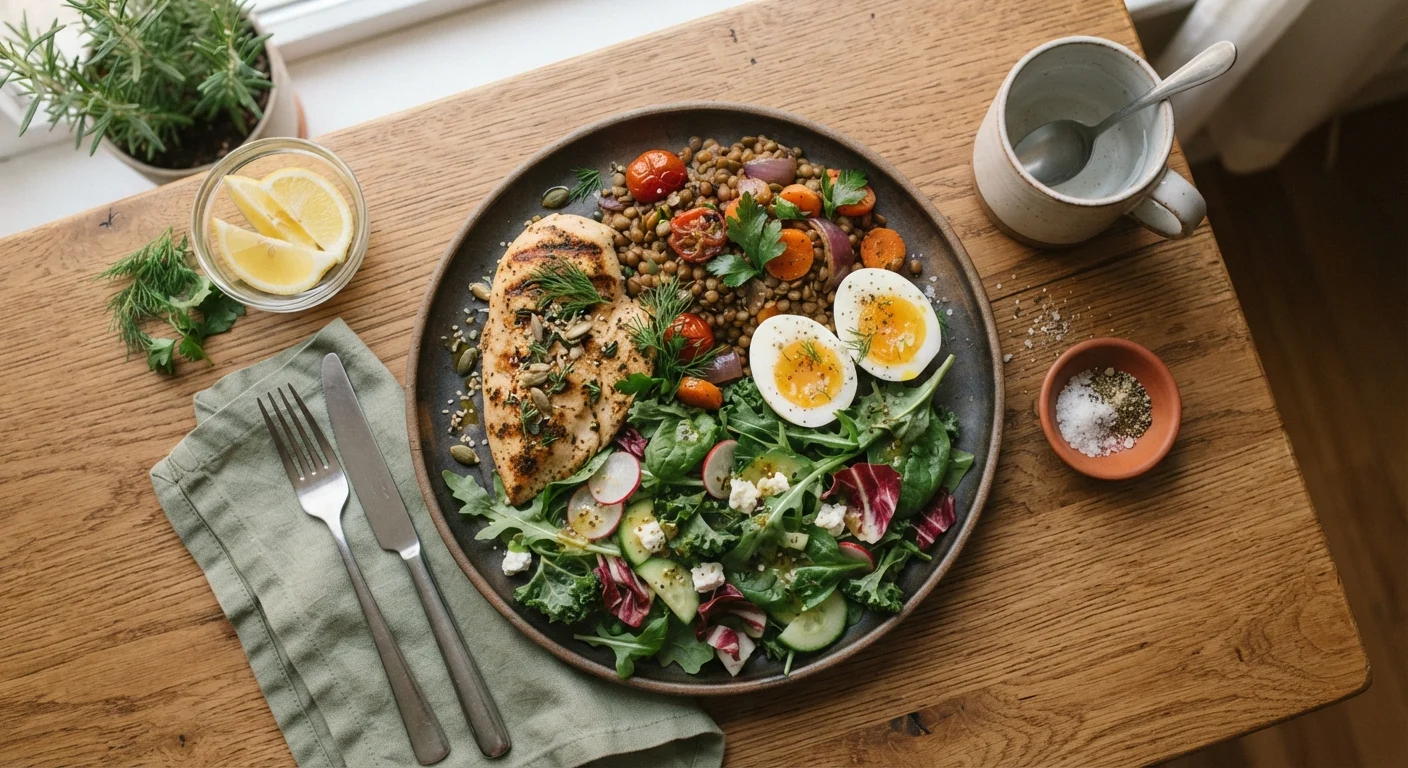
Photo credit: ArticlesHaven.net
In this article
Factual background on protein needs for everyday adults — separate from sports nutrition or body-composition goals.
What the General Recommendations Actually Say
For most non-athlete adults in the U.S., the Dietary Reference Intake (DRI) established by the National Academies of Medicine sets a Recommended Dietary Allowance (RDA) of 0.8 grams of protein per kilogram of body weight per day. For a 150-pound (68 kg) adult, that works out to roughly 54 grams of protein daily. For a 180-pound (82 kg) adult, it's closer to 65 grams.
It's worth understanding what the RDA actually represents: it's the minimum amount estimated to meet the needs of roughly 97-98% of healthy, sedentary adults - not an optimized target. Some nutrition researchers suggest that slightly higher intakes (around 1.0-1.2 g/kg) may better support muscle maintenance and satiety for many adults, particularly those over 50. That's an area of ongoing discussion in nutritional science, not settled consensus.
What's broadly agreed upon: the average American adult already gets enough protein through a typical diet. The issue is less about overall quantity and more about distribution and food quality.
Protein Distribution and Food Sources
Research published in nutrition journals suggests that spreading protein intake relatively evenly across meals - rather than loading most of it at dinner - may support how efficiently the body uses it. While exact targets are the domain of dietitians working with individual clients, the general principle of balance across the day is broadly supported.
Recommended Dietary Allowance (RDA)
The daily intake level estimated to meet the nutritional needs of 97-98% of healthy individuals in a given group. It is a minimum sufficiency benchmark, not a personalized optimization target.
Complete protein
A protein source that contains all nine essential amino acids in adequate amounts. Animal products are typically complete; most plant sources are not, though variety across meals compensates effectively.
Sarcopenia
The gradual loss of muscle mass and strength that tends to accelerate with age, particularly after 60. Adequate protein intake is one factor associated with slowing this process.
Essential amino acids
The nine amino acids the body cannot produce on its own and must obtain through food. Protein foods differ in which and how many essential amino acids they contain.
Dietary Reference Intake (DRI)
A framework of reference values developed by the National Academies of Medicine to guide nutritional planning for healthy populations in the U.S. and Canada.
Common protein sources for everyday adults include:
- Animal-based: Eggs, poultry, fish, dairy (Greek yogurt, cottage cheese, milk), and lean meats
- Plant-based: Lentils, chickpeas, tofu, tempeh, edamame, and quinoa
- Mixed: Combination dishes like bean soups, grain bowls with legumes, or stir-fries with tofu or chicken
Plant-based proteins vary in their amino acid profiles. Most plant sources are lower in one or more essential amino acids, but eating a varied diet across the day - not necessarily in every meal - addresses this without complicated planning. If you're navigating specific dietary restrictions, a registered dietitian can offer guidance tailored to your situation.
To understand how protein content is listed on packaged foods, see our guide to reading nutrition labels - it breaks down what the numbers on the label actually mean.
When Standard Guidance May Not Apply
The 0.8 g/kg RDA applies to generally healthy, sedentary adults. Several populations may have different considerations:
Special Populations Need Personalized Guidance
The general 0.8 g/kg RDA was established for healthy, sedentary adults and does not automatically apply to older individuals, pregnant or breastfeeding people, those with chronic illness, or anyone recovering from surgery or injury. If you fall into any of these groups, the appropriate protein target may be meaningfully different. A registered dietitian or your primary care provider is the right resource for personalized recommendations - general figures from any article, including this one, are not a substitute.
- Older adults (65+): Muscle loss (sarcopenia) accelerates with age. Some professional bodies, including the European Society for Clinical Nutrition and Metabolism (ESPEN), have suggested higher protein intakes for older adults to help preserve lean mass, though individuals should discuss specifics with their doctor or dietitian.
- Pregnant and breastfeeding individuals: Protein needs increase during pregnancy and lactation. Always consult a healthcare provider for guidance specific to your situation.
- People managing chronic conditions: Kidney disease, liver conditions, and other health issues can significantly change protein recommendations - in some cases requiring lower intake. Medical supervision is essential.
- Those recovering from illness or surgery: Protein plays a role in tissue repair; needs may be elevated temporarily.
Protein doesn't exist in isolation in your diet, either. Pairing attention to protein with fiber-rich foods is a sensible general approach - see how fiber fits into everyday eating for context. And if you're rethinking your grocery habits more broadly, a practical approach to nutritionally-aware grocery shopping can help you translate general knowledge into cart decisions.
0.8 g/kg
Minimum RDA for healthy sedentary adults
Set by the National Academies of Medicine as the baseline for generally healthy, non-athletic adults.
~10-35%
Protein's acceptable share of daily calories
The Acceptable Macronutrient Distribution Range (AMDR) for protein, per the National Academies of Medicine.
30+ grams
Per-meal threshold discussed in muscle protein research
Some researchers suggest this per-meal range may support muscle protein synthesis, though individual needs vary and evidence is still developing.
This article is for general informational and educational purposes only and does not constitute medical or dietary advice. Individual protein needs vary based on health status, age, and other factors. Consult a qualified healthcare provider or registered dietitian before making significant changes to your diet.

Author
Articles Haven Editorial Contributor
Articles Haven Editorial Team is the collective byline for our editorial team and contributor network. Articles published under this byline or an editorial pen name are researched, written, and reviewed according to our editorial standards for clarity, consistency, and independence before publication.
View all articles →